Why a Door Goes Off Track in a Chino Garage
Chino's 1960s-70s housing stock and moderate heat put specific strain on garage door tracks.
Read moreBlogChino, CA · 5 min read
Chino's 1960s-70s housing stock and valley heat swings turn normal door wear into specific sounds. Here's what each noise means and when it's worth a call.
Local detail
Chino doesn't get the hard freeze-thaw cycles that crack concrete up north, but the climate here still runs in a moderate heat band, and that matters more than people think for a door that's been opening and closing the same way since the Nixon administration. A lot of the housing stock in this area went up between 1938 and 2007, with the median landing around 1972, and most of what you see across the neighborhoods near Los Serranos and toward Eastvale is straight 1960s-70s build. That means steel tracks and hardware that have gone through five decades of summer expansion and winter contraction without anyone touching them. The bit isn't dramatic - it's a door that used to run quiet and now doesn't. That shift is seasonal in the sense that heat cycles are what loosened it, not in the sense that it fixes itself when the weather turns. It won't. Once hardware works loose from thermal movement, it stays loose until someone tightens it back down. If your door has gotten louder over the past year or two and you can't point to one thing that changed, the age of the house is usually the answer, not a mystery part.
The area
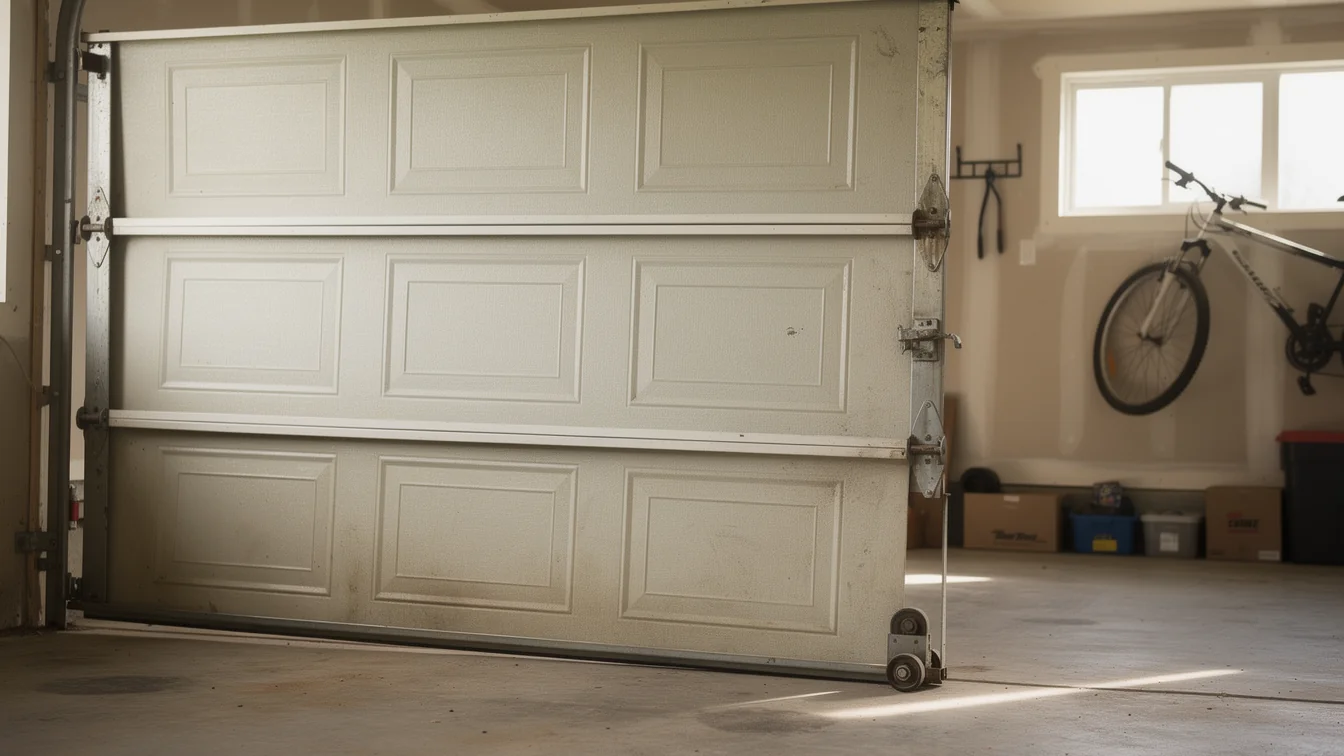
Different noises point to different parts, and in a town where so many garages are running original or close-to-original hardware from a 1960s-70s build, the usual suspects show up in a predictable order. A sharp bang, usually once, is a torsion spring losing tension - common on doors that have never had the spring touched since the house was built. A rhythmic thunk as the door travels is almost always a bent or worn roller, especially on the older steel-roller setups that came standard on houses from that era before nylon rollers became common. Grinding that gets worse near the top of the travel is a worn drum or a track that's pulled slightly out of alignment, which happens gradually in houses old enough that the slab has settled a little. Rattling hardware - brackets, hinges, the opener rail itself - is loose fasteners, full stop. None of these are the same repair, and none of them get quieter if you ignore them. A door that's merely loud is an annoyance. A door that's loud and getting louder is wearing a part down to the point where it fails, often on a day you need the car out.
What we find
The climate band for this part of the valley is moderate heat, not the kind of wild freeze-swing that snaps metal, but steady warm stretches that do their own slow damage. Steel expands under heat and contracts when it cools at night, and on a door with original 1960s-70s hardware that's been through that cycle for fifty-plus years, the fasteners work loose a fraction at a time. That's different from a sudden failure - it's cumulative. Lubricant also dries out faster under sustained heat, which is why a track that was fine in spring can start squealing by late summer with nothing else changed. Houses in this area built before the 1980s often have tracks mounted with hardware that was never upgraded, so the same heat cycle that's harmless on a newer install can be the thing that finally loosens a bracket that's been marginal for years. None of this means the door is failing on a schedule. It means heat accelerates whatever was already weak, and in a housing stock with a median build year around 1972, there's usually something already weak.
How we work
A single pop followed by a door that won't lift, or lifts only partway, is a spring - don't try to force it open, and don't let anyone without the right bars touch it. A grinding or scraping sound that's gotten steadily worse over weeks is worth a look before it becomes a stuck door at 6 a.m. Loose rattling hardware is often a fifteen-minute tightening job, and if that's genuinely all it turns out to be, we'll tell you that instead of selling you a new opener. Where we draw the line: if your door is original to a house built in the 1960s or 70s and the track, drums, and rollers are all original too, replacing the one noisy part sometimes just moves the problem to the next-oldest piece. At that point we'll say so plainly rather than keep billing you for parts on a door that's at the end of its service life. We serve this area; we don't guess at what we can't see, so a noise that's hard to describe over the phone usually means a truck needs to come look at it.
Questions
Not urgently, but don't ignore it either. In houses from the 1960s-70s stock common around here, a new noise usually means a bracket or roller has worked loose from years of heat cycling. It still works because the failure is gradual. Catching it now is a tightening job; waiting usually turns it into a part replacement.
Steel hardware expands in heat and contracts at night, and that cycle works fasteners loose over time, especially on older tracks that haven't been re-torqued since installation. Lubricant also dries out faster in sustained heat. It's cumulative wear showing up seasonally, not a new problem appearing out of nowhere.
No. A single loud bang is usually the spring. A grinding or scraping sound as the door travels is more often a worn drum, a bent roller, or a track that's slightly out of alignment - all common on original hardware from a 1960s-70s build that's never been serviced.
Not automatically. If the door is otherwise original to a house from that era and multiple parts - track, drums, rollers - are all original and aging together, fixing one noisy piece sometimes just shifts the problem to the next one. We'll tell you honestly if that's the situation before you spend money on a single part.
Recommendation
More garage door guides for Chino homeowners.
Chino's 1960s-70s housing stock and moderate heat put specific strain on garage door tracks.
Read more
Chino's housing stock runs 1938 to 2007, most of it 1960s-70s builds.
Read more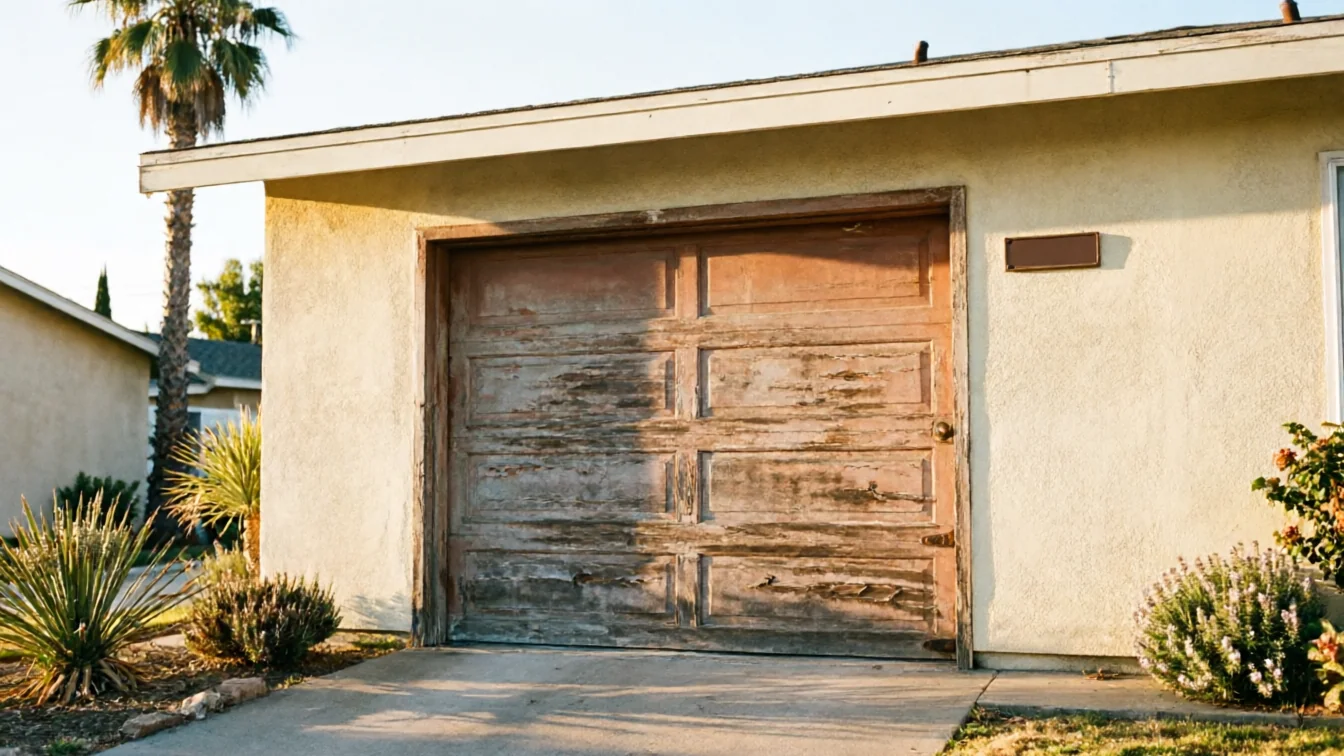
Chino's housing mostly dates to the 1960s and 70s under a moderate heat climate band.
Read moreReady when you are
Chino Garage Door Co repairs and installs garage doors, springs and openers in Chino, CA and the surrounding area.