What the Fix Involves
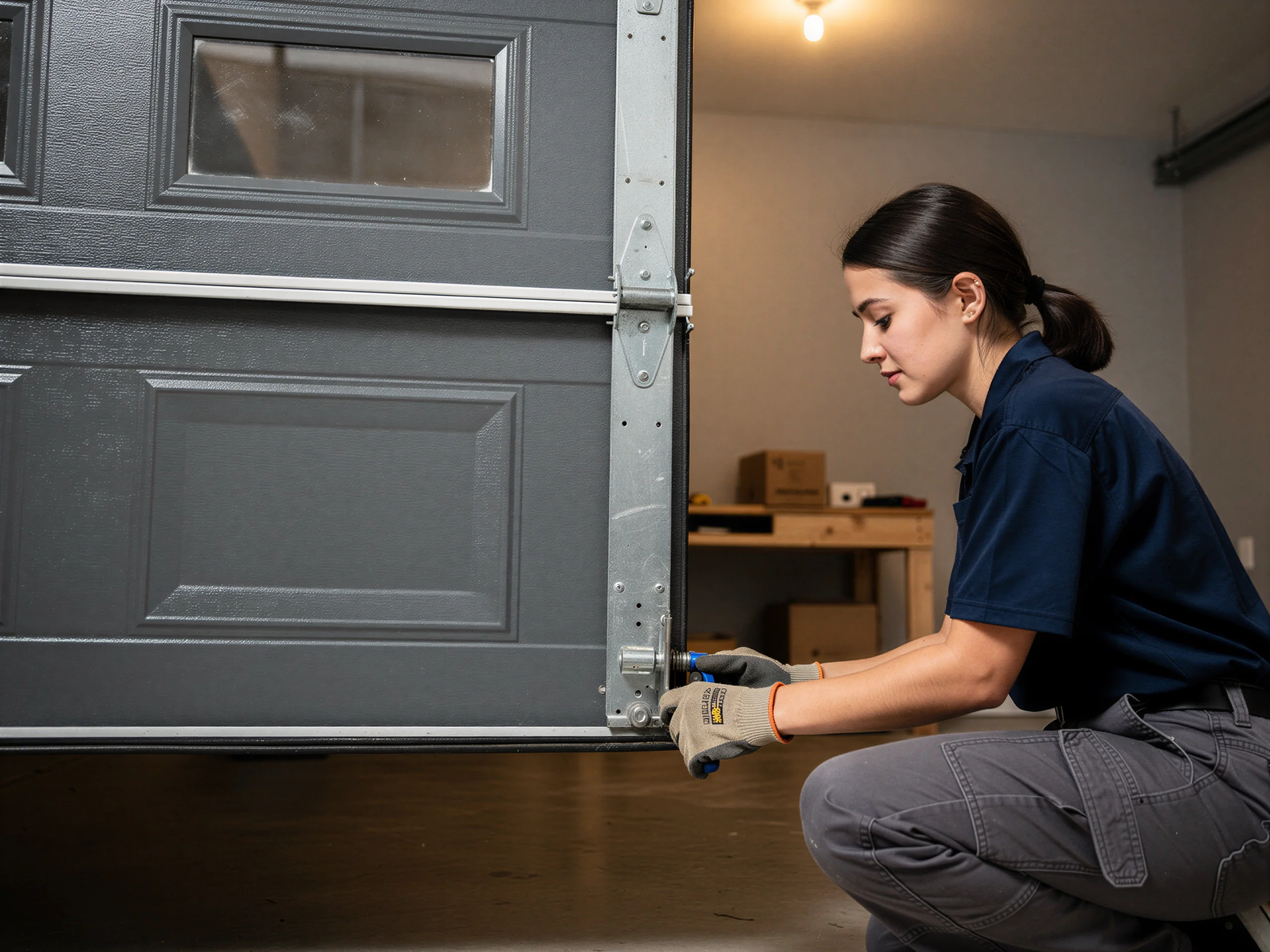
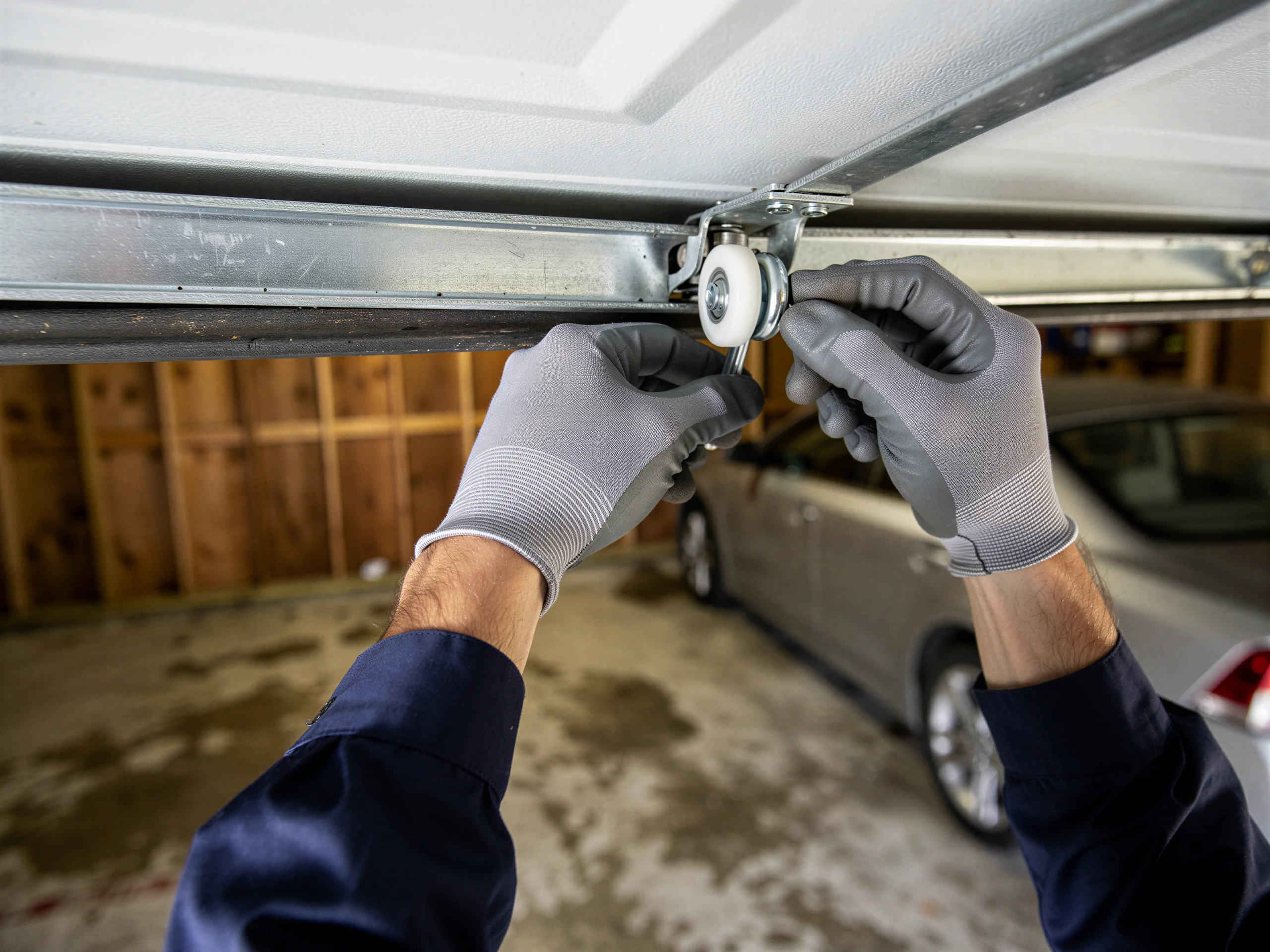
Roller replacement is not just popping out a wheel. On a double or single door, each roller sits in a bracket, rides in a track, and takes a share of the panel's weight every time the door moves.
Original steel roller track
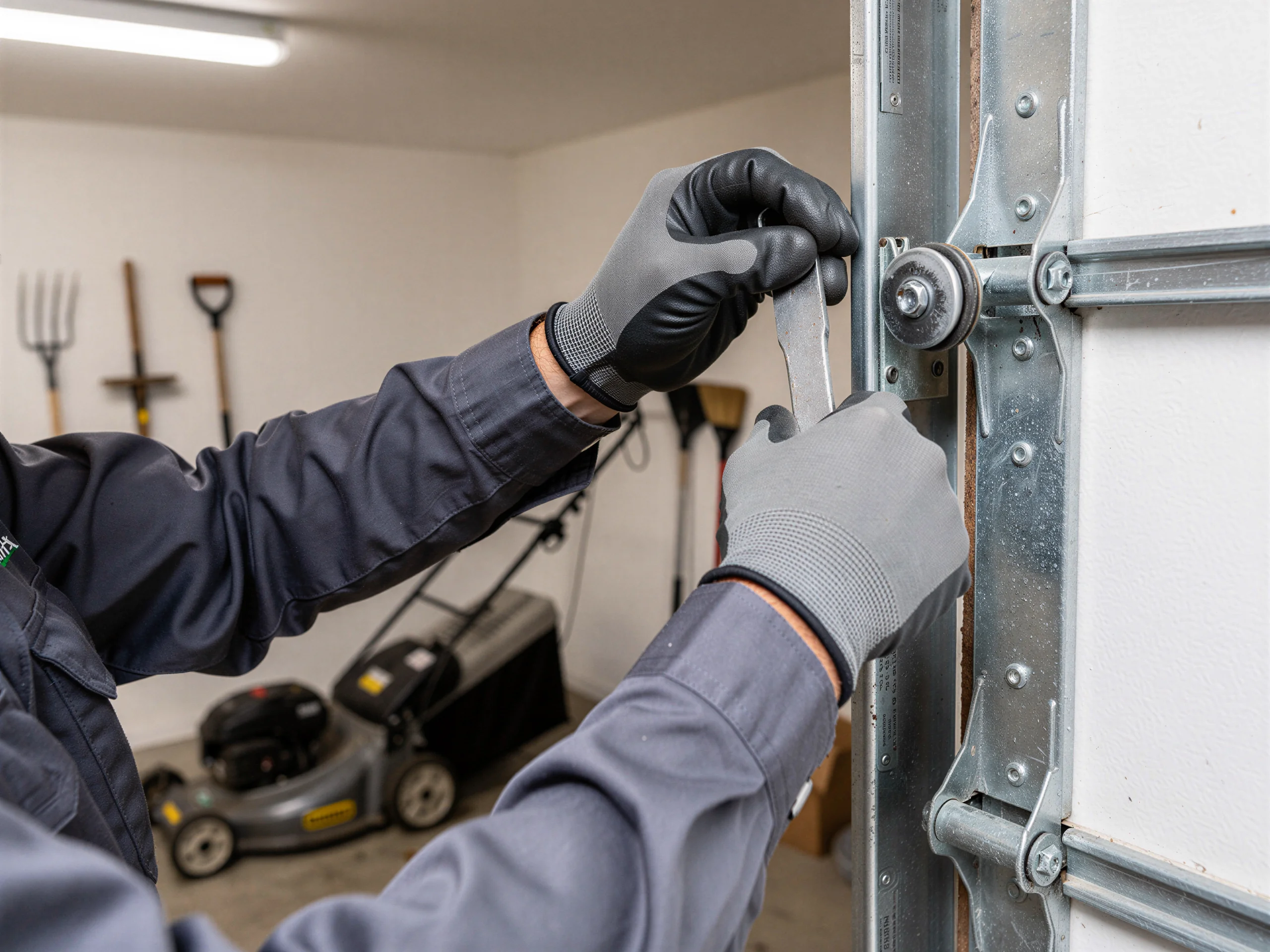
Across this service area, houses went up mostly between 1938 and 2007, with the median build year at 1972 - which means a lot of doors still running original steel rollers in steel track, stock that was never designed to be maintenance-free. The job starts with pulling the door down, releasing tension at the bottom bracket, and sliding each roller stem free one at a time so the track stays aligned.
Nylon sealed-bearing upgrade
We check the track itself while we're in there - bent track is a separate problem and swapping rollers won't fix it. Most jobs call for nylon rollers with sealed bearings in place of the old steel-and-bushing kind, since they run quieter and don't need the periodic grease the old ones did.
Partial roller sets
We don't replace a full set of ten rollers if two are worn and the rest are sound - that's padding a bill. If a track is warped enough that new rollers won't sit true, we say so before we start, not after.
How to Book
Booking starts with a call or a message through the site describing what the door is doing - grinding, sticking partway, jumping the track. That lets us bring the right roller stock on the first visit instead of a second trip to grab parts.
City-based truck routing
We serve the wider area around Chino, including the nearby communities listed on our coverage, so when you call, mention your city so we route the right truck.
Watching a full cycle
Most roller jobs are diagnosed on-site in a few minutes once we watch the door run a full cycle - the sound and the spot where it sticks usually tell us whether it's the rollers, the track, or both. We give a price before any work starts, not after the door is already apart.
Diagnosis beyond rollers
If the issue turns out to be a cracked panel or a spring rather than rollers, we'll say that plainly rather than replace rollers that weren't the problem. For general booking and to see the rest of what we handle, start at the homepage.
Why This Fails Locally
The housing stock across this area runs older than a lot of buyers assume - built mainly from 1938 through 2007 with a median year of 1972, and the bulk of the 39 named communities we cover sitting squarely in that 1960s-and-70s wave of construction. That generation of garage doors came standard with steel rollers on steel track, no nylon, no sealed bearing, just metal on metal held together with whatever grease was on hand at install.
Fifty-plus years on, those rollers have worn grooves into their own bearings. The climate band here reads as moderate heat rather than desert-extreme, so the failure mode isn't rubber melting in August - it's slow, steady wear from decades of grit working into an unsealed bearing that was never meant to run this long. Add in 221,746 owner-occupied houses across 427,123 households in the service area, and roller wear shows up as one of the steadiest calls we get, right alongside spring replacement on these same-era doors.
At a median household income of $105,104, most owners here choose a full roller swap with sealed bearings rather than babying one worn roller at a time - it costs less over the life of the door than repeat service calls.
How It Shows Up
The first sign is usually sound - a grinding or rattling that gets louder as the door nears the top or bottom of its travel, right where the worn rollers are working hardest against the track.
Shopping-cart wheel noise
Some owners describe it as a shopping-cart-wheel noise. That's the bearing, not the spring, and it's worth knowing the difference before you call out the wrong fix. Next comes hesitation: the door catches partway, especially on the second or third panel seam where an old roller has flattened on one side.
Loose roller stem bracket
In worse cases, the door jumps the track slightly on one side, which looks alarming but is usually the roller stem wearing loose in its bracket rather than anything structural with the door itself. We don't recommend ignoring a grinding roller and hoping it settles down.
Seized rollers cracking track
A roller that's worn enough to make noise is worn enough to eventually bind or snap the stem, and a seized roller under load is what cracks a track. Catching it at the noise stage is a straightforward fix; catching it after a track bends is a bigger job.
Talk to a local pro
Garage door service in Chino?
Same-day service with honest, upfront quotes.