
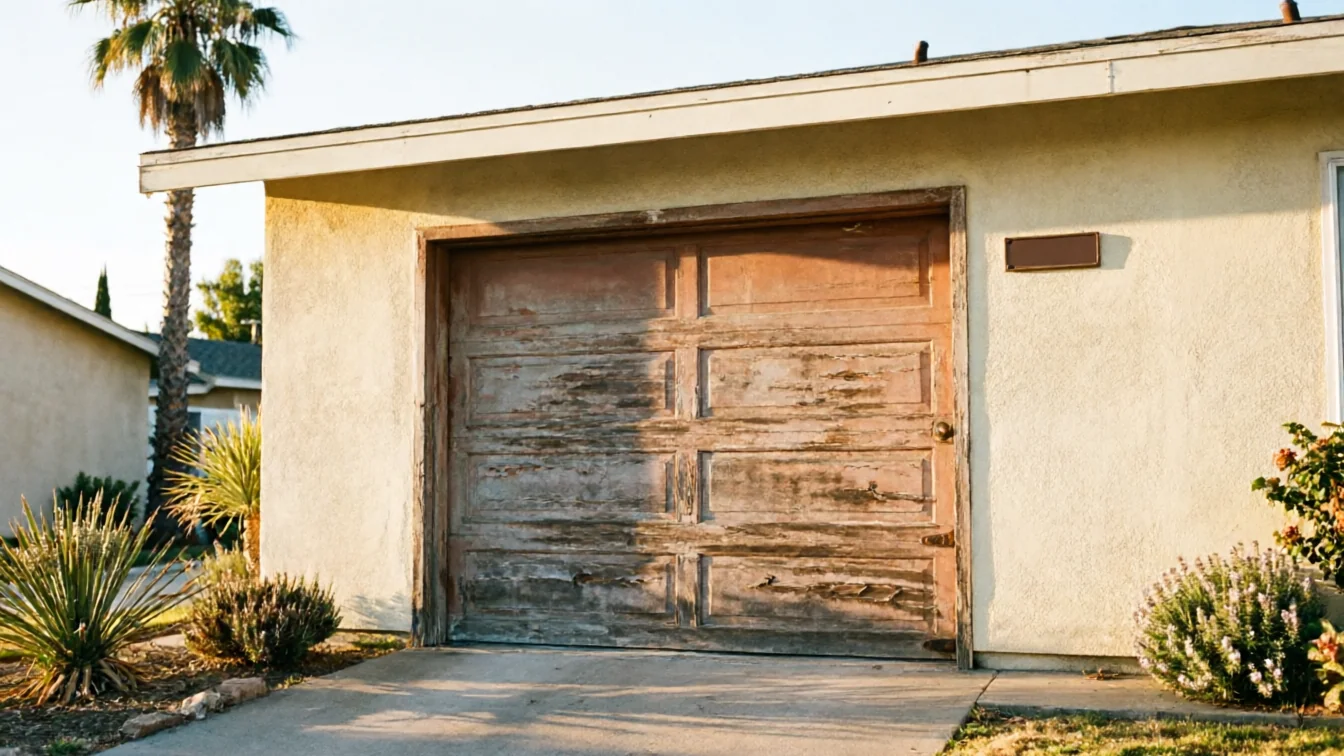
Is Your Chino Garage Door Still Worth Fixing
Chino's housing mostly dates to the 1960s and 70s under a moderate heat climate band.
Read moreBlogChino, CA · 4 min read
Chino's garage doors date mostly to the 1960s-70s building boom. Here's why the seals on those original frames let in heat and dust, and when to replace them.
Local detail
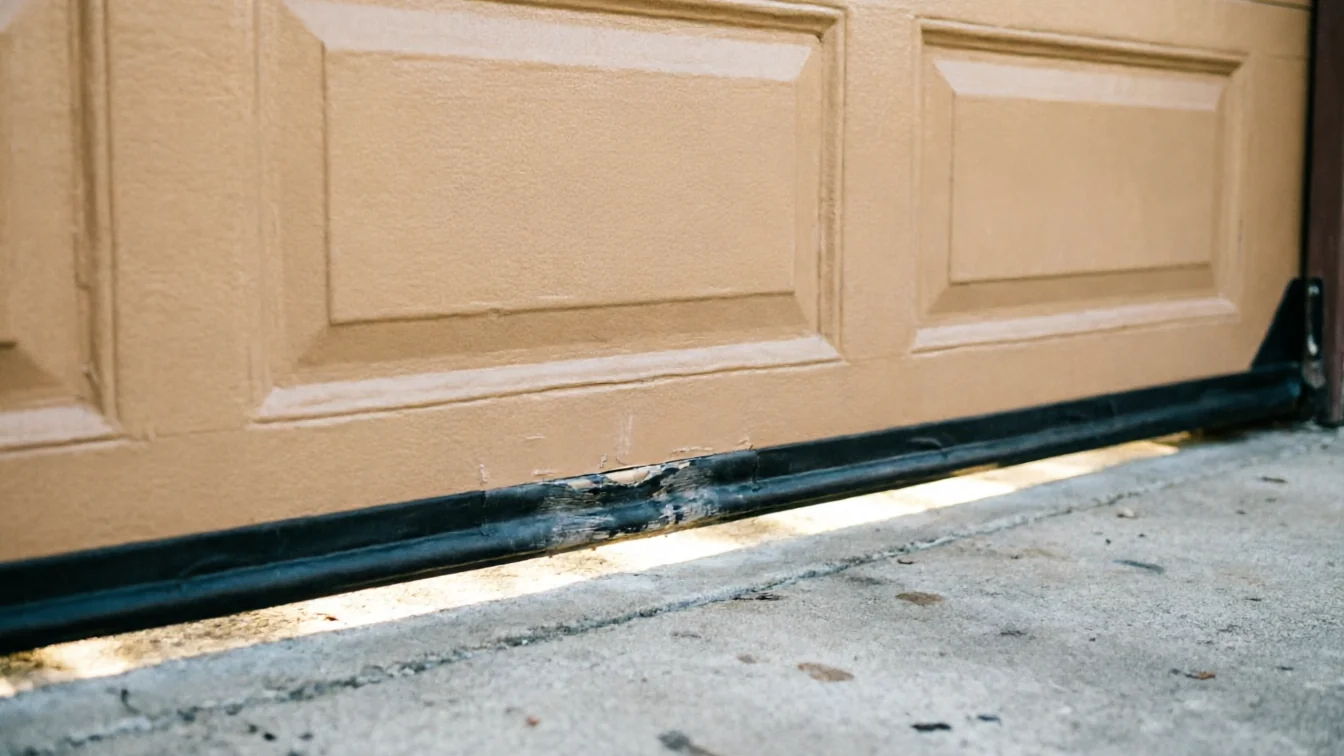
Chino homes were mostly built between 1938 and 2007, with the median house going up around 1972. That means a big share of the garages on your street still have the bottom seal and perimeter weatherstripping that came with the original door, or a close replacement of it. Rubber doesn't last fifty years. It hardens, cracks at the corners, and pulls away from the track it's set into. You notice it most when the season turns: a line of daylight under the door at dusk, a draft across the slab that wasn't there a few years back, dust sitting in a thin stripe along the floor after a windy week. None of that means the door is broken. It means the seal that was doing its job in 1972 has given up. This isn't an emergency repair, but it's not nothing either, especially with a climate that leans on that seal more than people expect for a place this far from the coast.
The area
Across the 39 named communities in this part of the Inland Empire, most garages share the same bones: 1960s and 70s construction, steel or wood doors set into tracks that were never built with today's foam-core seals in mind. The bottom astragal - the rubber strip along the floor edge - is the first thing to go because it takes the most abuse: car tires rolling over it, grit, sun through the open door. Side and top seals go next, usually quietly, which is why most owners find out from a draft rather than a leak. On a door this old, the seal channel itself can be slightly out of true after decades of settling, so a stock replacement strip sometimes won't seat flush without trimming. That's a five-minute fix for someone who's done it before, and a frustrating one for someone who hasn't.
What we find
Chino sits in a moderate-heat climate band, not the extreme highs you'd get further out in the desert, but enough sustained warm weather that rubber seals take real UV and thermal cycling over a year. That cycling is what actually breaks a seal down, not one bad storm - it's a strip of rubber ten thousand small expansions and contractions deep. A door with its original 1970s-era seal has usually been through forty-plus of those cycles already. The result is less about leaks you can see and more about the small stuff: a few degrees warmer garage in the afternoon, a thin film of dust on stored boxes, a slightly colder slab in the early morning. On a house built in the median era for this area, around 1972, that's close to the ordinary lifespan of a vinyl bulb seal, and it's a reasonable thing to check before it becomes a bigger annoyance.
How we work
If the seal is just hard and cracked but still attached, that's often a straightforward strip swap and not worth a service call on its own - you can buy the track-style bulb seal and run it yourself if you're comfortable on a ladder. Call when the seal has pulled loose from a warped track, when the door itself doesn't sit flush anymore (common on older steel doors that have taken some denting over fifty years), or when you've already replaced the strip and the draft is still there, which usually points to the door or opener alignment rather than the weatherstripping. We don't stock every profile for every older door on short notice - some of the original 1960s and 70s tracks take a less common seal size, and that can mean a short wait on parts rather than a same-day fix.
Questions
On houses built in the 1960s and 70s common in this area, the bottom seal has usually hardened after decades of sun and heat cycling. It still looks closed but no longer presses flat against the slab, so fine dust works its way under the gap. Replacing the bulb seal usually fixes it; if dust keeps coming through after that, the track alignment is the next thing to check.
There's no fixed interval in the specs, but a seal from the original construction era, often the 1960s-70s stock common here, is well past what rubber is expected to hold up to. If it's hard, cracked at the corners, or pulling away from the channel, that's the sign to replace it rather than wait for a specific year.
Usually not. On older homes in this area it's most often just a worn bottom seal, which is a minor fix. It's worth a closer look if the draft is new and strong, or if it showed up alongside the door sitting unevenly, since that can point to a track or spring issue rather than just weatherstripping.
Recommendation
More garage door guides for Chino homeowners.
Chino's housing mostly dates to the 1960s and 70s under a moderate heat climate band.
Read more
Chino's housing stock runs 1938 to 2007, most of it 1960s-70s builds.
Read more
Chino's 1960s-70s housing stock and valley heat swings turn normal door wear into specific sounds.
Read moreReady when you are
Chino Garage Door Co repairs and installs garage doors, springs and openers in Chino, CA and the surrounding area.