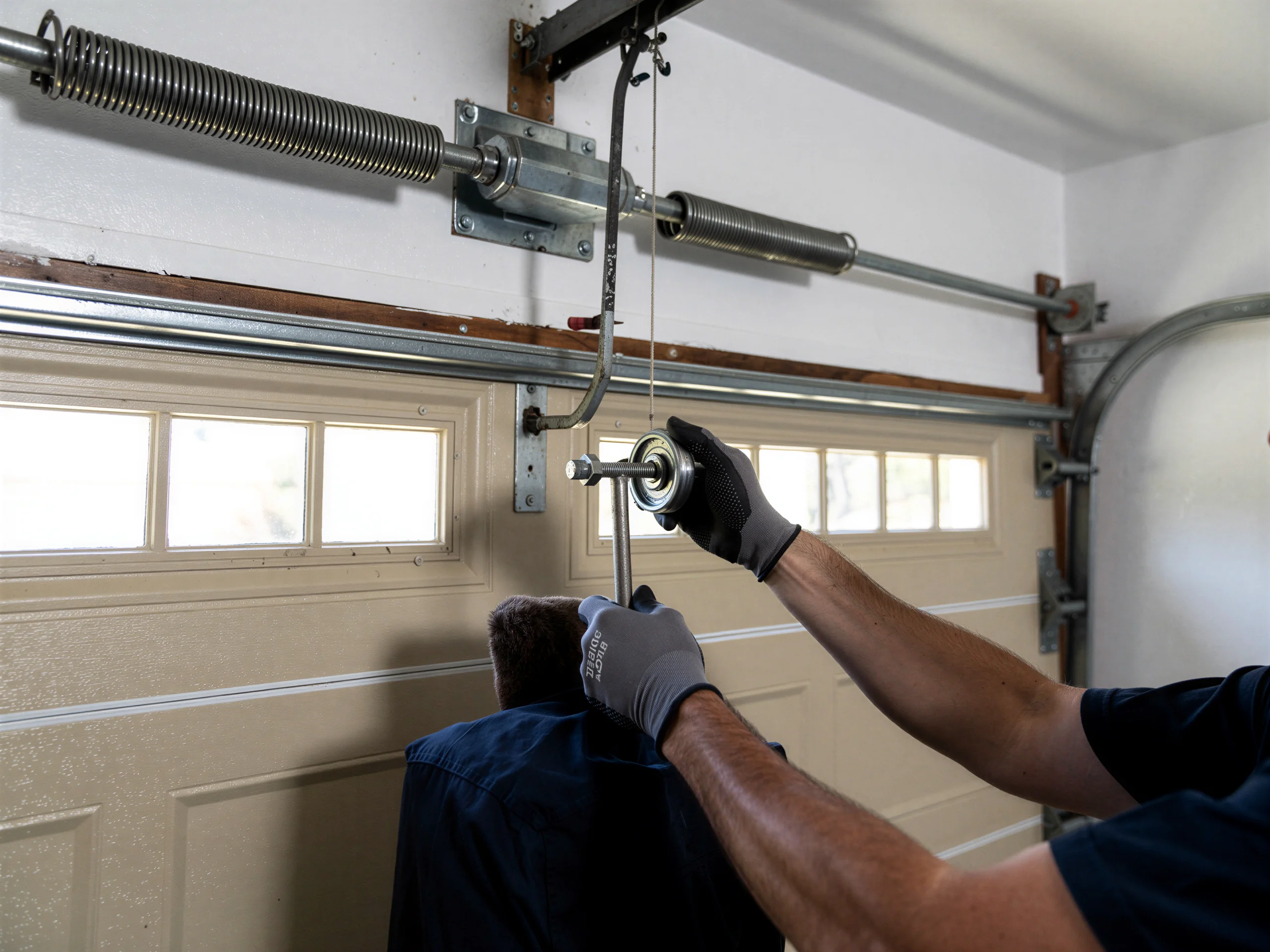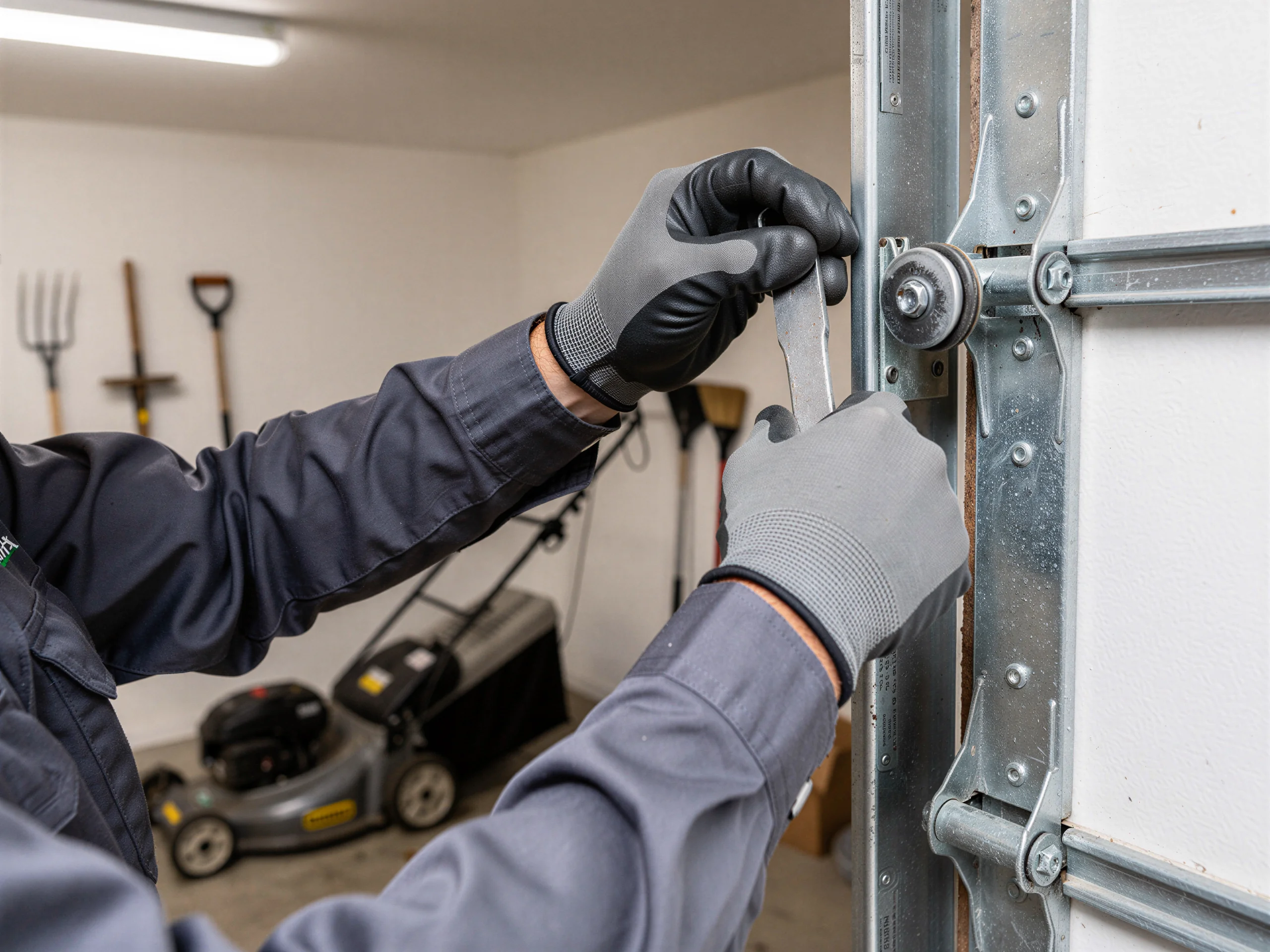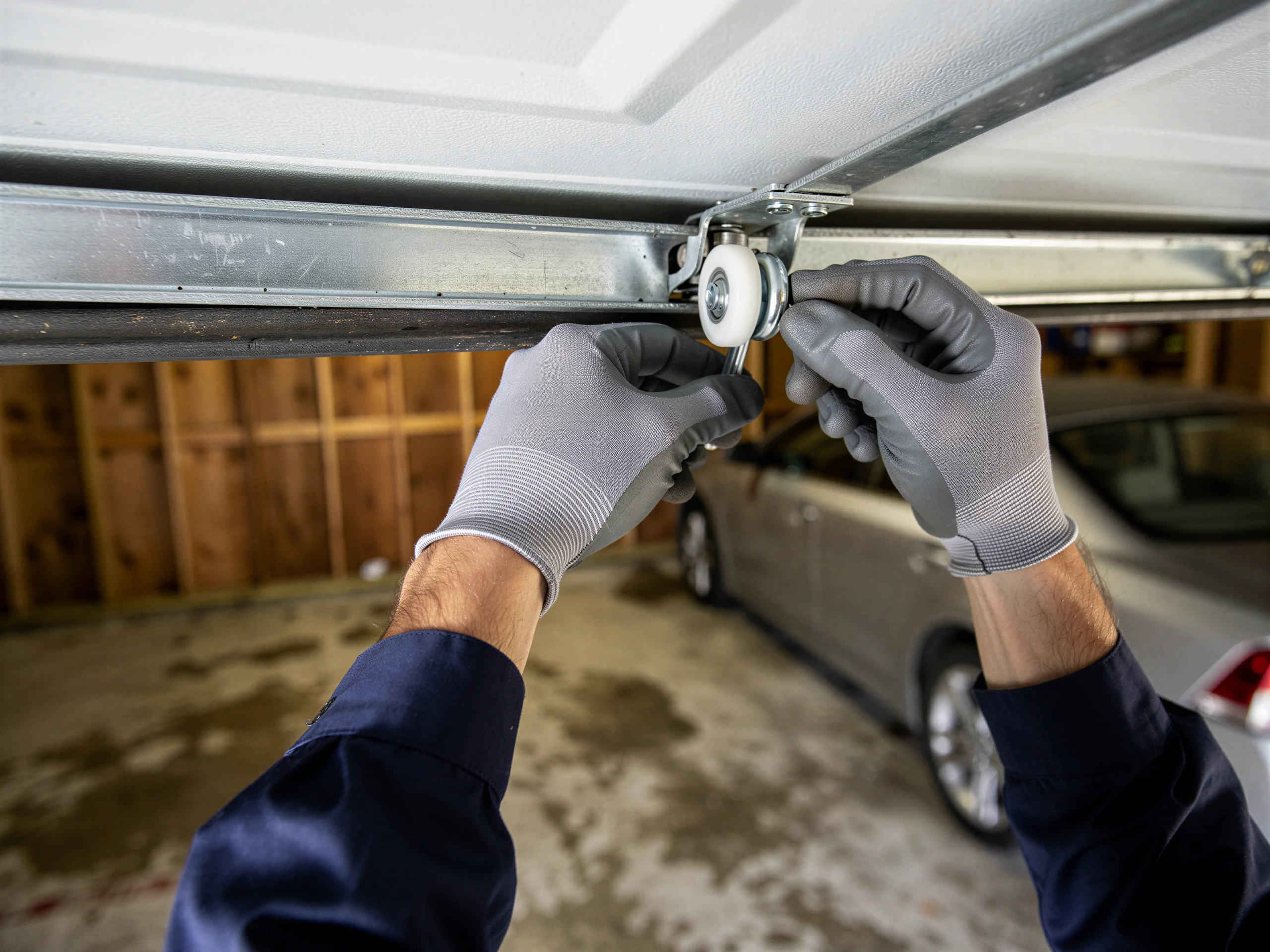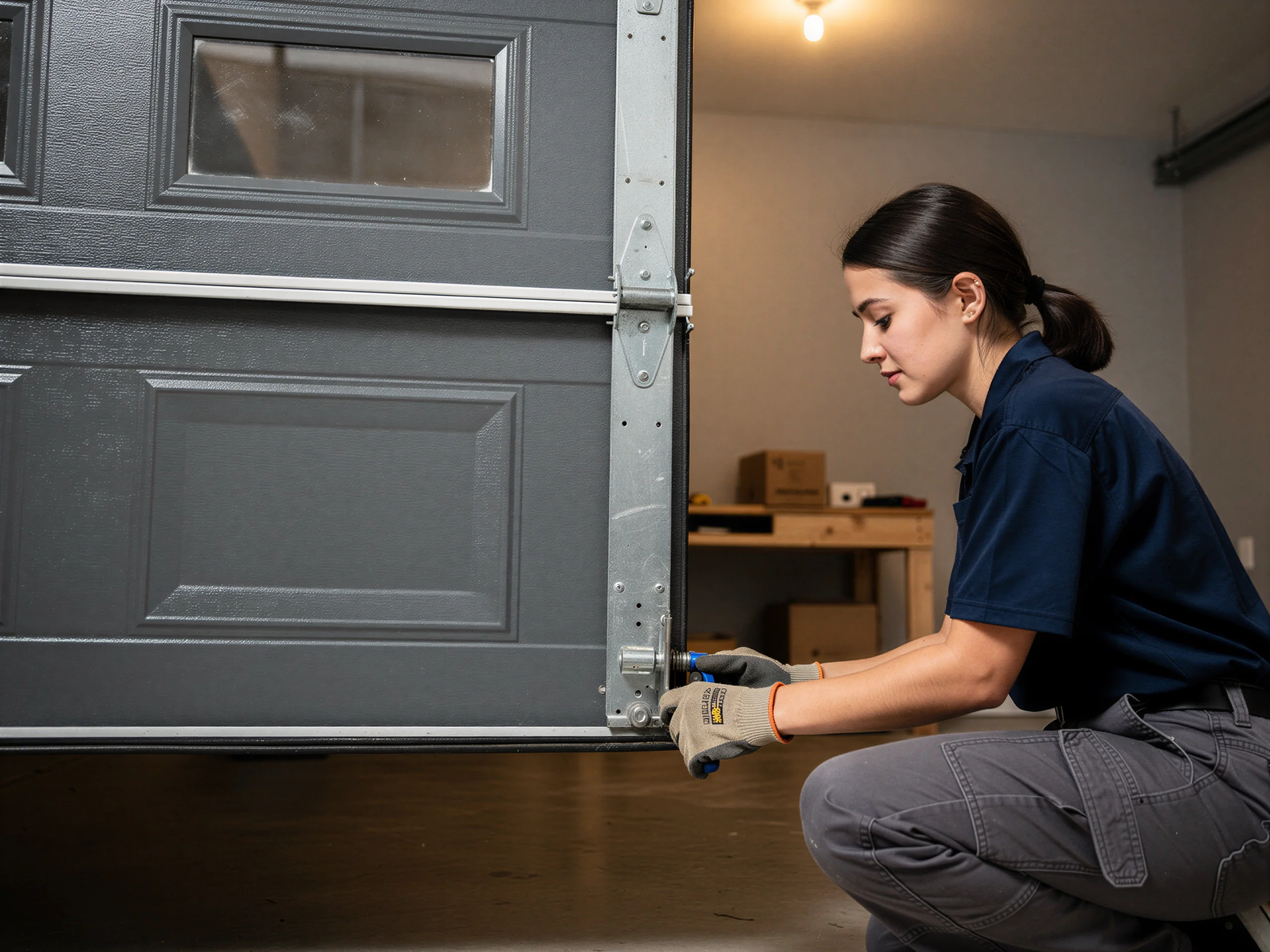
What the Fix Involves
A proper install starts with the opening, not the door. Most of Chino's housing went up between 1938 and 2007, with the bulk of it dating to the 1960s and 70s, and that median build year of 1972 matters because framing, header height, and track clearance from that era rarely match the dimensions stock doors are cut to now.
Measuring the opening
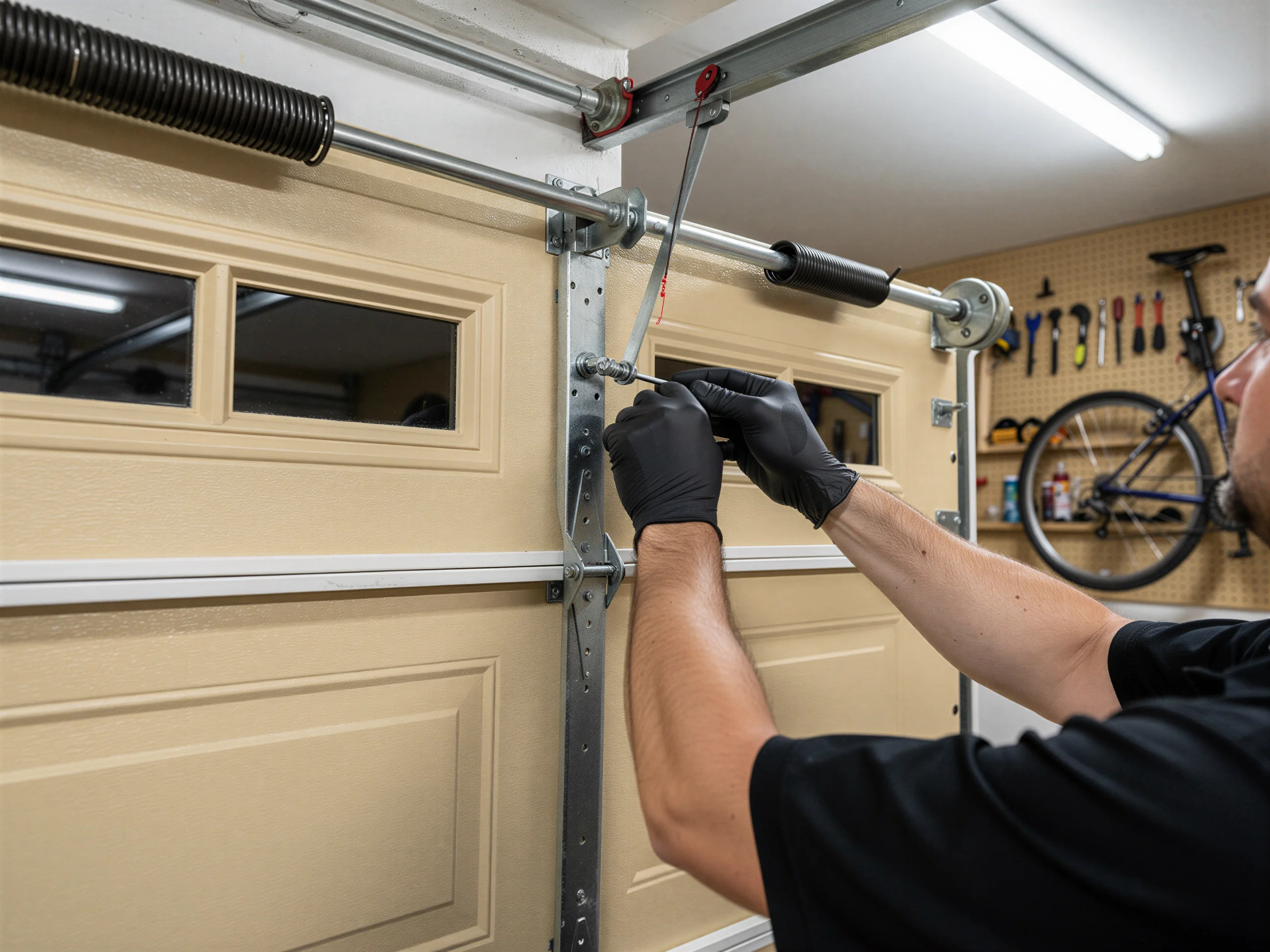
We measure the rough opening, check the jamb for square, and look at what the original springs and track were rated for before we order anything. If the opening is out of square or the header's too shallow for a modern torsion setup, that gets addressed before the door goes in, not after.
Insulation matched to climate
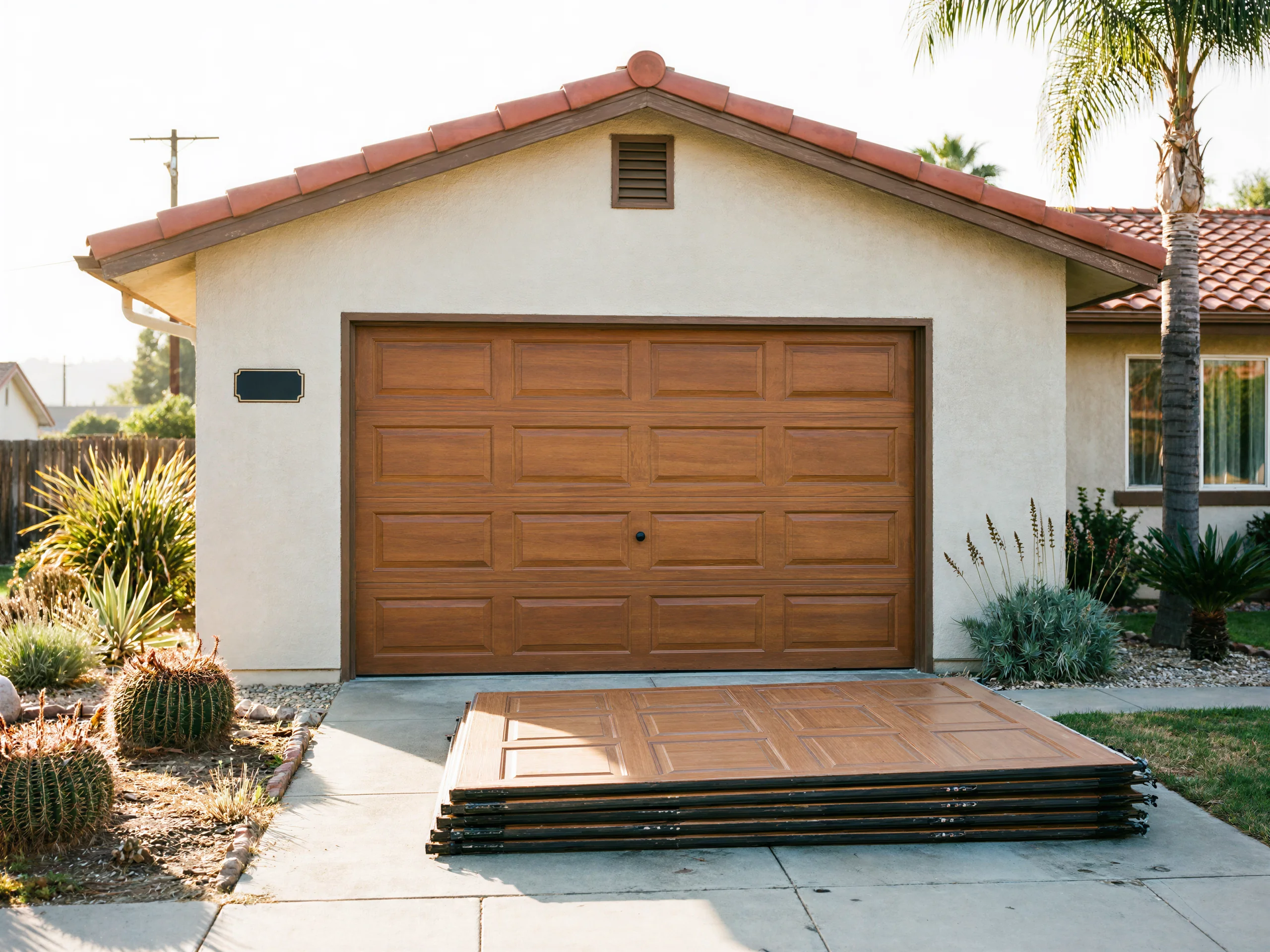
We also match the door's R-value and panel gauge to the moderate-heat climate band Chino sits in, since a door that isn't built for heat cycling will warp or bind within a couple of summers.
Carpentry handed off
One limitation worth saying up front: if the opening needs structural framing work beyond the door itself, that's a carpentry job we hand off rather than patch around, because a door hung on bad framing will fail again regardless of how good the door is.
How to Book
Call or use the contact page to get a measurement and quote scheduled. We'll ask for the age of the house if you know it, since anything built before the 1980s often needs a hardware check alongside the door measurement, not just a box swap.
Partial past replacements
If you're not sure what's original and what's been replaced, that's fine; a lot of homes in this area have had one or two doors replaced already without the track or springs being updated to match, and that's easier to catch in person than over the phone.
Free measurement visit
We schedule the visit, confirm the opening size and header clearance on site, and give you a firm quote before ordering. There's no charge for the measurement visit itself.
Replacing long-lived doors
If the household income and housing data for this area tells us anything useful, it's that most owners here are replacing a door that's lasted decades, not doing a first install, so we plan the visit around confirming what's actually behind the old door rather than assuming.
Why This Fails Locally
The failure pattern here traces straight back to the building stock. With most houses in Chino and the surrounding 39 named areas dating to the 1960s and 70s, a lot of original garage openings were framed before torsion spring sizing and track spacing were standardized the way they are now. That means a door bought off the shelf today can be close enough to fit but not actually matched to the header height or track run the house was built with, which shows up later as a door that labors on the opener or binds partway through its cycle. Add the moderate-heat climate band Chino sits in, and steel or aluminum panels that aren't rated for that cycling start to warp at the seams faster than they would in a milder zone. Across the wider service area's roughly 221,746 owner-occupied houses, this isn't a rare combination; it's the default for anything built in that mid-century window. Los Serranos, just three miles west, sits in the same construction era, which is part of why this fit problem isn't limited to one pocket of town.
How It Shows Up
The most common sign is a door that looks fine closed but drags, scrapes, or hangs at an angle partway through opening. On houses from the 1960s-70s build window, that's usually the original track spacing fighting a newer door or opener that wasn't matched to it.
Shifted header or jamb
Another version: daylight visible at one bottom corner even though the door looks square from the driveway, which points to a header or jamb that's shifted slightly over fifty-plus years and was never accounted for at install.
Warping panels in heat
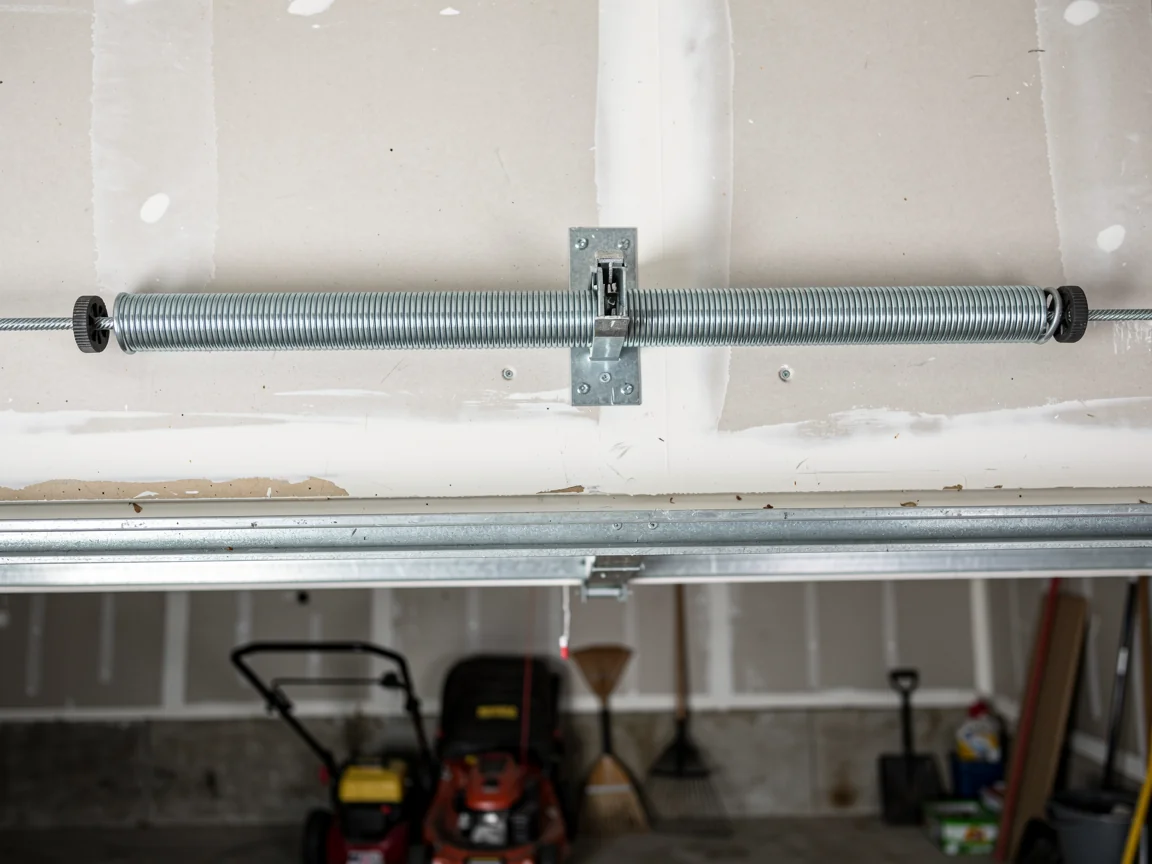
In the warmer months, panel warping becomes more obvious, especially on doors without adequate insulation for the heat cycling this area gets. Openers struggling or reversing unexpectedly on a door that used to run fine is often the spring, not the opener, especially on original hardware that was sized for a lighter door than what's currently hanging.
Slow symptoms hide misalignment
None of these show up overnight. They build slowly enough that homeowners usually notice the noise before they notice the actual misalignment, which is why a measurement visit catches things a phone description won't.
Talk to a local pro
Garage door service in Chino?
Same-day service with honest, upfront quotes.