What the Fix Involves
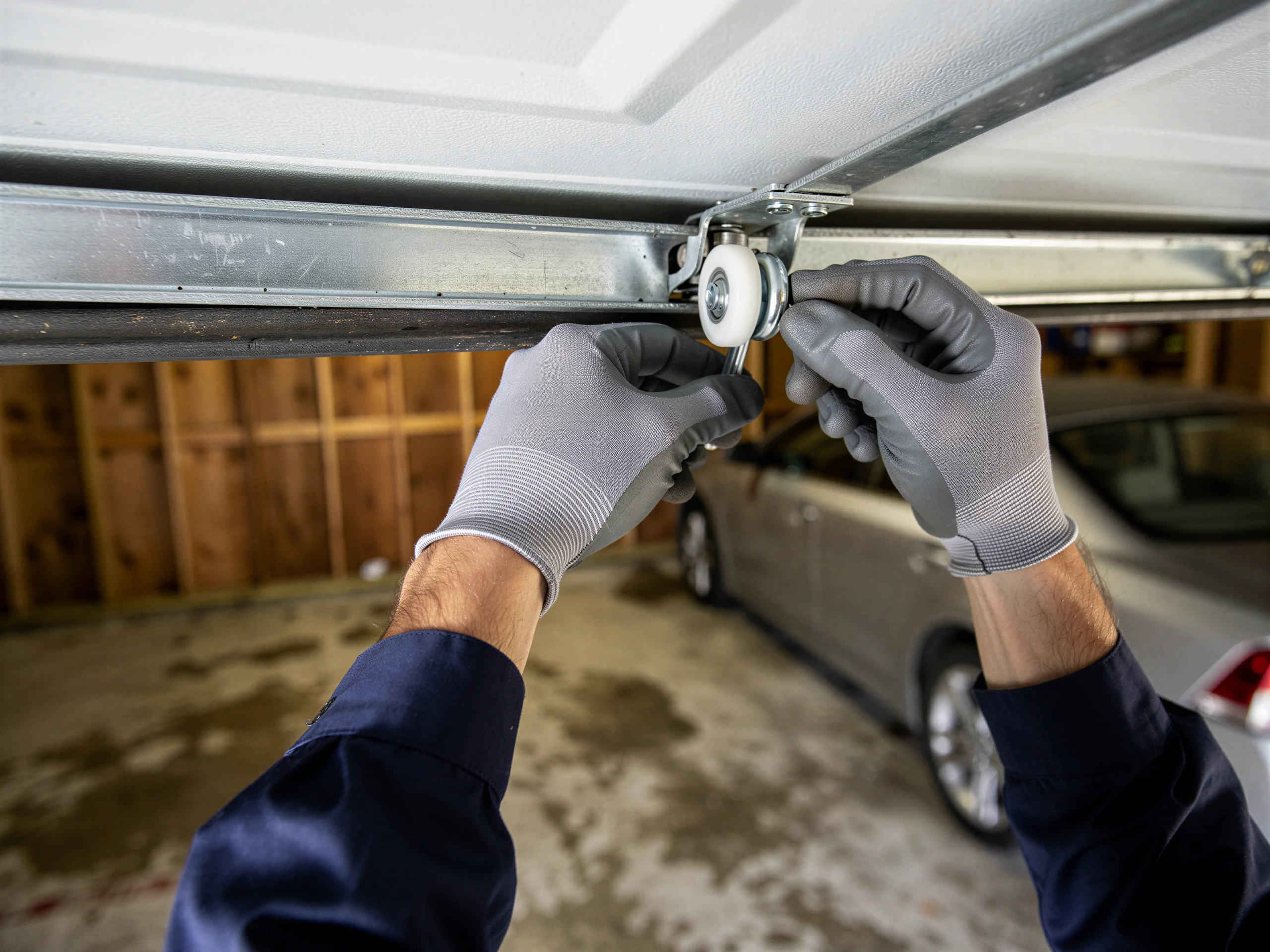
An off-track door almost always comes down to one of three things: a bent track, worn or broken rollers, or a cable that's jumped the drum and pulled the door sideways.
Checking tension first
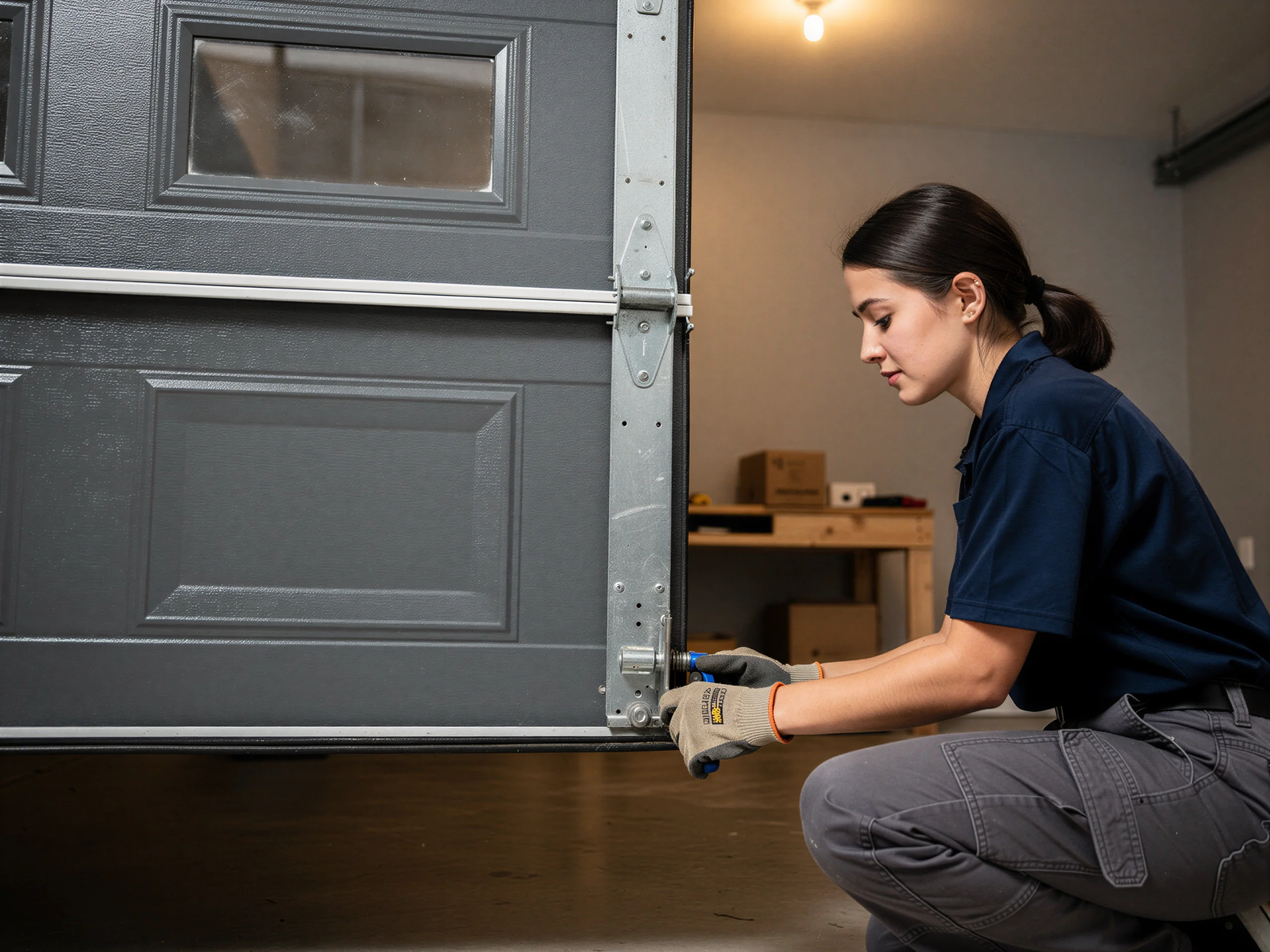
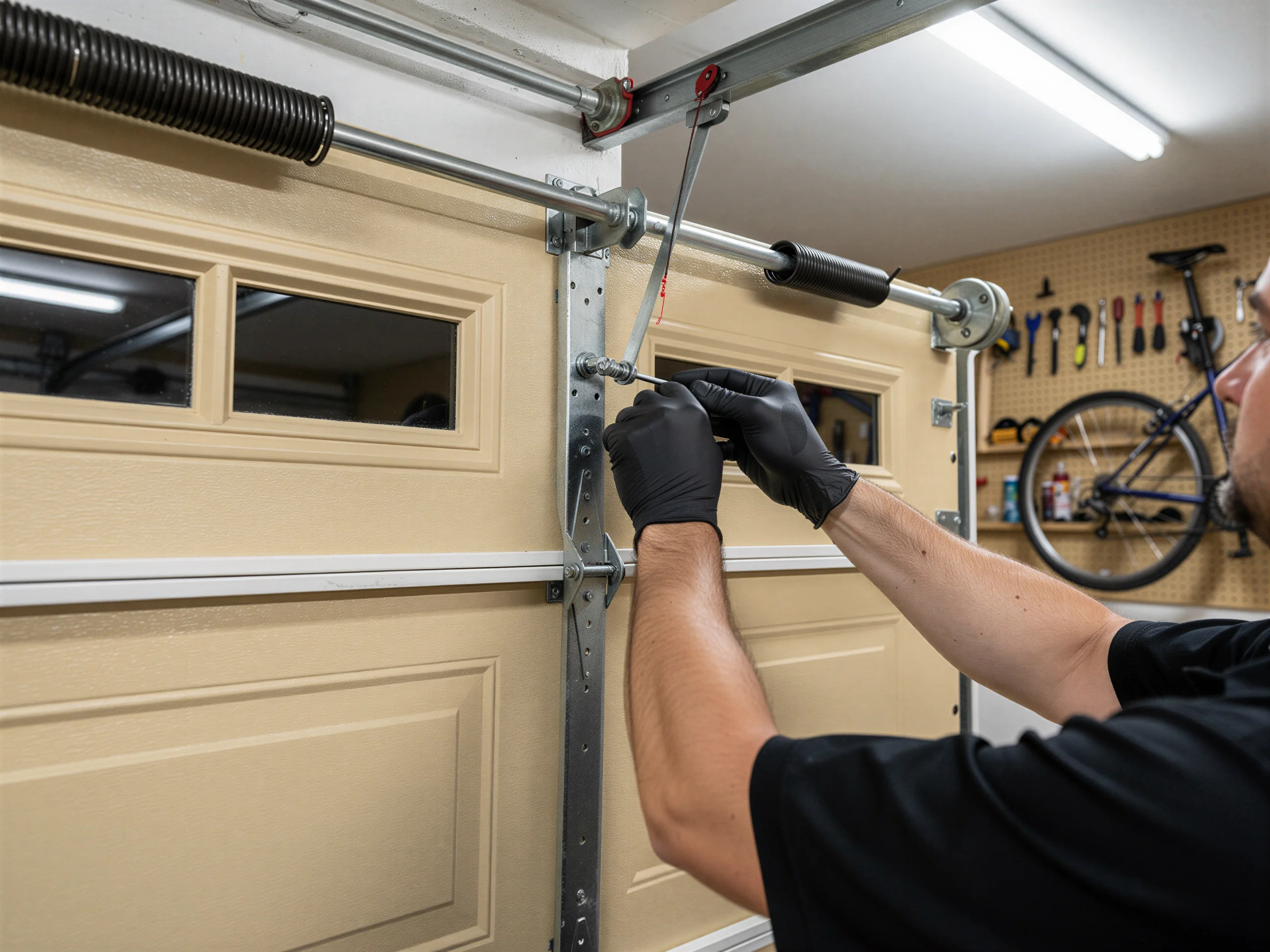
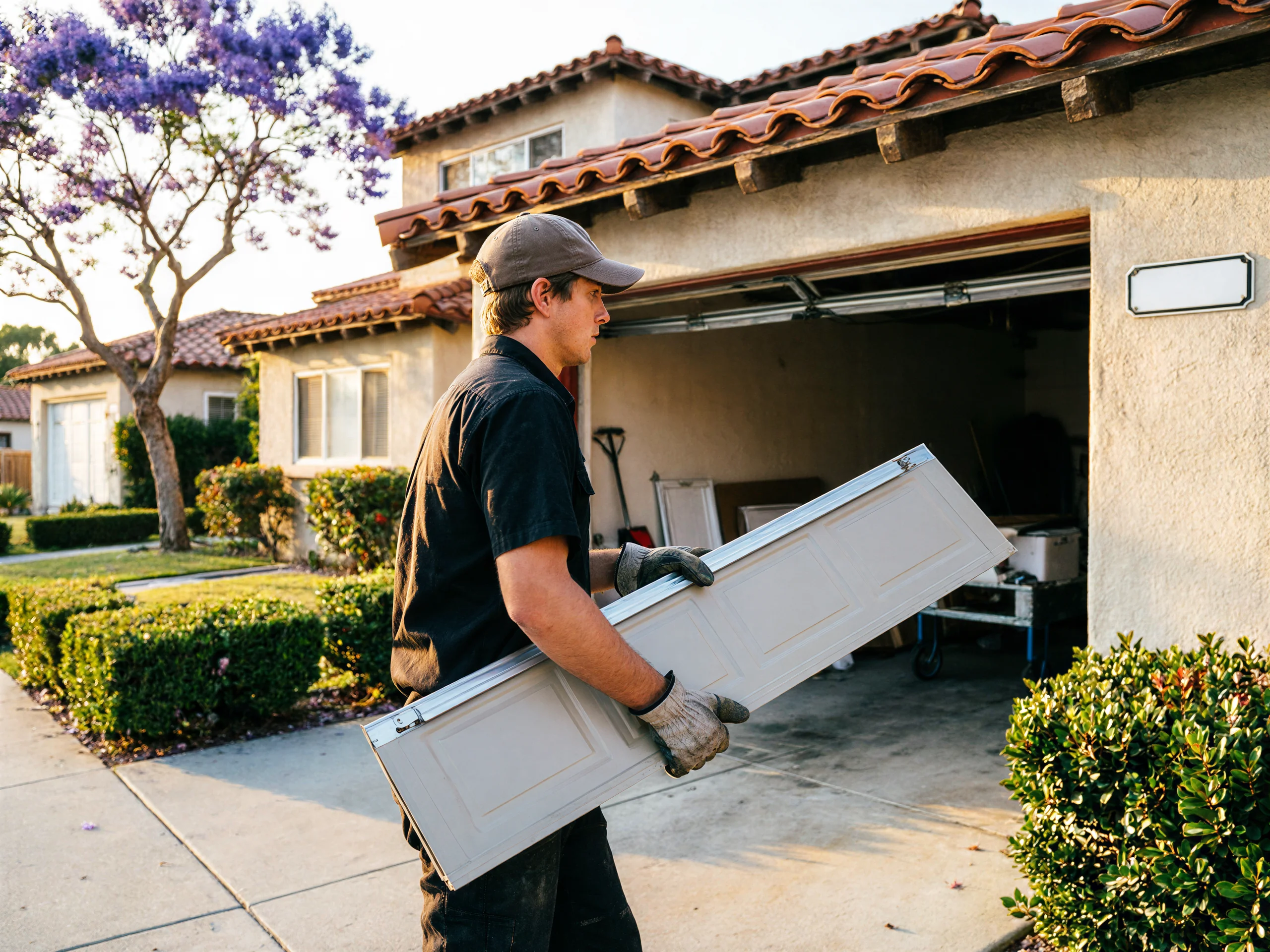
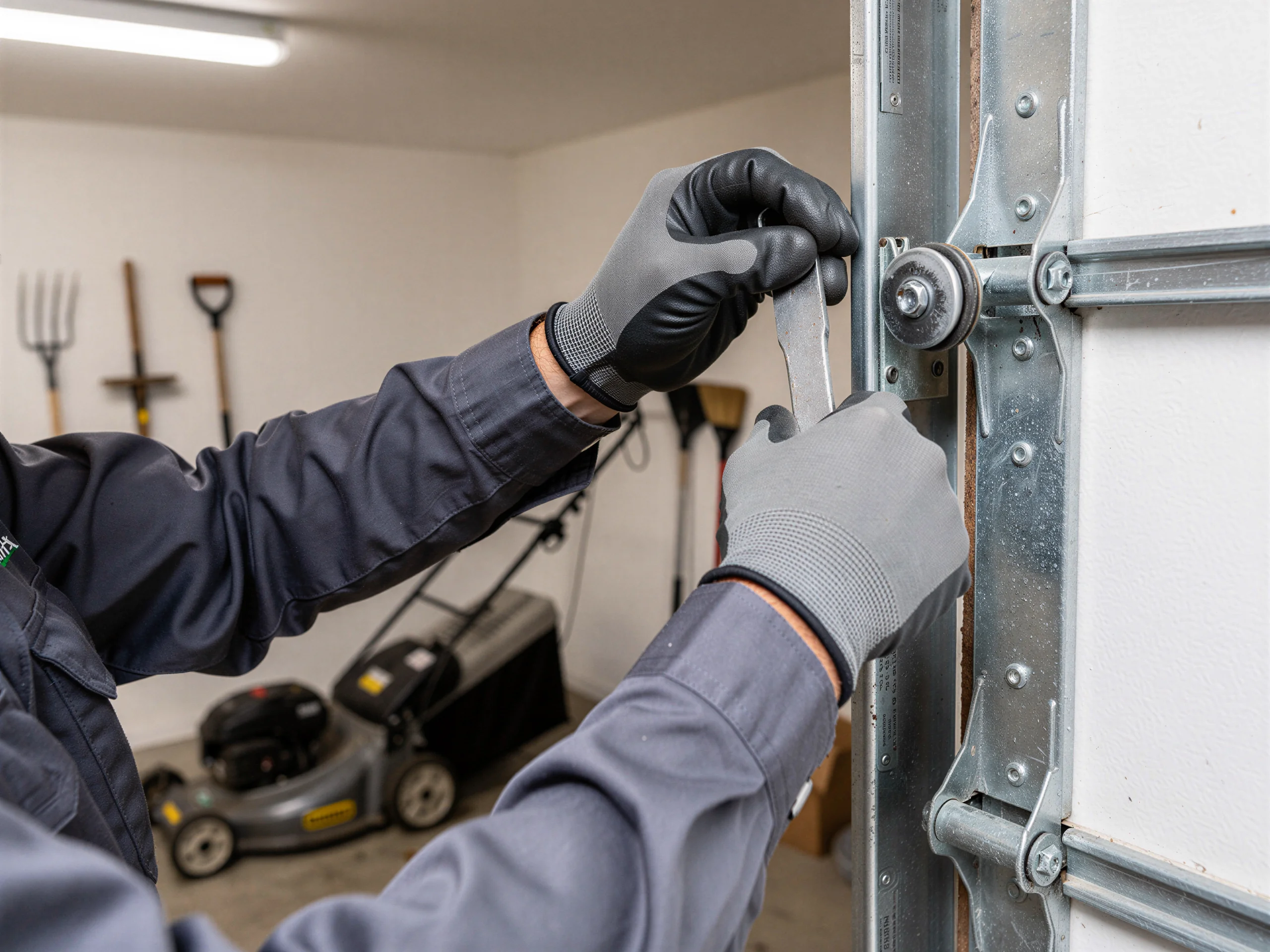
The first thing we do is check whether the door is safe to touch - if a spring is under tension and holding the weight wrong, we don't let anyone force it back by hand, because that's how fingers get crushed. Once it's safe, the repair is usually straightforder: unbolt the bent section of track and swap it, replace the rollers that caused the drift in the first place, and re-square the track against the jamb so the door doesn't walk right back out next month.
Replacing frayed cables
If the cable jumped because of a frayed strand, we replace the cable, not just re-seat it - a frayed cable that's already slipped once will slip again. We don't recommend hammering a bent track back into shape. It can look straight and still be weakened at the bend point, and it'll fail again within a year.
Checking both tracks
Track is cheap compared to a door that falls off the wall a second time. On double doors especially, we check both tracks and both ends, because a door that's dragged sideways on one side has usually stressed the opposite rail too, even if it still looks fine.
How to Book
Call or use the contact page to get a truck scheduled. Tell us whether the door is still moving at all - a door that's jammed halfway open in the track is a different, faster call than one that's simply drifted and still rolls rough. That one detail changes what we load on the truck before we leave the shop.
If the door won't move and it's blocking a car in or out, say so when you call. We'd rather know that up front than show up and find out the household's been stuck for a day.
We do ask for the make of the opener if you know it, since some rail and track kits are opener-specific. If you don't know it, that's fine - we can read it off the unit once we're there.
Why This Fails Locally
Housing across this service area was mostly built between 1938 and 2007, with a median year of 1972, and the bulk of it - across 39 named communities - went up in that 1960s-to-70s tract-building push. That means a lot of garages still running steel track and hardware that's now past the fifty-year mark, installed for lighter single-layer doors, not the heavier insulated sectional doors a lot of homeowners have swapped in since.
When a heavier door goes up on an old track and old brackets, the margin for error gets smaller. A roller that's worn a little, or a bracket lag screw that's backed out a sixteenth of an inch over decades, is enough to let the door creep sideways a bit more each cycle until one day it jumps the rail.
The climate here runs on the moderate-to-hot side, and track brackets mounted on stucco or block that heats and cools through the day move slightly over the years - not dramatically, but enough that fasteners work loose faster than they would on a newer build. None of this means anyone installed the door wrong. It means thousands of garages in this area are the same age and carrying the same slow wear, which is why off-track calls are one of the most common jobs we run.
How It Shows Up
Most people notice it one of two ways: the door stops being quiet first - a grinding or popping sound as a roller catches a bent spot in the track - or the door visibly leans, with one bottom corner sitting lower than the other when it's down.
Rubbing weatherstrip on one side
Sometimes it's subtler: the door still opens and closes, but it rubs the weatherstrip on one side only. If you see daylight between the roller and the track near the top, or the door looks like it's sitting crooked in the opening, stop running the opener.
Opener strain from running
Running a motor against a door that's partway off its track strains the opener and can bend the track further, turning a track swap into a track-and-opener call.
Full derailment needs pros
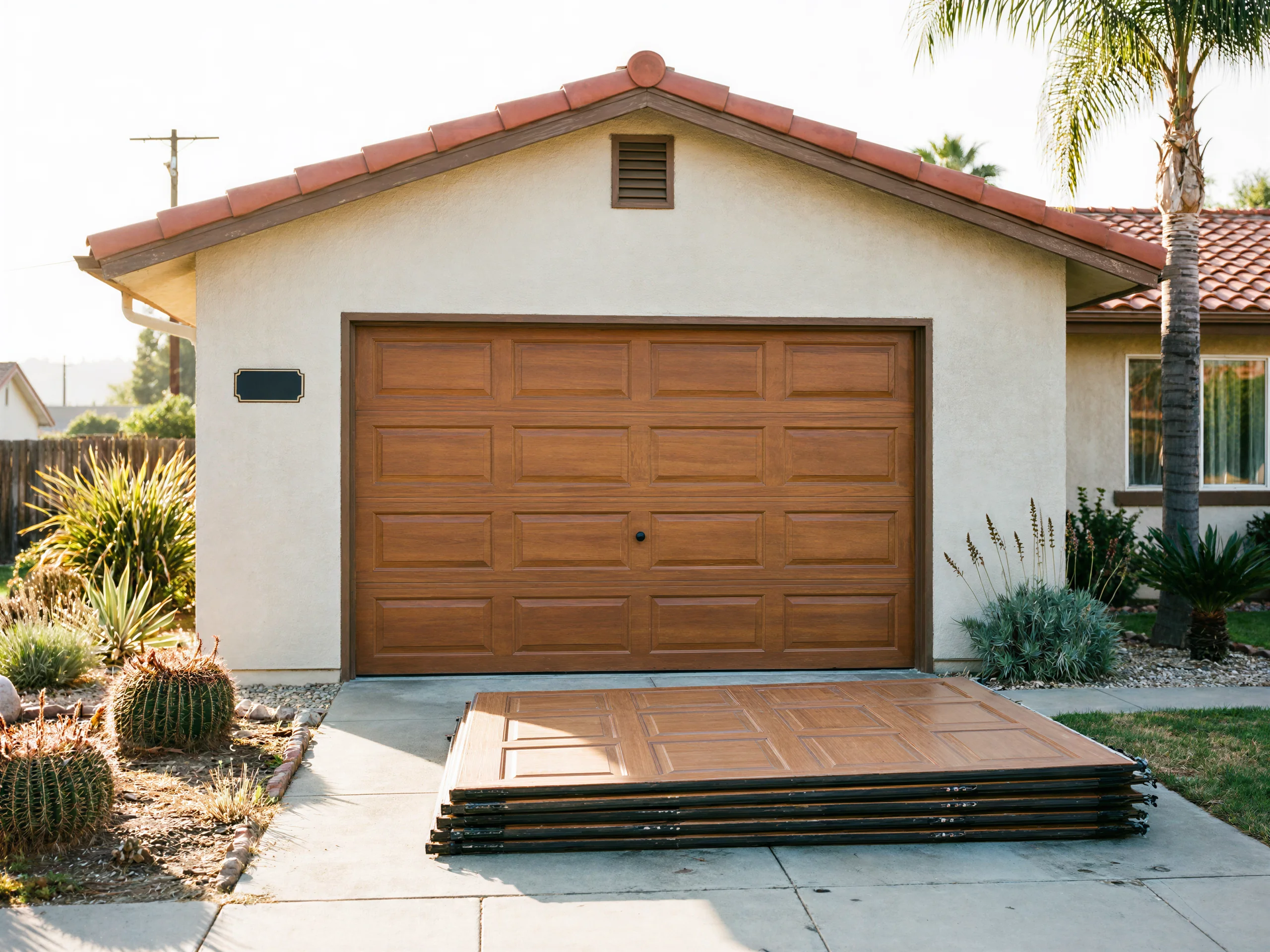
A door that's fully jumped the track and come to rest against the wall is not a DIY fix, regardless of what the internet says about re-seating rollers by hand - there's spring tension involved and it's not worth the risk.
Talk to a local pro
Garage door service in Chino?
Same-day service with honest, upfront quotes.