What the Fix Involves
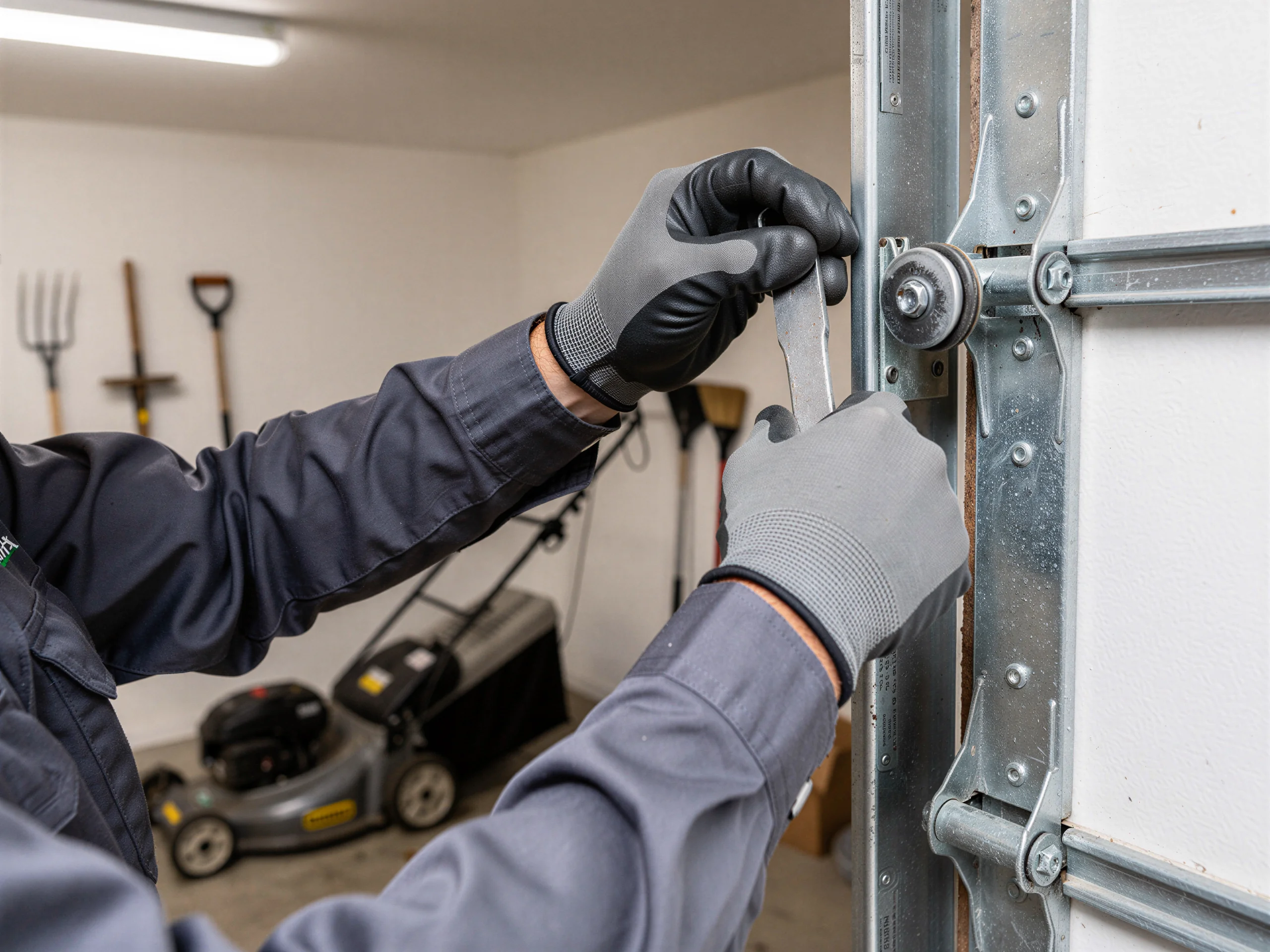
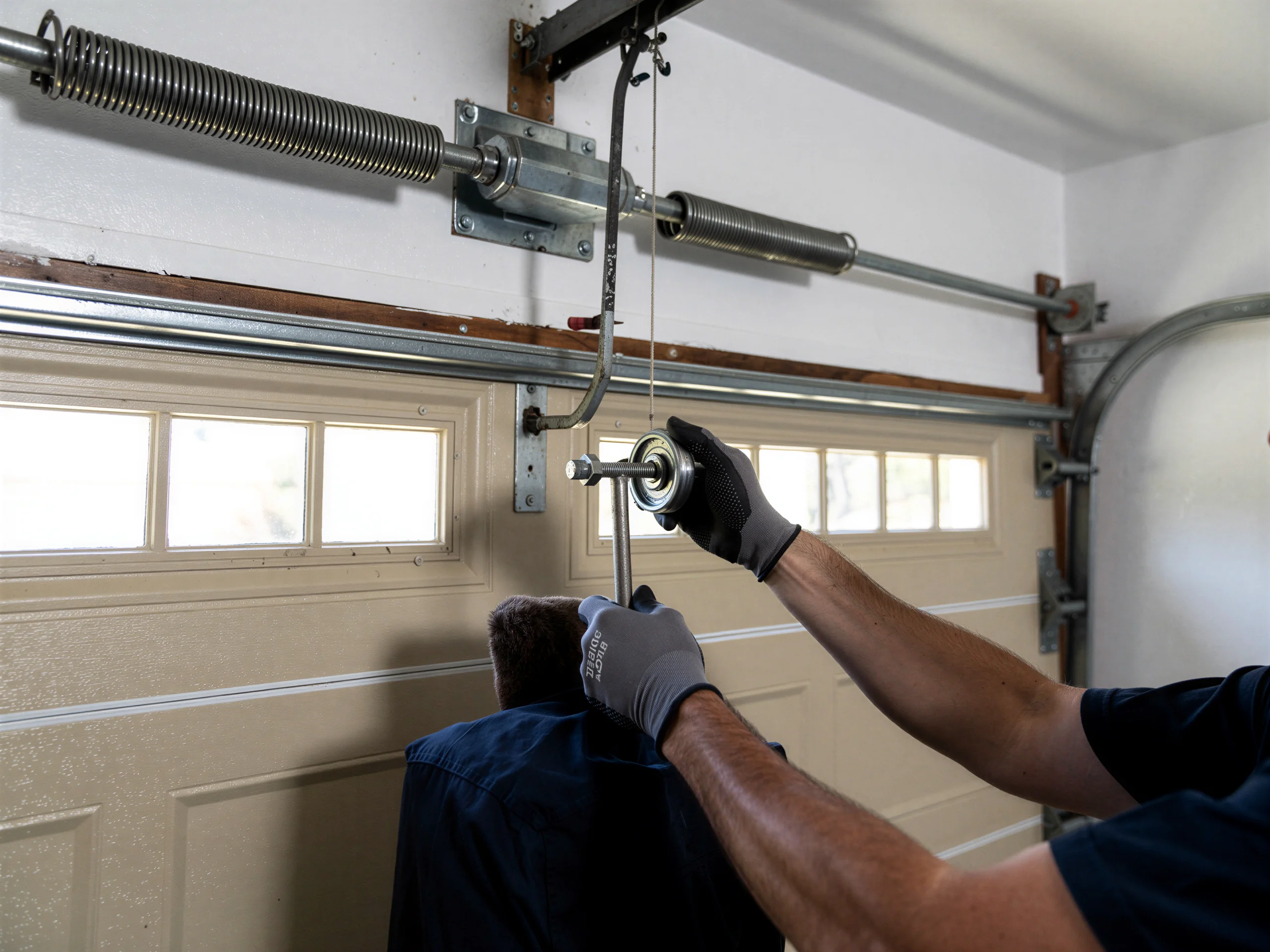
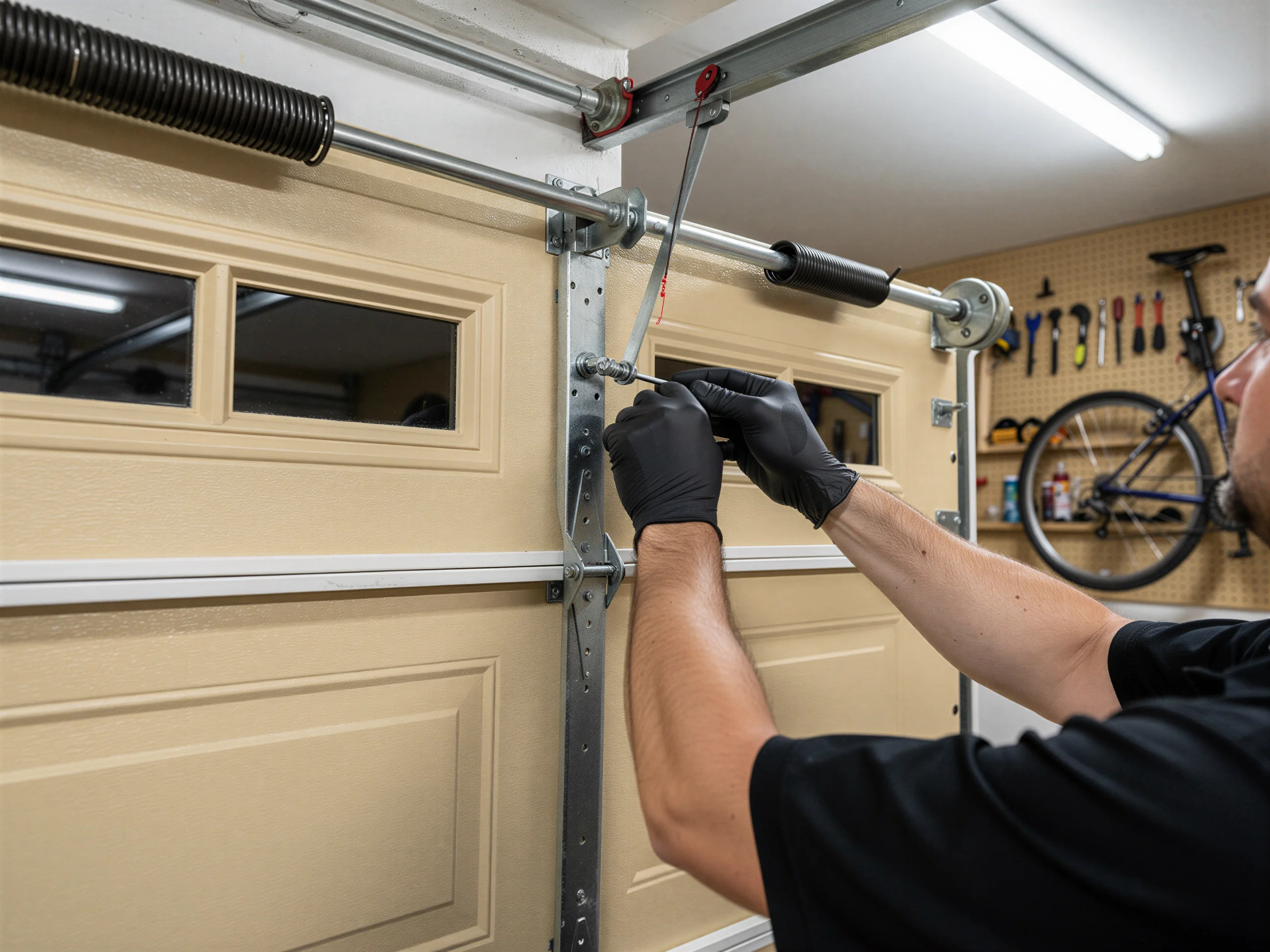
A service call starts with the door itself, not a script. We check spring tension against the door weight, run the balance test by hand with the opener disconnected, and look at every roller, hinge, and cable for wear that doesn't match the rest of the door.
Balance testing matters
In a town where the median home dates to 1972, that balance test matters more than it does somewhere newer, because a lot of torsion springs out there were sized for a door that's been repainted and re-hung more than once since. We also check the opener's force and travel settings, since those get bumped or drift over years of use and are a common reason a door reverses or won't seal at the floor.
Track alignment checks
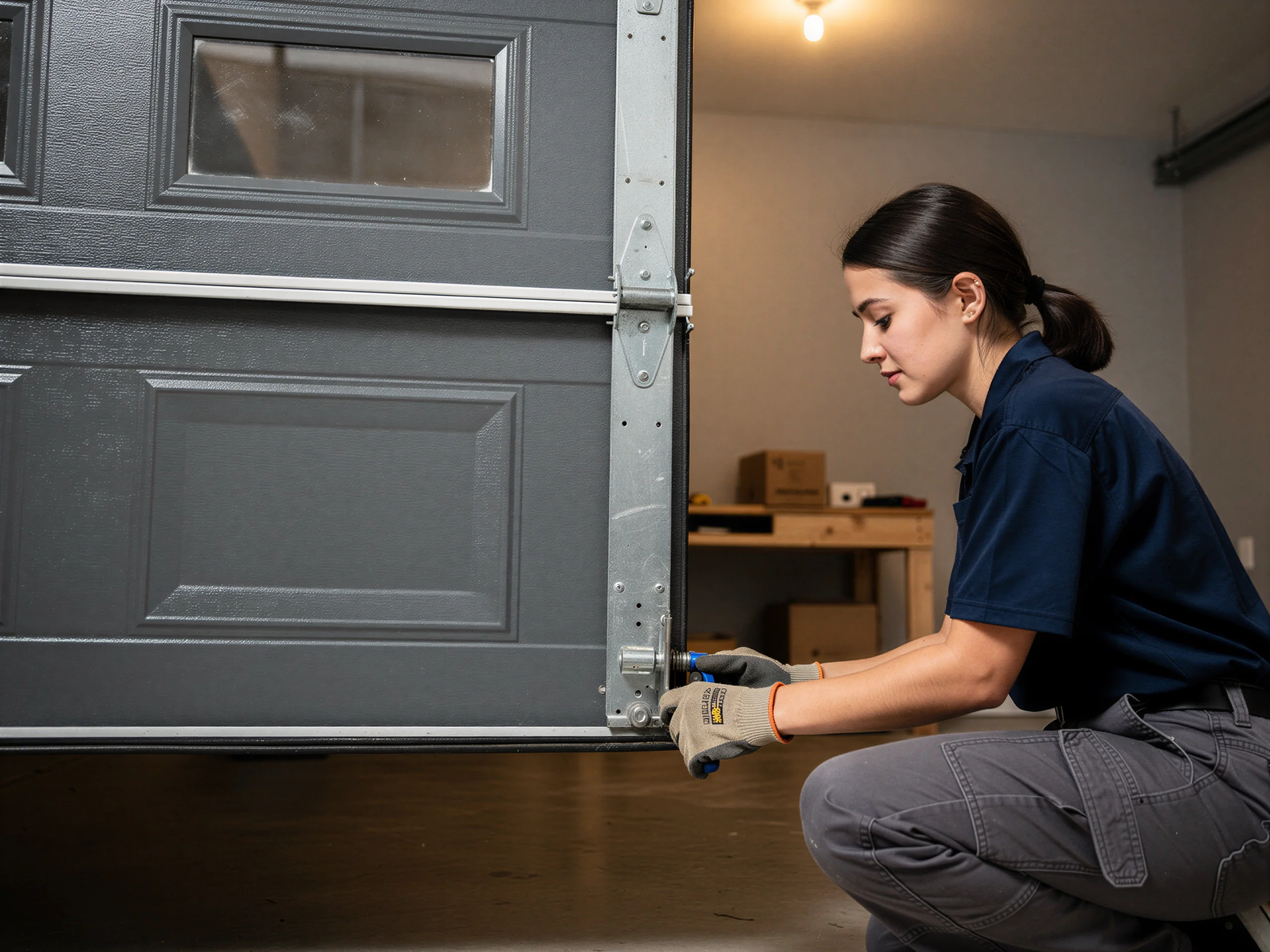
Track alignment gets a look too - on houses from the 1938-2007 build range, the framing has settled enough that tracks which were plumb at install are not always plumb now. What we don't do is replace parts that test fine just because they're old.
Leaving healthy springs alone
If a 1970s torsion spring is still cycling within spec, we'll say so and leave it. Full door balance and hardware wear are the two things that actually predict whether you're looking at a fifteen-minute adjustment or a part that needs to come off the door.
How to Book
The fastest way to get on the schedule is through the contact page at /. We'll ask what the door is doing - slow to close, off the tracks, loud, or simply dead - and whether anyone has worked on it recently, because that changes what we bring on the truck.
No firm phone prices
One honest limitation: we can't quote a firm price over the phone for anything beyond a basic adjustment. A door that looks like a simple roller problem can turn out to be a bent track from a decades-old settling issue, and we're not going to guess at that sight unseen.
Discontinued parts ordering
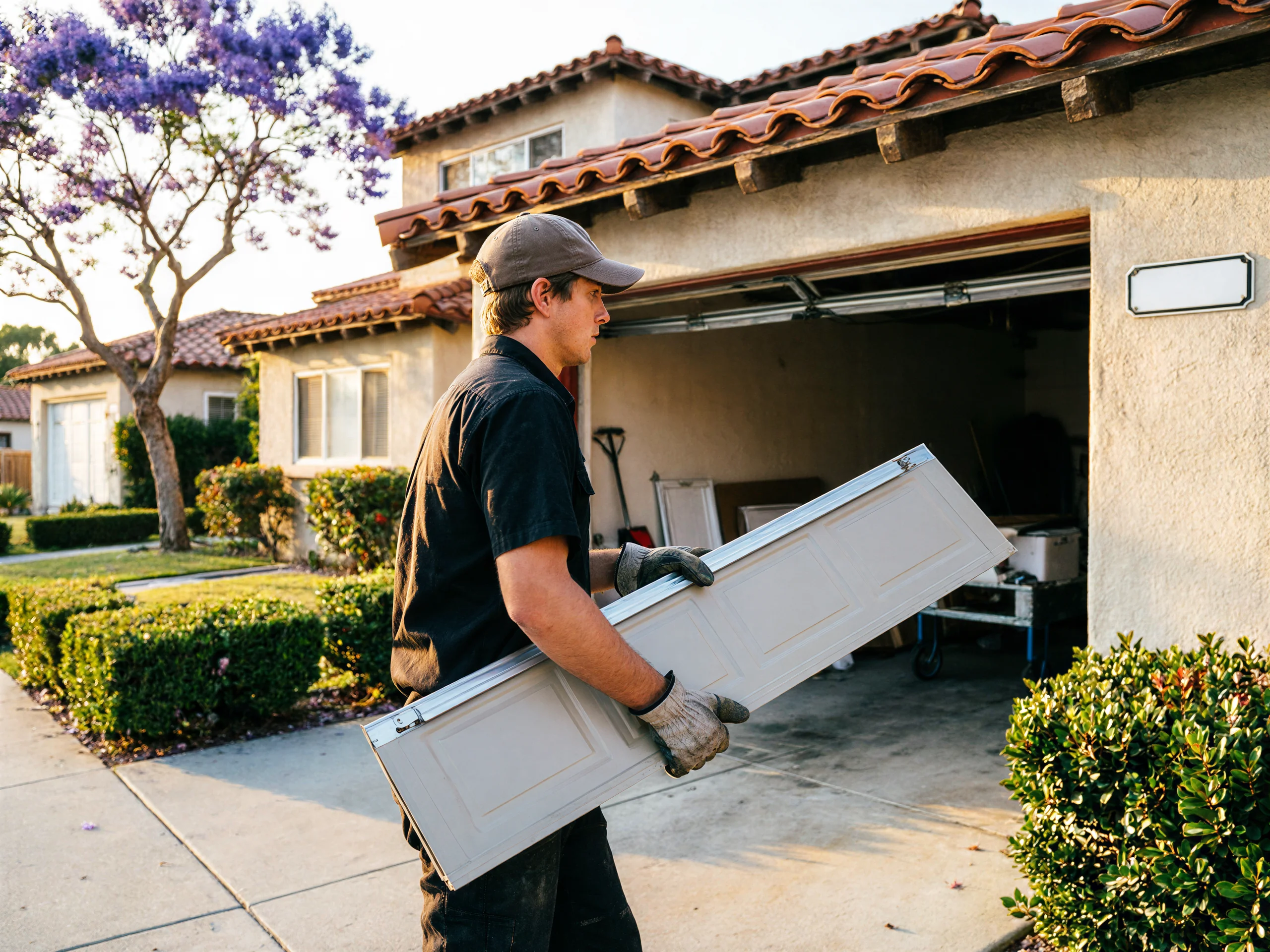
If a part needs ordering - which happens more often on older doors where the original hardware has been discontinued - we'll tell you that up front rather than let you find out at the job.
Flagging the build year
With 221,746 owner-occupied houses across this service area, a fair number of them are sitting on garage door hardware that's original to a build decades back. If that's your situation, mention the approximate age of the house when you call - it tells us what kind of spring and track setup to expect before the truck even leaves.
Why This Fails Locally
Housing in and around Chino went up mostly between 1938 and 2007, with the median build landing at 1972, and across the 39 communities that make up this stretch of the Inland Empire the stock skews heavily toward that same 1960s-70s construction. That means steel doors on torsion hardware that's now outlived its original spring-cycle rating in a lot of garages, even when the door still looks fine from the driveway.
Chino sits in a moderate-heat climate band - not the extreme summer highs you get further out in the desert valleys, but enough sustained heat to dry out nylon rollers and harden factory grease over twenty or thirty years. That combination of older hardware and steady summer heat is the specific reason springs and rollers fail here on a schedule tied to the house's age rather than to any one storm or season.
It's a slower failure than a flood or a windstorm would cause, which is why a lot of these doors keep limping along years past when the hardware should've been serviced. The symptoms show up gradually, which is exactly what makes them easy to ignore until the day they don't.
How It Shows Up
On a house from this era, the first sign is usually noise - a grinding or popping at the top of the door travel that wasn't there a year ago.
Hardened plastic rollers
That's often a roller that's gone from nylon-smooth to hardened plastic, a direct result of decades of summer heat cycling through the garage. The second sign is a door that closes unevenly, dropping faster on one side than the other.
Gradual loss of lift
That points to spring fatigue, and on original 1960s-70s torsion setups, fatigue shows up as a slow loss of lift rather than a sudden snap - the door just gets heavier to the opener a little more each month until the opener starts straining or reversing mid-close. A third pattern, more specific to the older stock here, is a door that binds partway up or down on one track but not the other.
Settling-caused track misalignment
That's usually track misalignment from decades of minor house settling rather than anything wrong with the door itself. None of these are emergencies the day they start. They're the kind of thing worth a service call before the spring lets go entirely, which is a different and more disruptive job.
Talk to a local pro
Garage door service in Chino?
Same-day service with honest, upfront quotes.