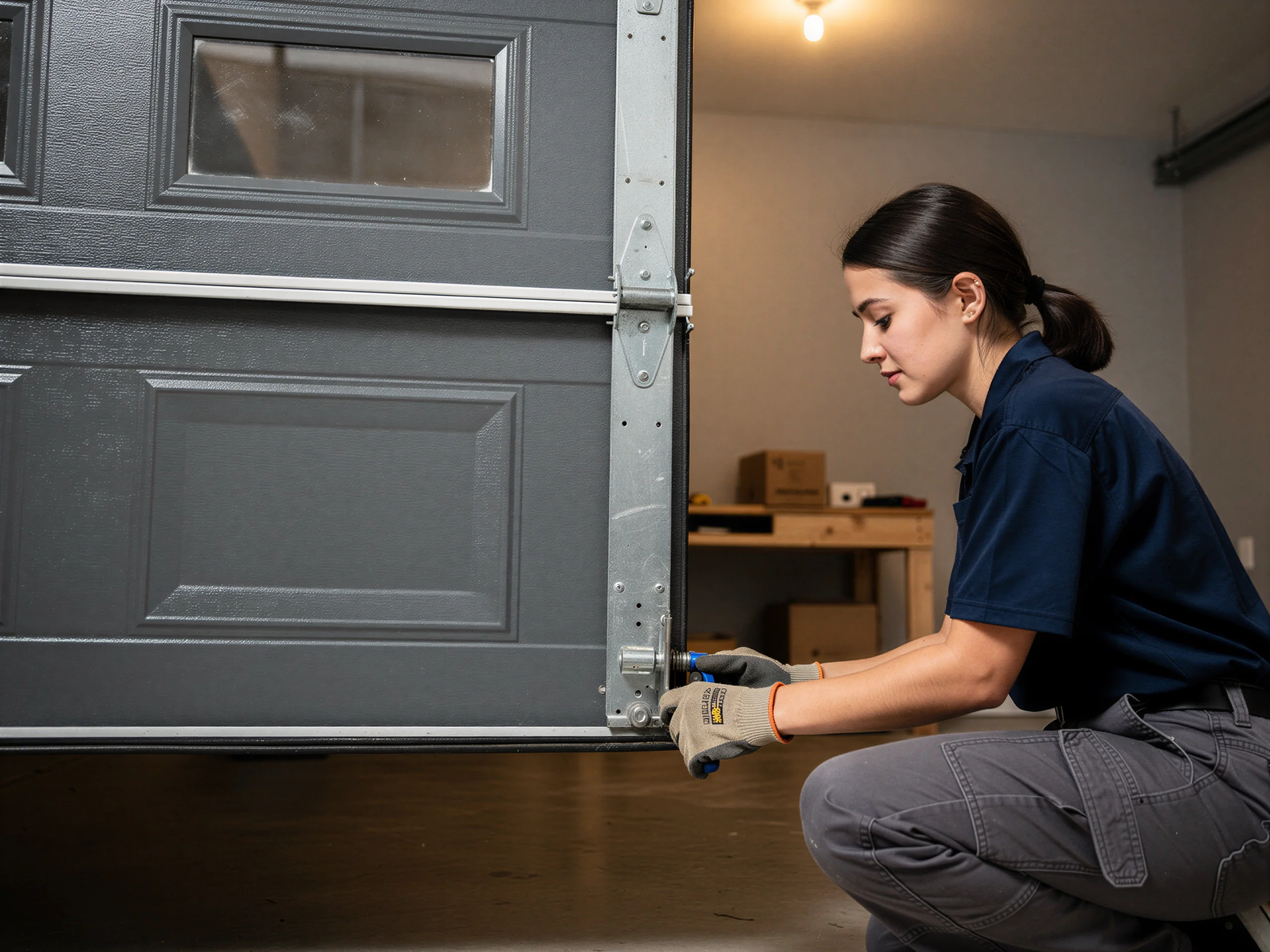
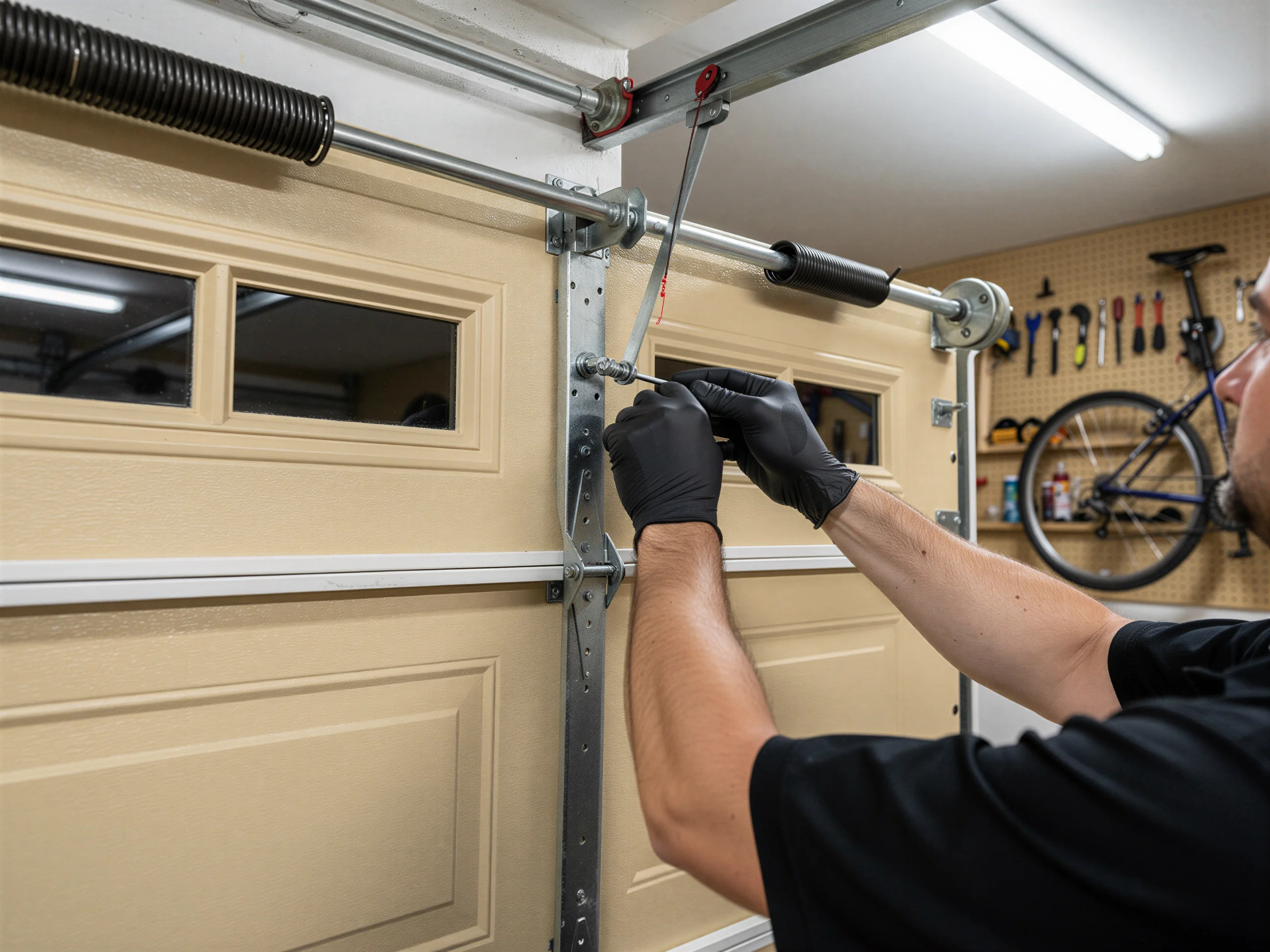
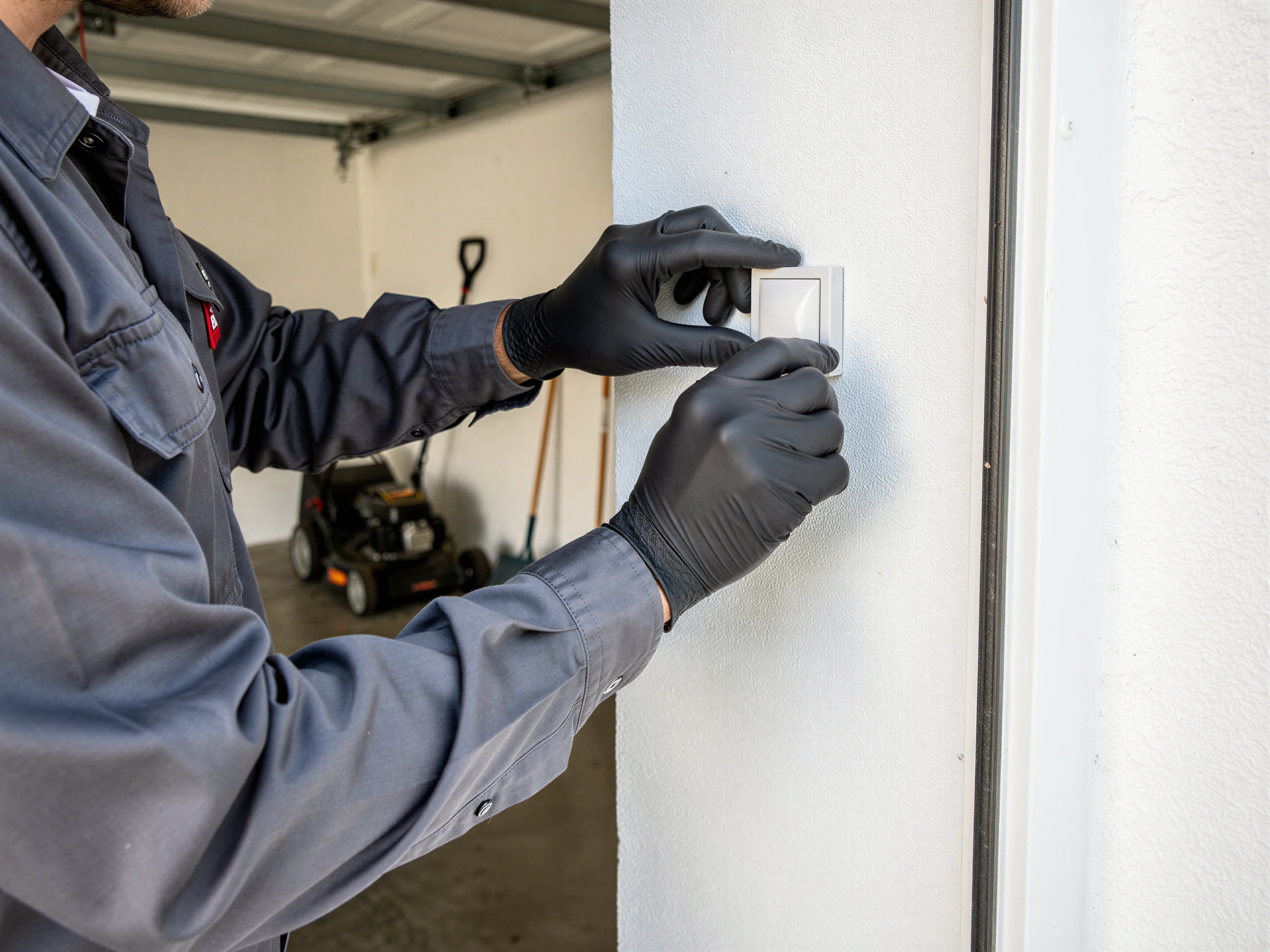
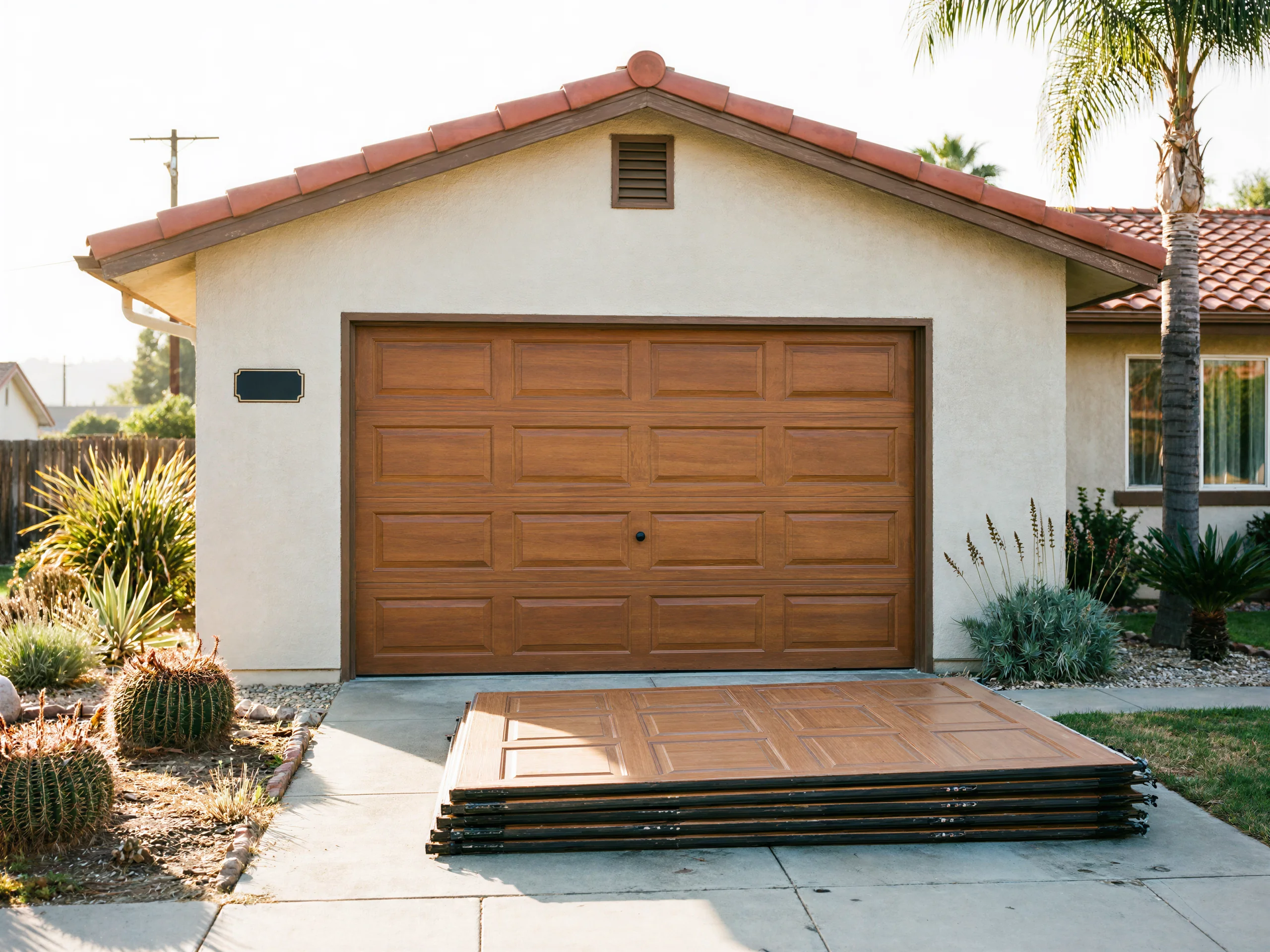
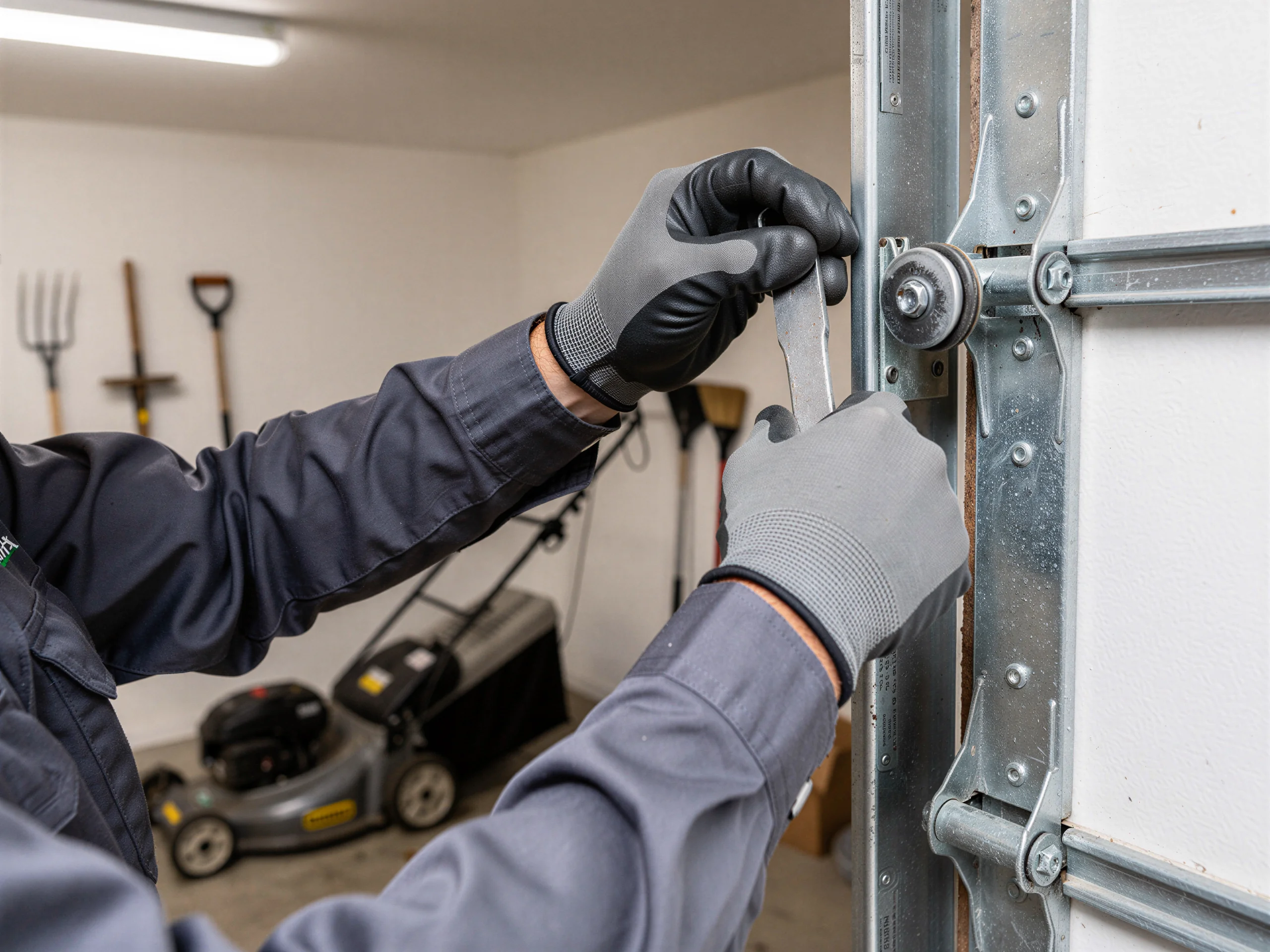
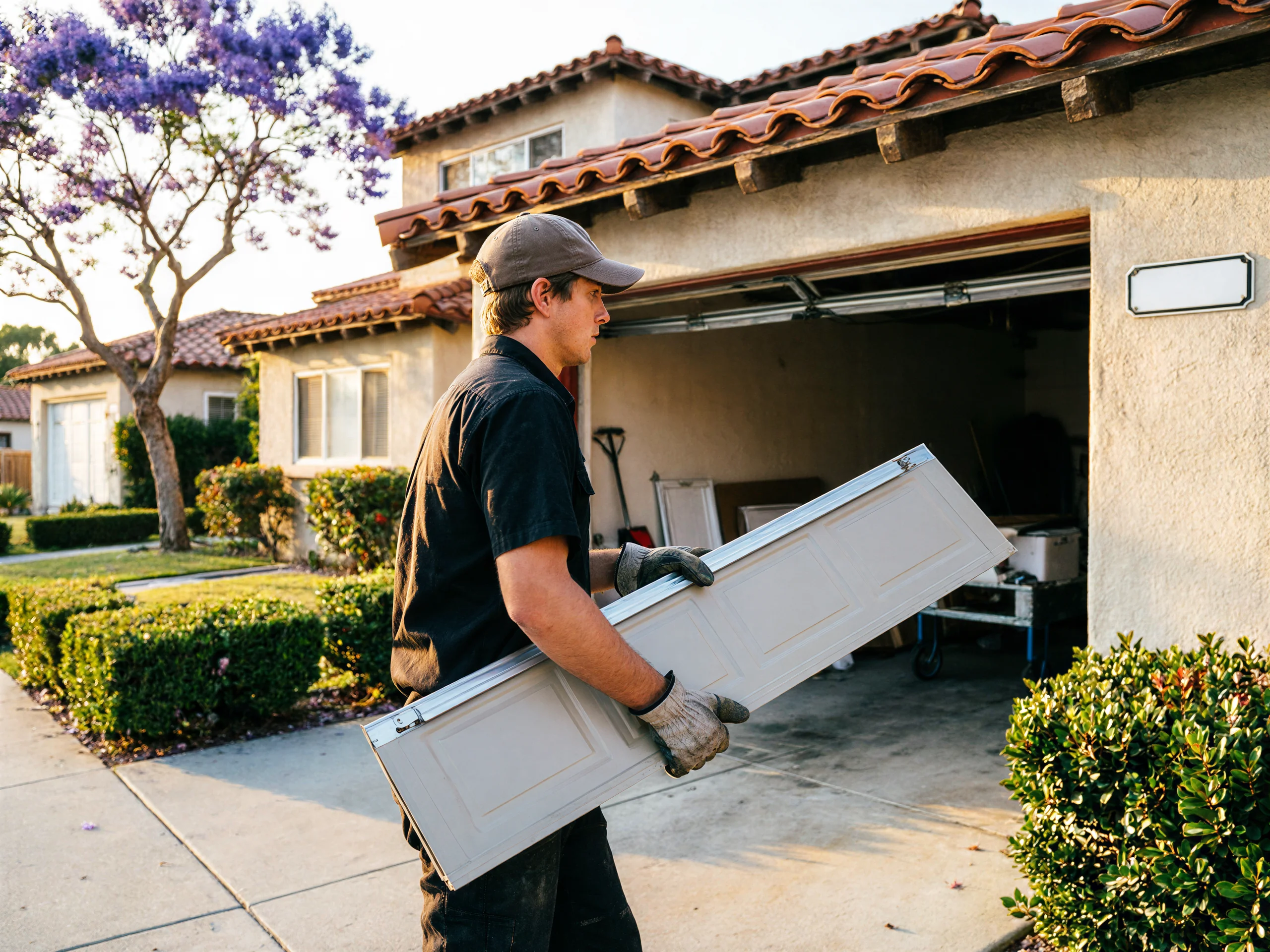
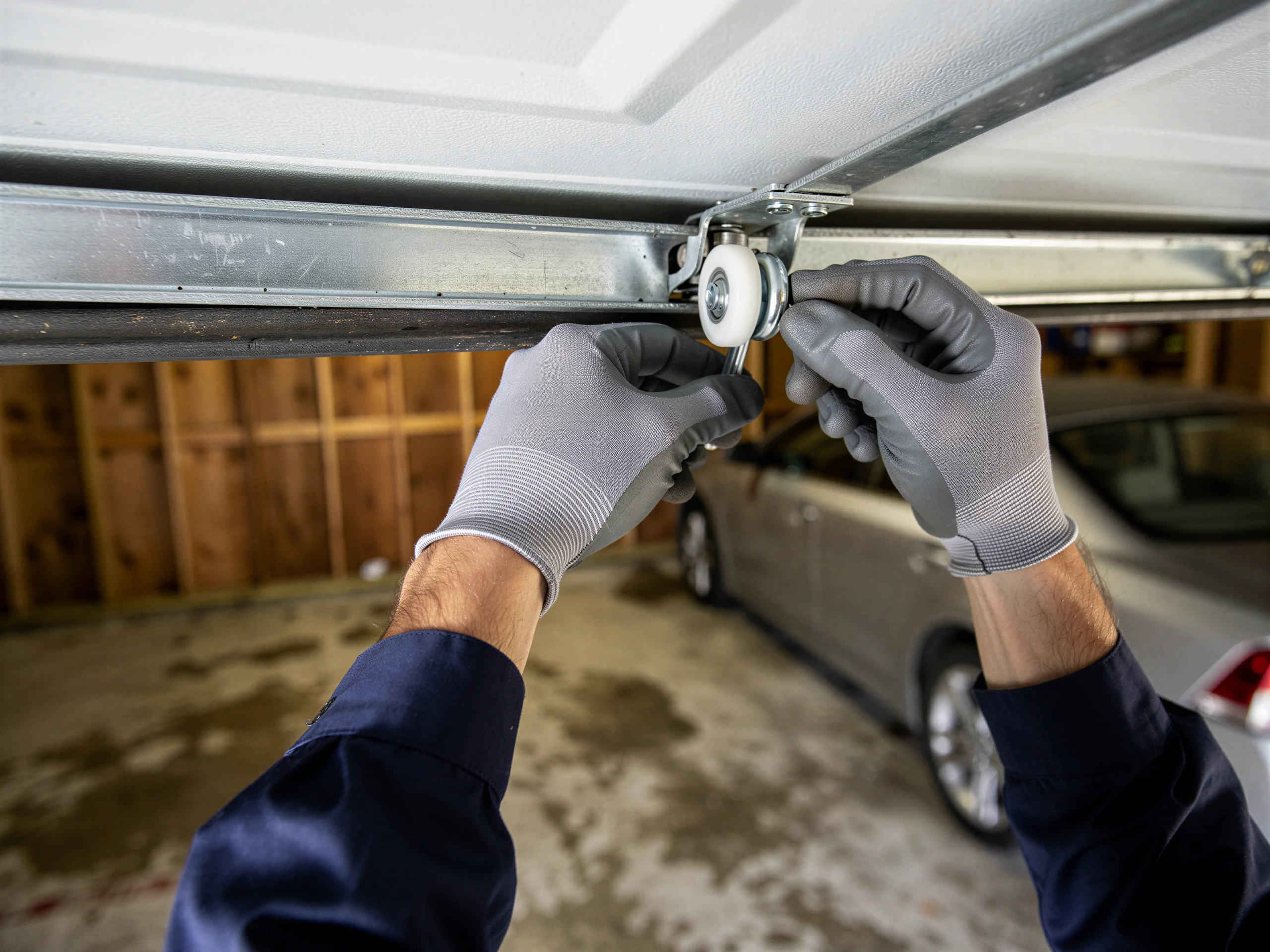
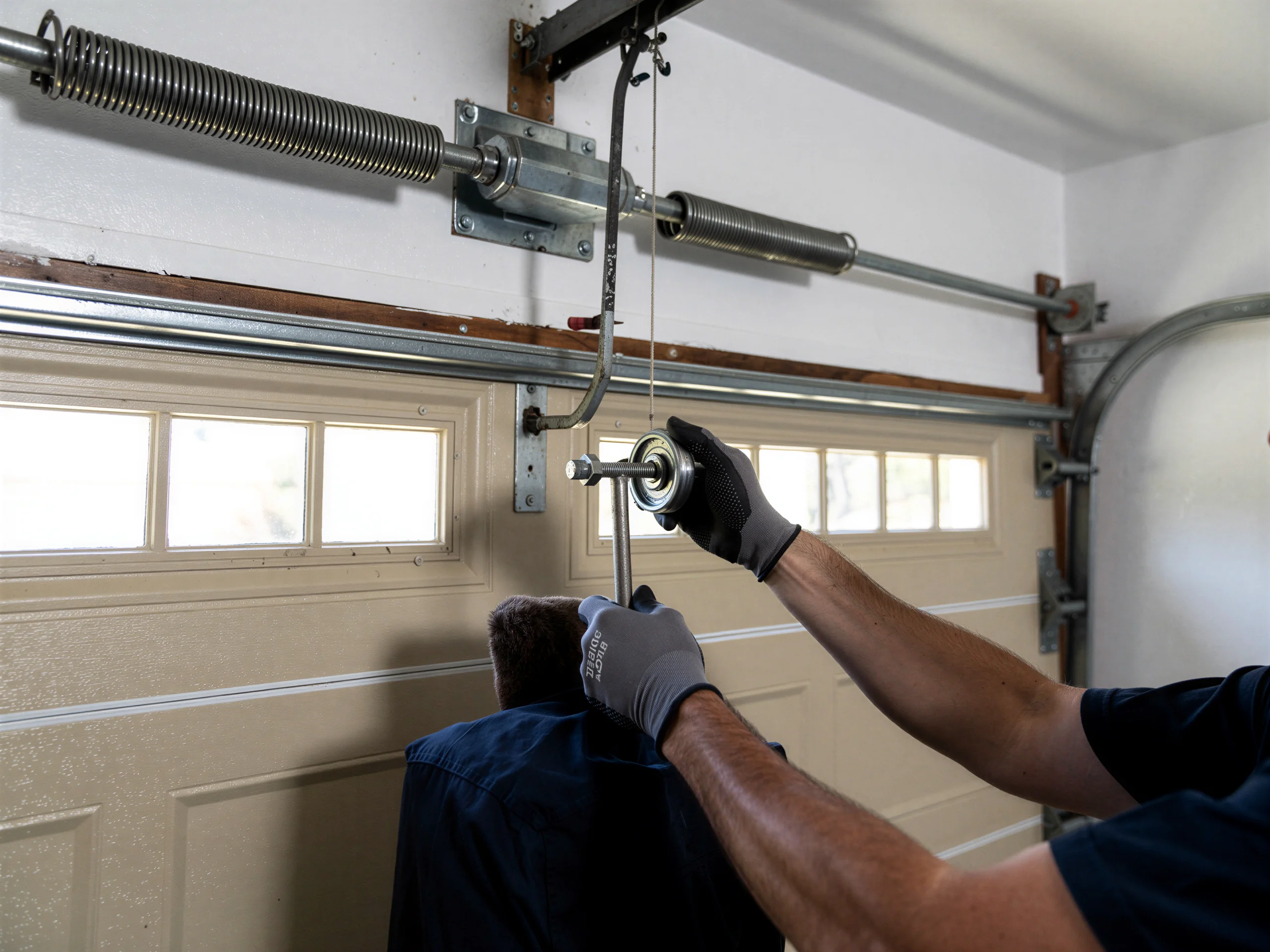
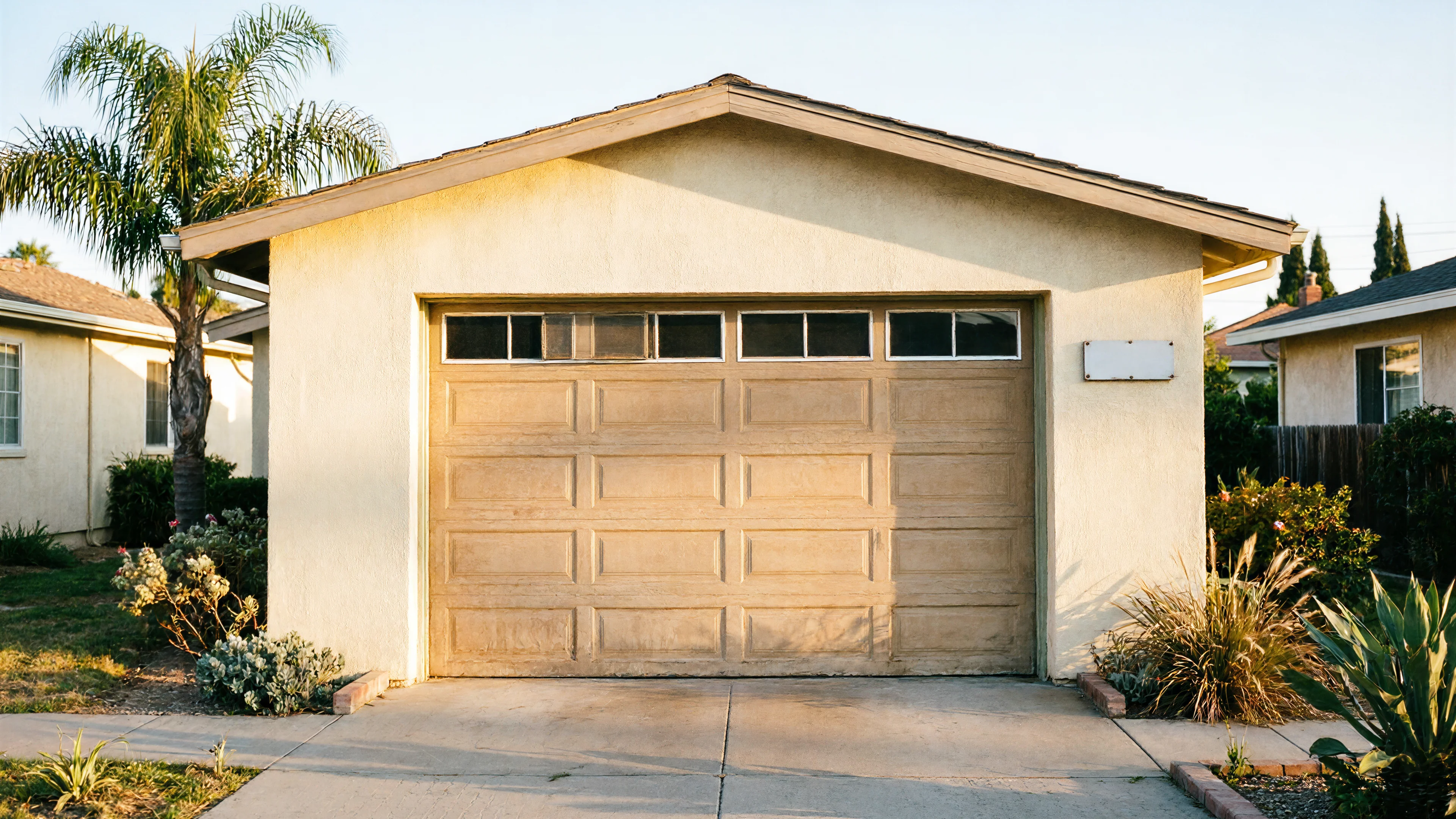
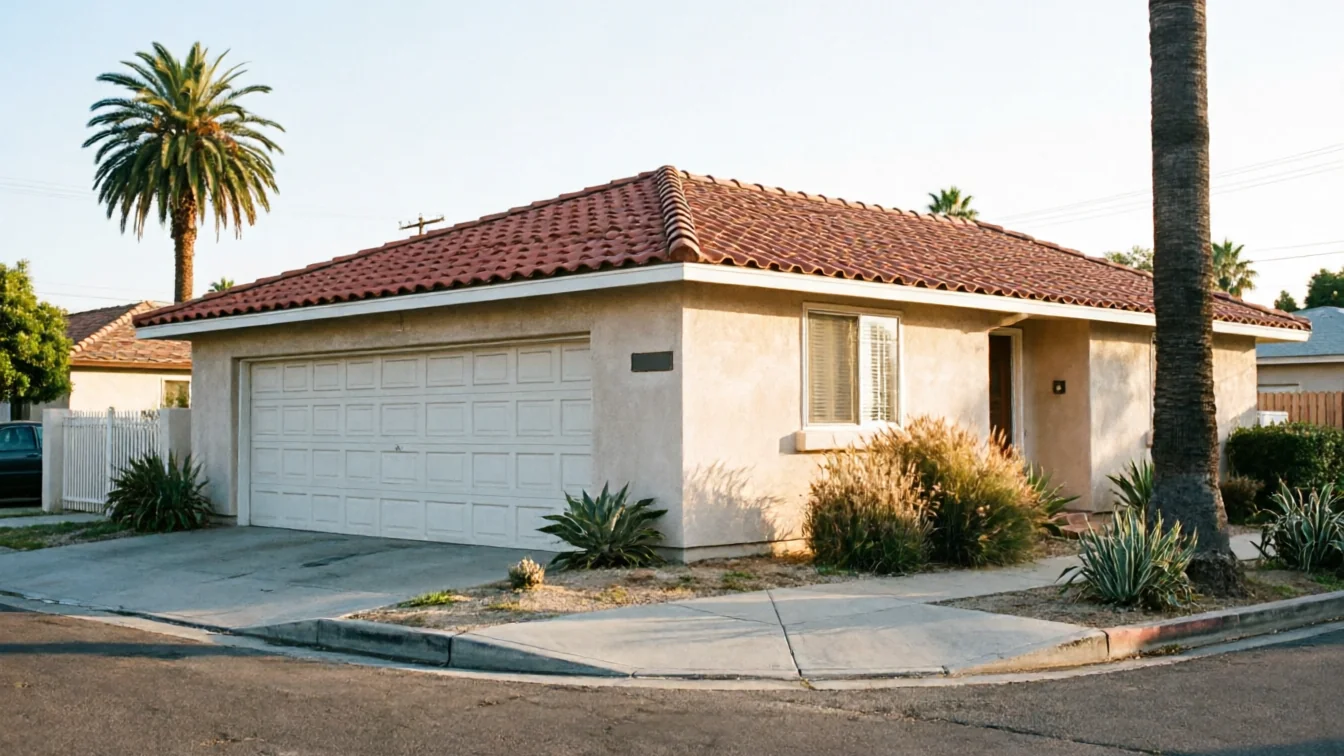
Newer construction means newer failure points, not fewer. These doors carry extension or torsion springs rated for extra weight, and when a cable does go, the heavier door comes down harder and faster than an older lightweight door would. Openers here are almost always belt or chain-drive units with rolling-code remotes and safety sensors wired to code - when those sensors drift out of alignment, the door simply won't close, and no amount of pressing the button fixes that without a physical adjustment. We also run into insulated steel panels that dent rather than crack, which is good news for structural integrity but means a cosmetic hit can still throw off the track alignment. Honest limitation: if a panel on one of these newer insulated doors is badly dented, color-matching a single replacement panel isn't always possible since manufacturers change finishes and discontinue runs - sometimes the whole door is the more sensible fix, not just the damaged section.