What a Replacement Door Really Needs to Handle in Chino
Chino's housing stock runs 1938 to 2007, most of it 1960s-70s builds.
Read moreBlogChino, CA · 4 min read
Chino's housing mostly dates to the 1960s and 70s under a moderate heat climate band. Here's how to tell if your original door is worth repairing or replacing.
Local detail
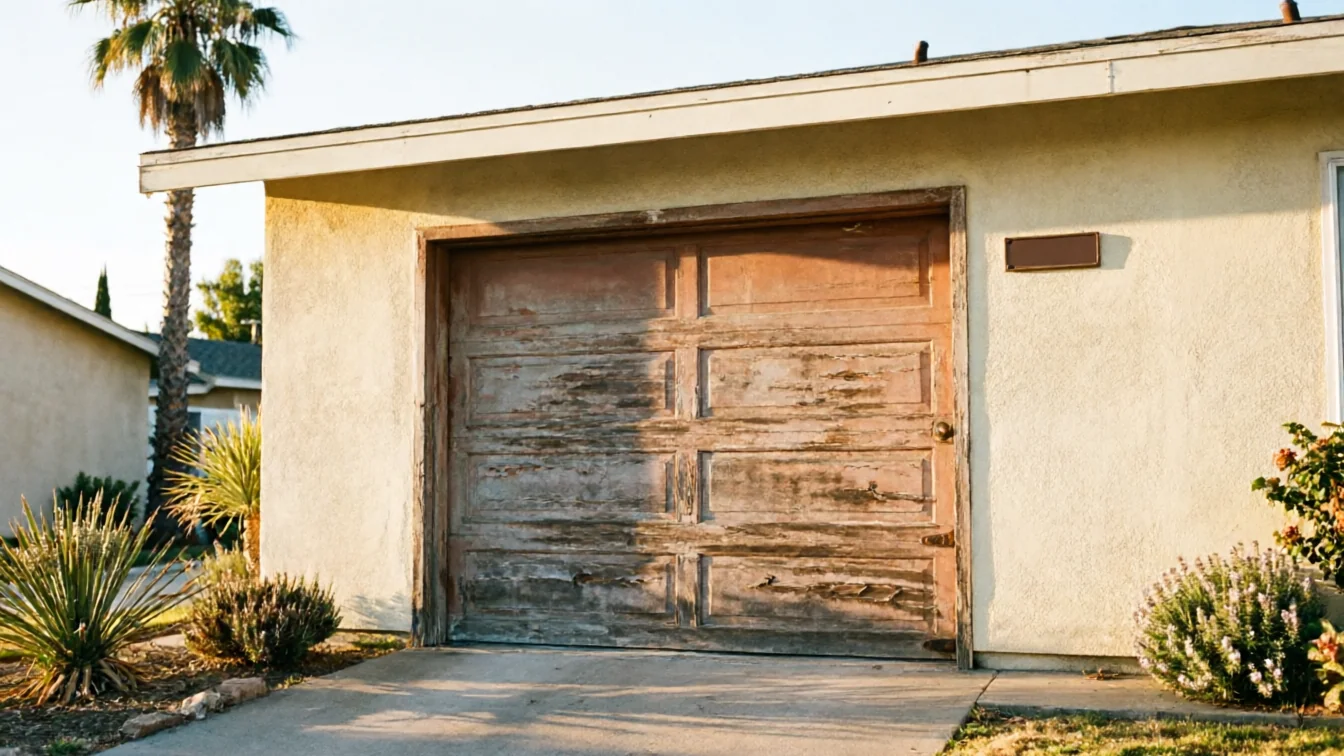
Chino sits in a moderate heat climate band, which means the seasonal swing on a garage door here isn't dramatic, but it isn't nothing either. A door doesn't get the hard freeze-thaw cycling you'd see further inland or at elevation, so you're not fighting ice-cracked panels or frozen tracks. What you do get is steady heat exposure through the summer months that dries out lubrication, shrinks weatherstripping, and slowly stiffens the nylon rollers on doors that have been sitting in a sun-facing driveway for decades. It's a slower kind of wear than a town with real winters, but it adds up the same way, just quieter. If your door has gone a few years without a tune-up, this is usually when the symptoms show up: a spring that's lost tension, a track that's walked slightly out of alignment, hinges that squeal on the way up. None of that is dramatic on its own. It's the accumulation that gets expensive if it's ignored.
The area
Most of the housing stock in and around Chino went up between the 1960s and 70s, with the broader build range running from 1938 to 2007 and a median year of 1972. That matters for garage doors specifically because a door installed when a 1970-era house was built is almost certainly not the door on it now, but the opener, the track mounting, and sometimes the header framing often are original or close to it. A lot of what we see on these jobs is a mismatch: a newer door bolted onto 50-year-old track brackets, or a modern opener fighting a spring system sized for a much lighter door. That combination is what actually breaks, not age by itself. A door from 1975 that's been maintained can still run fine. A door with mismatched parts from three different decades is the one that strands someone in the driveway.
What we find
Because Chino sits in that moderate heat band rather than a severe one, you're not dealing with the kind of thermal stress that warps panels or snaps springs outright from cold. The wear here is slower and more mechanical: steel expands slightly in summer heat, which can tighten tolerances on an already-misaligned track, and extended dry heat pulls moisture out of rubber seals and weatherstripping faster than people expect. On a house built in the 1960s or 70s, the original garage opening and header often weren't framed with today's spring and track specs in mind, so a door that's been fine for years can suddenly bind or drag once the heat has worked on the hardware long enough. It's rarely one event. It's a slow accumulation of small tolerances going out of spec until the door starts telling you about it.
How we work
If your door is original to a 1960s or 70s build and it's still running on its first spring and opener, that's worth a second look before you spend money chasing individual symptoms. A worn spring or a bent roller is a straightforward fix. A door where the track brackets, the header, and the opener are all different eras is a different conversation, and sometimes the honest answer is that patching one more part isn't worth it when the rest of the system is close behind it. We don't try to stretch a repair past where it makes sense. If a part we need isn't something we carry on the truck, we'll tell you that too rather than guess at a fix. Call before a spring fully lets go, not after. A door that's starting to sag on one side or groan on the way up is still a repair call. One that's already come off track is a bigger job.
Questions
Often yes, if the spring and track system match the door and haven't been mixed with newer parts that don't fit the original opening. A lot of Chino's housing dates to that era, and a well-maintained door from then can still run fine. The problem shows up when parts from different decades have been patched together over the years.
Not dramatically. Chino sits in a moderate heat band, so you're not dealing with freeze damage or extreme thermal swings. The wear is slower: steady summer heat dries out weatherstripping and lubrication over years, which eventually shows up as stiff rollers or a dragging track.
If your house was built in the 1960s or 70s, which covers most of this area, check whether the track brackets and header framing look original versus the door panel and opener, which are more commonly replaced. A mismatch between old framing and newer equipment is a common source of recurring problems.
Recommendation
More garage door guides for Chino homeowners.
Chino's housing stock runs 1938 to 2007, most of it 1960s-70s builds.
Read more
Chino's 1960s-70s housing stock and valley heat swings turn normal door wear into specific sounds.
Read more
Chino's garage doors date mostly to the 1960s-70s building boom.
Read moreReady when you are
Chino Garage Door Co repairs and installs garage doors, springs and openers in Chino, CA and the surrounding area.