What It Costs
We don't have a published price list to quote here, and giving you a number without seeing the door would be a guess dressed up as a fact.
Income supports replacement
What we can tell you is how the decision tends to play out. Eastvale's median household income is $161,322, well above the income level where replacing a door instead of patching it stops being a stretch.
Replacement math on repairs
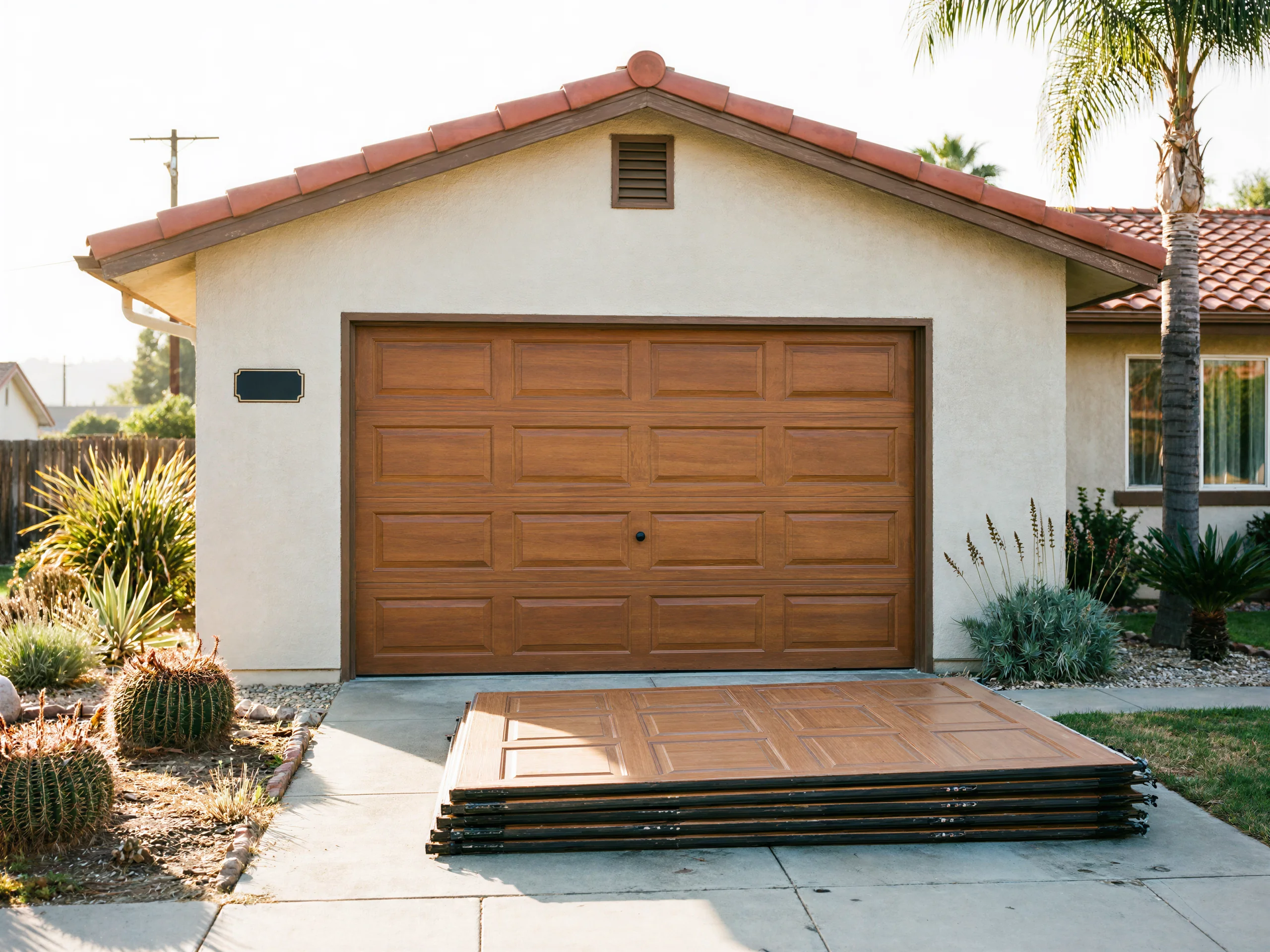
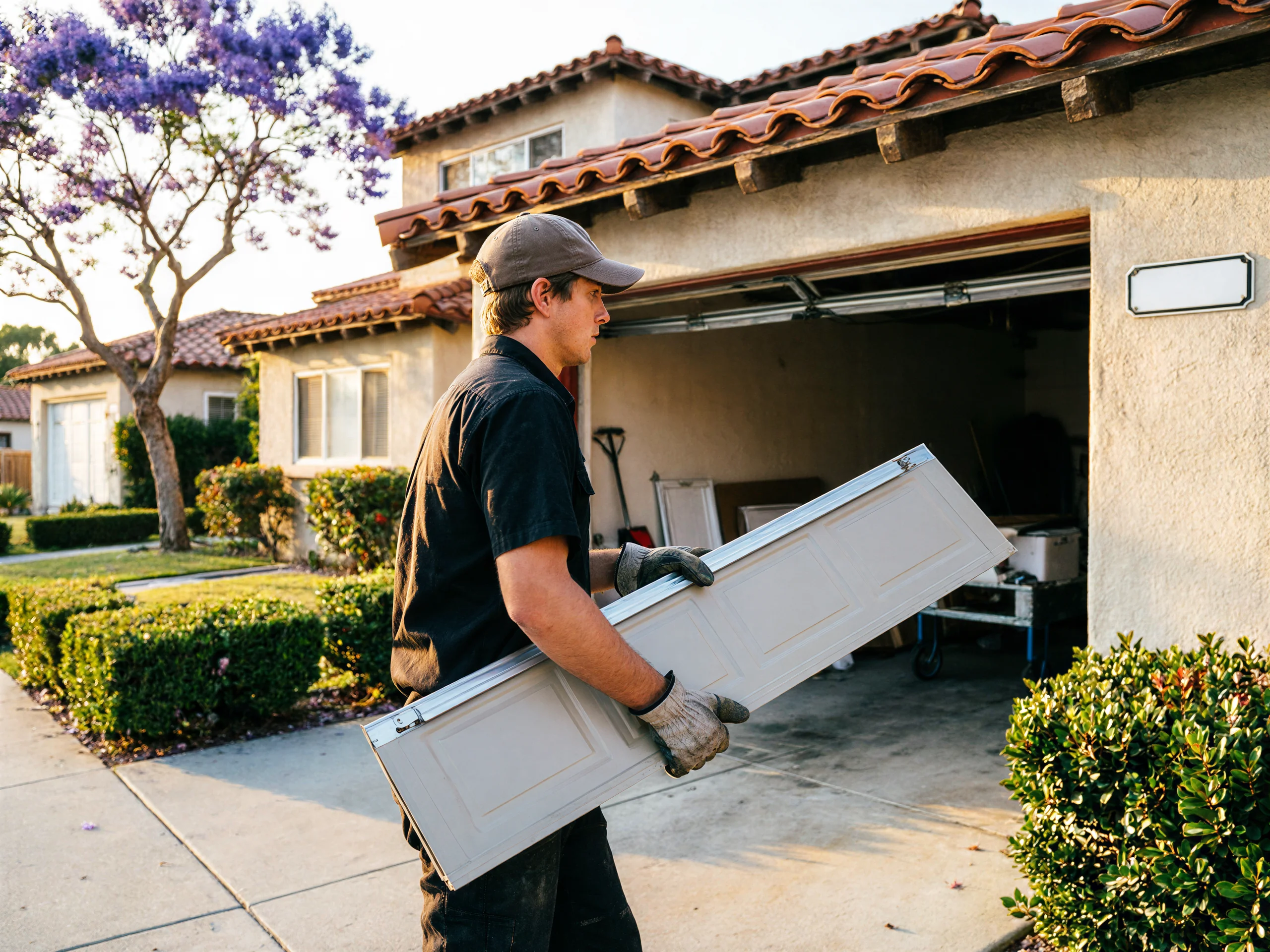
For a lot of households here, when a torsion spring goes on a door that's also showing cracked panels or a pitted opener board, the math points to replacement rather than a second repair call in two years.
Budgets shape repair choice
That's not true everywhere in the service area - in neighborhoods built decades earlier, where household budgets run tighter, a straight spring swap on an otherwise sound door is almost always the right call. Which way you lean depends on the condition of the door itself, not just its age, so the honest answer is that we tell you after we're in your garage, not before.
Can You Do This Yourself
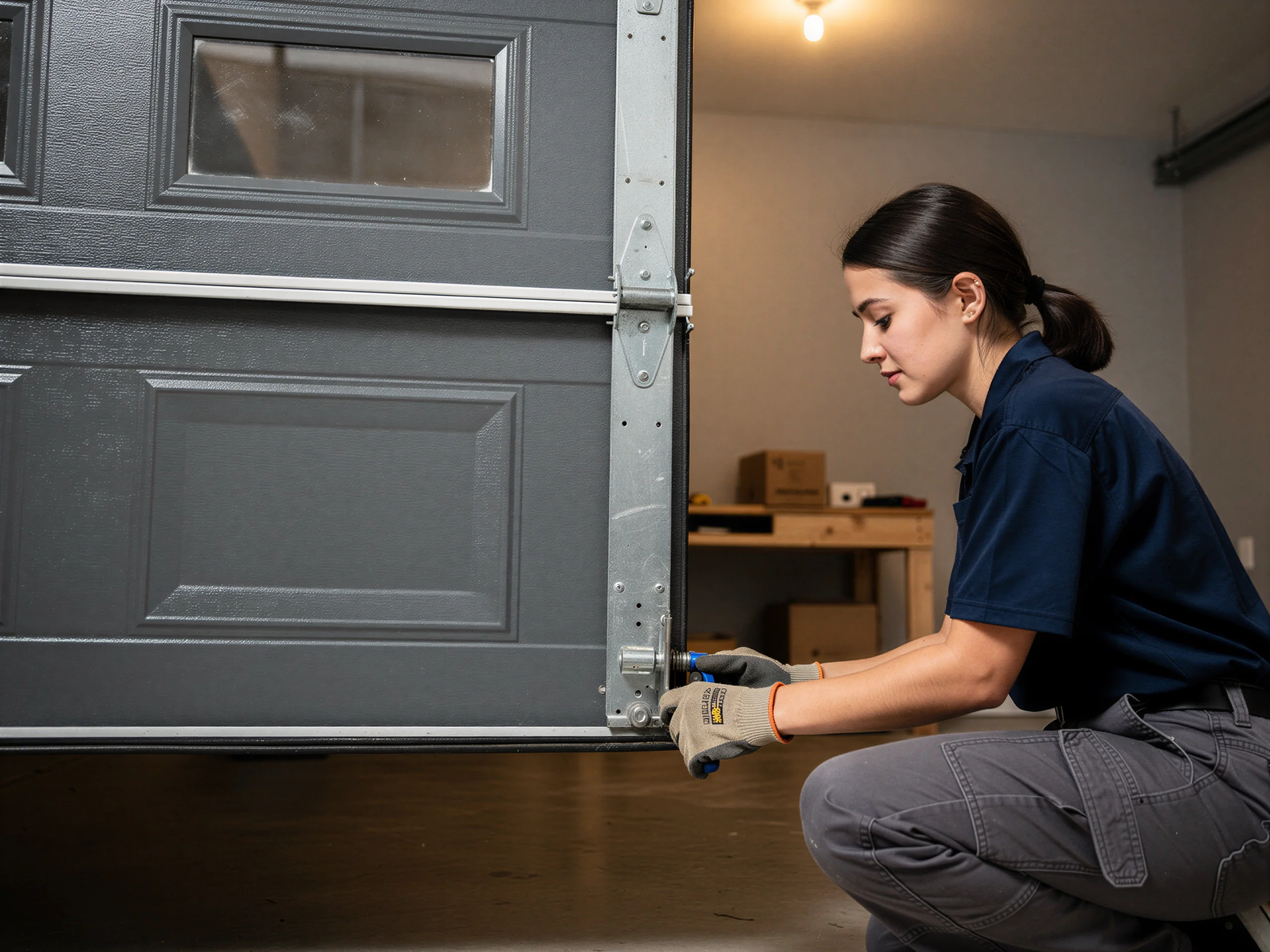
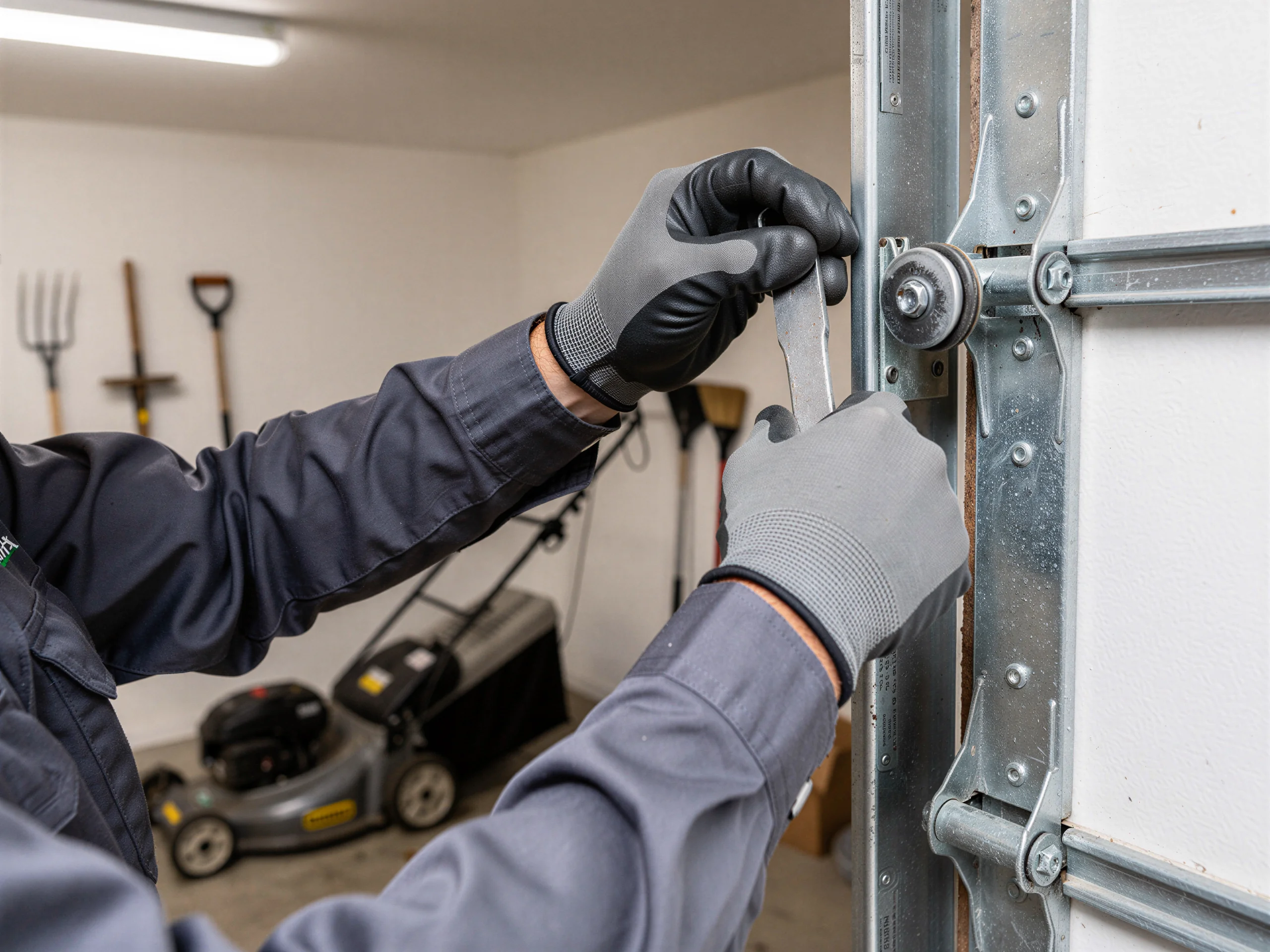
A torsion spring under tension can break a hand or worse, and that doesn't change because the door is newer. We won't walk you through adjusting or replacing one over the phone, full stop. Where a homeowner can reasonably do their own work: lubricating rollers and hinges, tightening loose track brackets, swapping a worn remote battery, or replacing bottom weatherstripping on a door that still opens and closes true. If the opener's circuit board is the problem, that's a part we may need to order rather than carry on the truck - newer opener models don't all use interchangeable boards, and that's a real limitation, not a sales line. If your door is dropping unevenly, slamming the last foot of travel, or the cables look frayed, that's a call-us job, not a weekend one.
Why This Fails Locally
The failure pattern in Eastvale traces straight back to the build date. Houses here went up mostly around 2007, well after the 1960s-70s wave that covers most of the broader Chino service area, so the doors and openers are a newer generation of hardware with their own weak points - sensor brackets, foam-backed insulated panels that delaminate at the seams, and torsion springs sized by the builder for cost rather than the heavier insulated doors some owners have since added.
Steady heat dries seals
Our moderate heat band means these garages don't see the extreme swings of a true desert climate, but they do bake for long stretches, and that steady heat is what dries out seals and stiffens lubricant years before a door in a cooler climate would show the same wear.
Slow drift, predictable sequence
None of this is dramatic - it's a slow mechanical drift that shows up as a noisy door, then a stuck door, then a dead opener, usually in that order.
How to Book
We run out of Chino, about 4 miles from Eastvale, so there's no separate branch or depot here - a truck comes from Chino for every job. We're not going to promise a same-day window we can't back up; book through the Eastvale service page and we'll confirm timing when we have your address and a description of what the door is doing. If you're not sure whether what you're hearing is the spring, the opener, or just a dry track, say so - that's a normal starting point, not a problem. For the rest of what we do across the service area, including services this page doesn't cover, the Chino page has the full list.
What Can Go Wrong
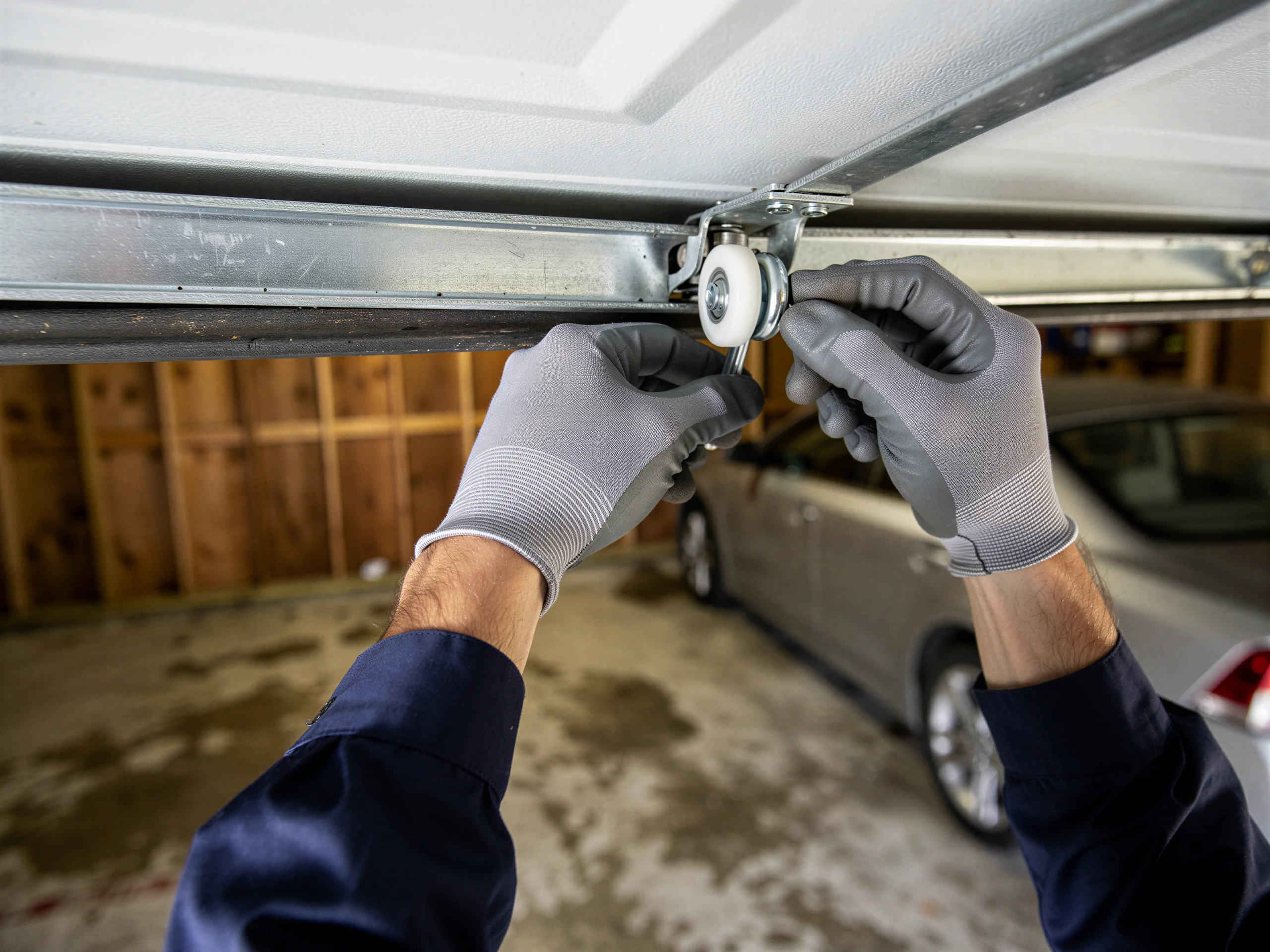
Eastvale's median year built sits around 2007, which puts most garage doors here close to twenty years old - not ancient, but old enough that the factory torsion springs are nearing the end of a normal service life and the nylon rollers that came standard on builder-grade doors are starting to chip and bind in the track.
Center-mount torsion failures
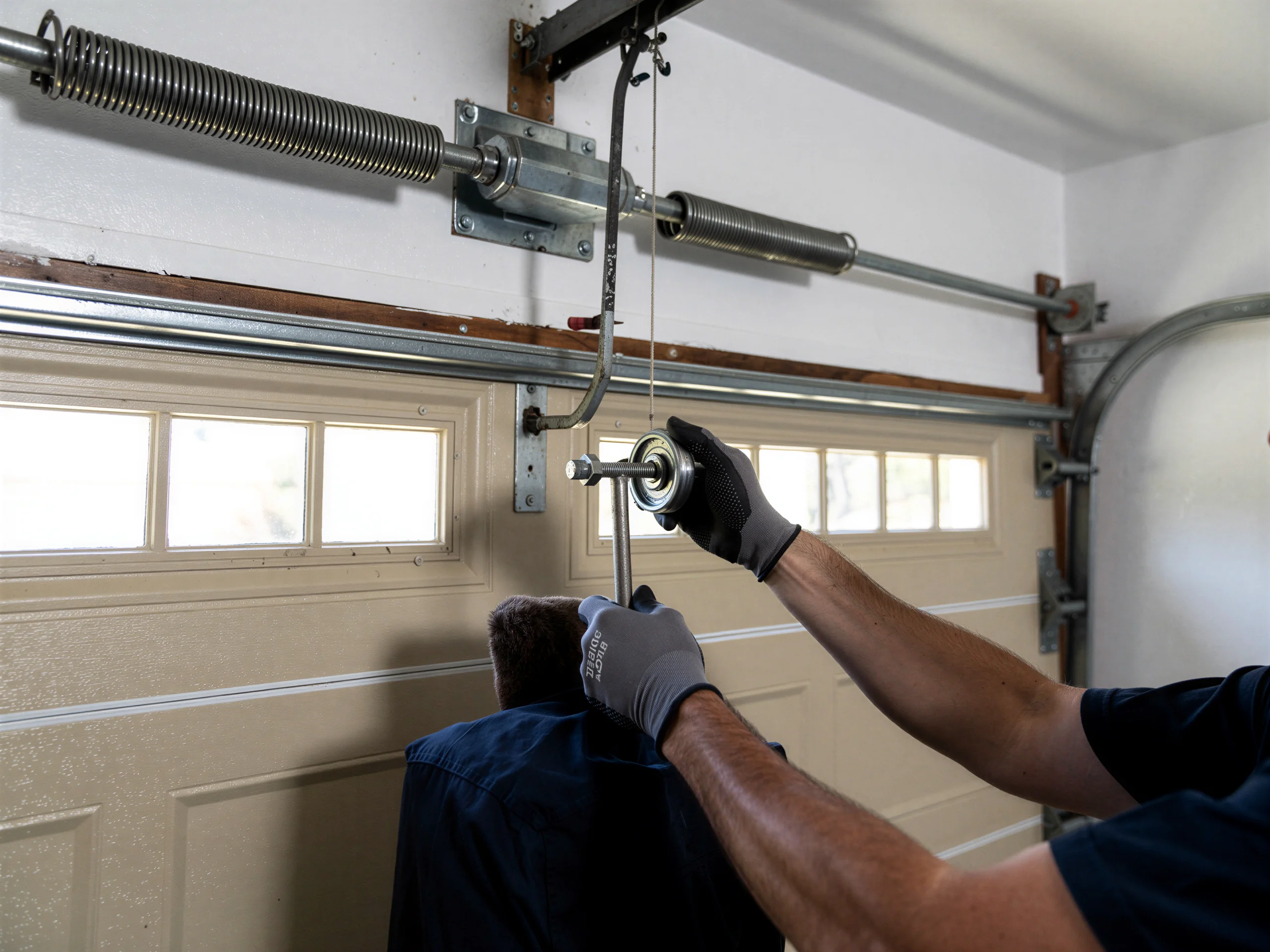
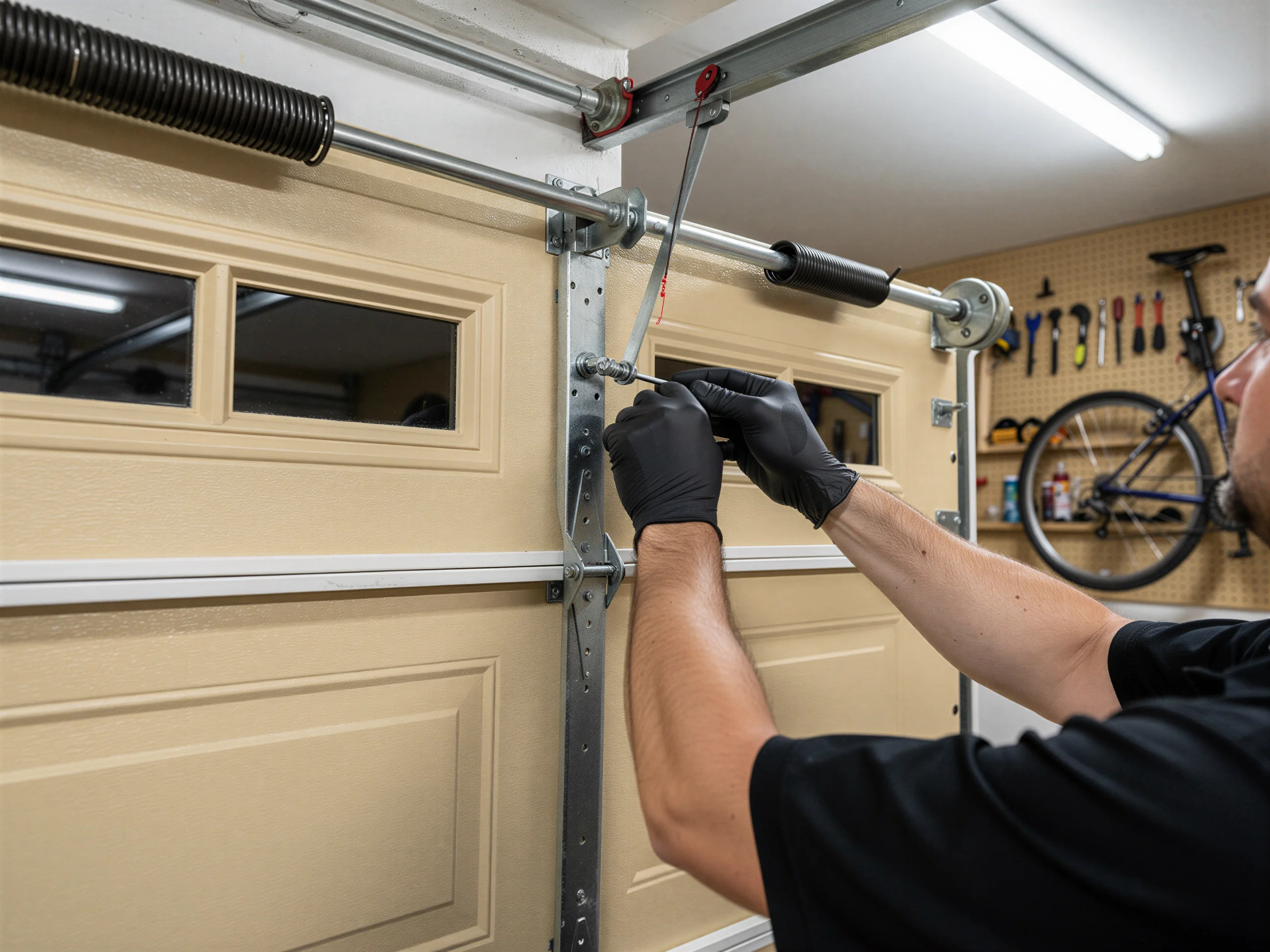
These are steel sectional doors on center-mount torsion hardware, not the side-mount setups you find on the older housing stock elsewhere in the service area, so the failure pattern is different: a snapped spring here usually takes out a double-wide door in one go rather than the single-car doors common on 1960s construction.
Cracked sensor brackets
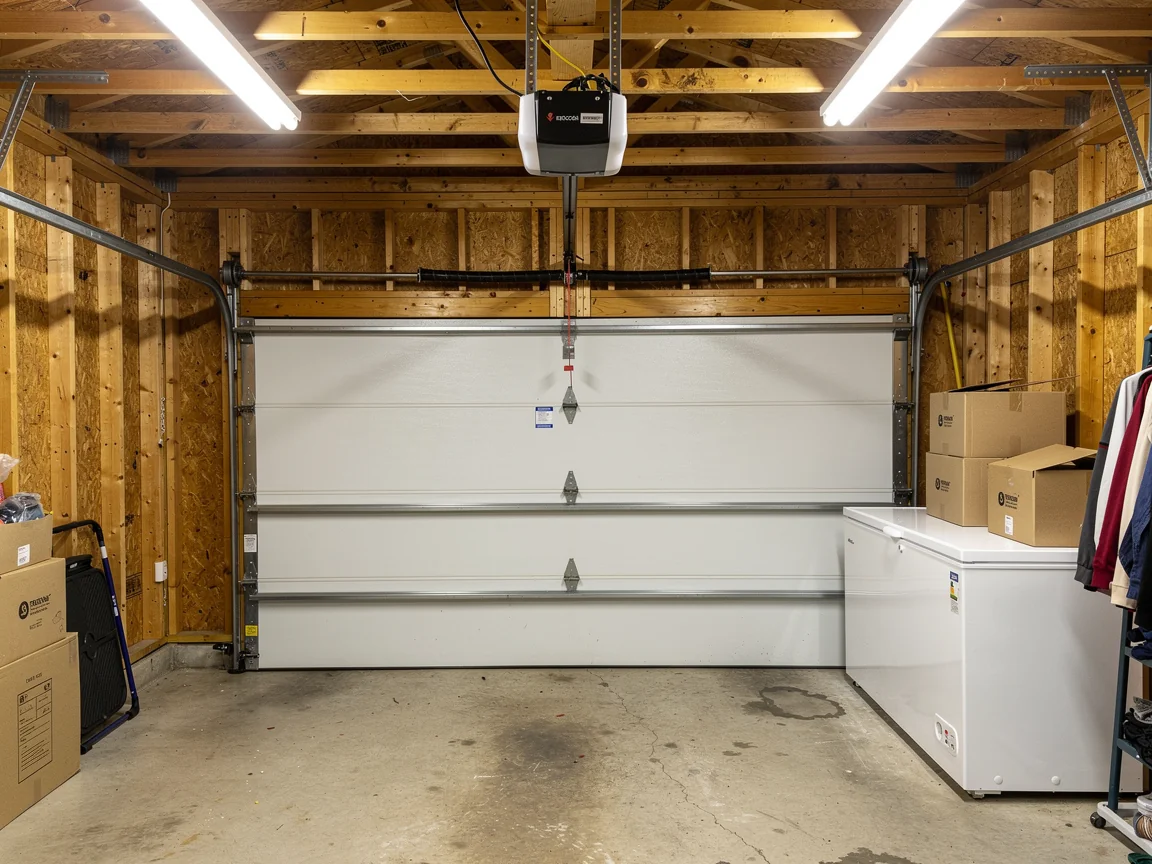
Openers from that era are chain or belt drive with photo-eye safety sensors, and the most common call isn't the motor - it's a cracked sensor bracket or a logic board that's dropped out after years of garage heat cycling under our moderate-heat climate band.
Brittle bottom seals
Weatherstripping and bottom seals also go brittle faster on south- and west-facing bays here than people expect, which lets in dust and lets heat build up inside the garage itself.
Talk to a local pro
Garage door service in Chino?
Same-day service with honest, upfront quotes.