What It Costs
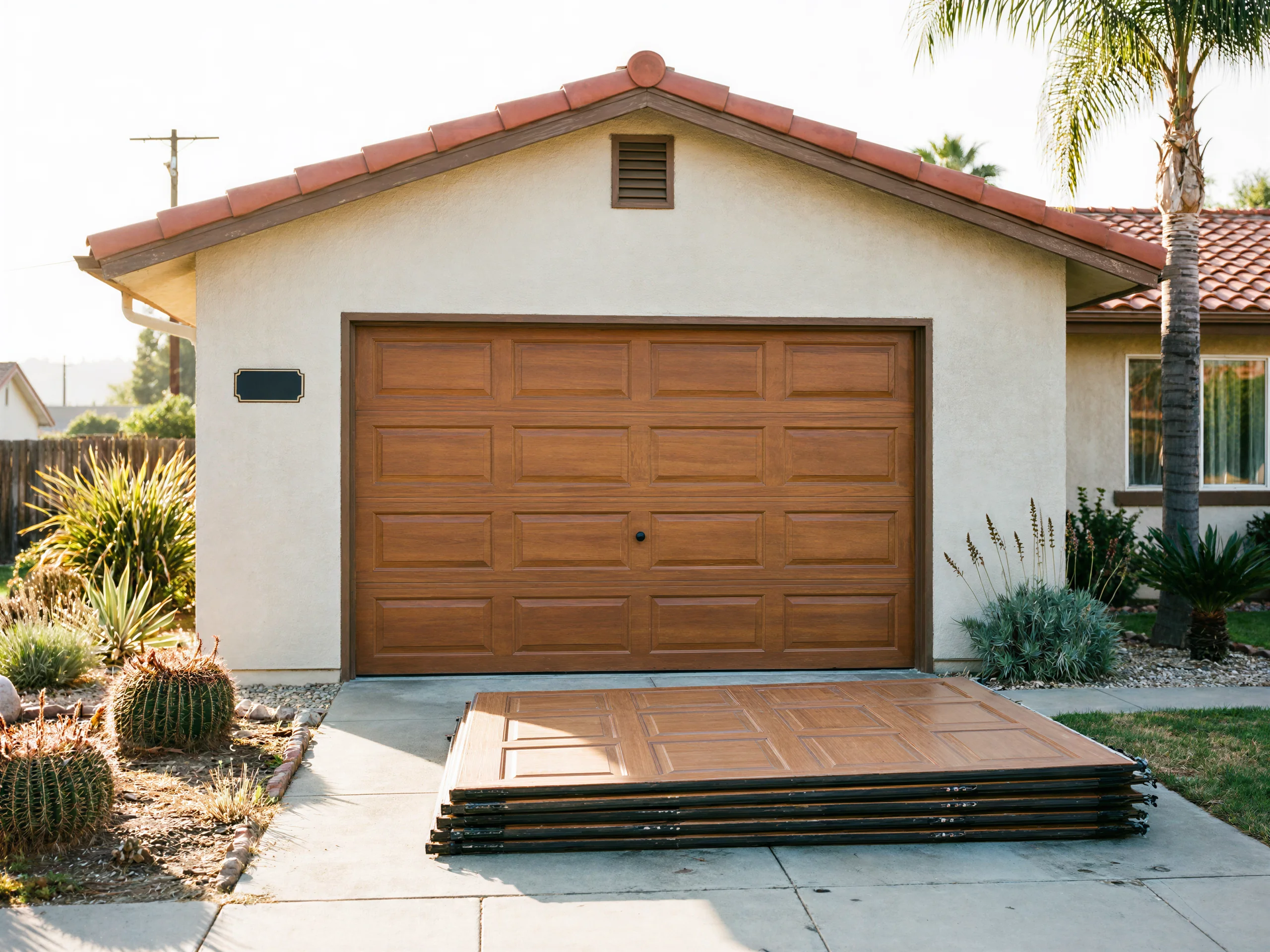
We don't post a fixed price for a new door because the number depends on size, insulation level, and whether the opener gets replaced at the same time - those choices move the total more than anything about the town itself. What's true for Eastvale specifically is that household income here runs well above the service area average, and we see that reflected in the door choices: more requests for insulated steel or composite doors with upgraded hardware, fewer bare single-layer units. If you want a number, we'll give you one after we see the opening and the existing track condition, not before.
Can You Do This Yourself
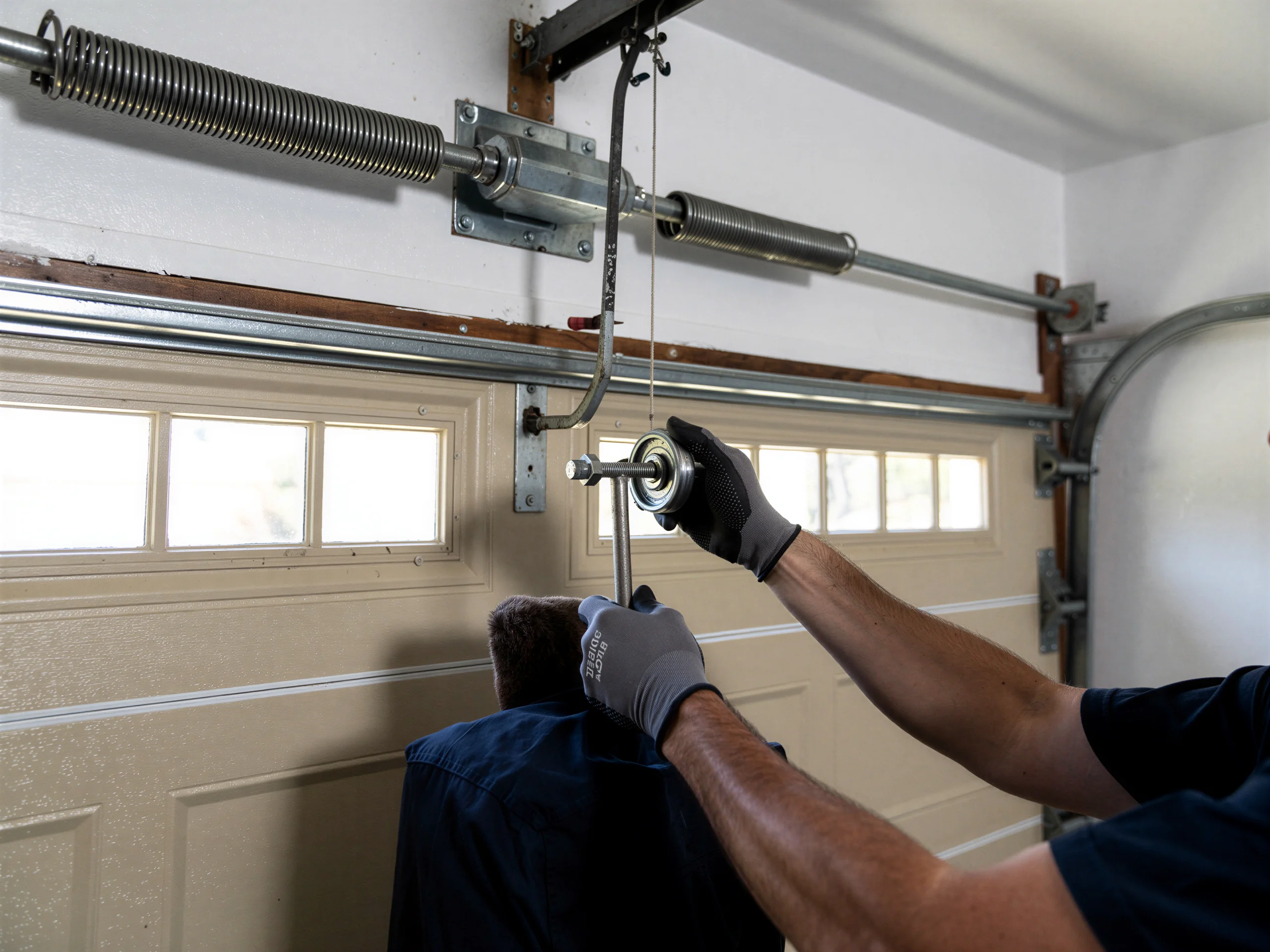
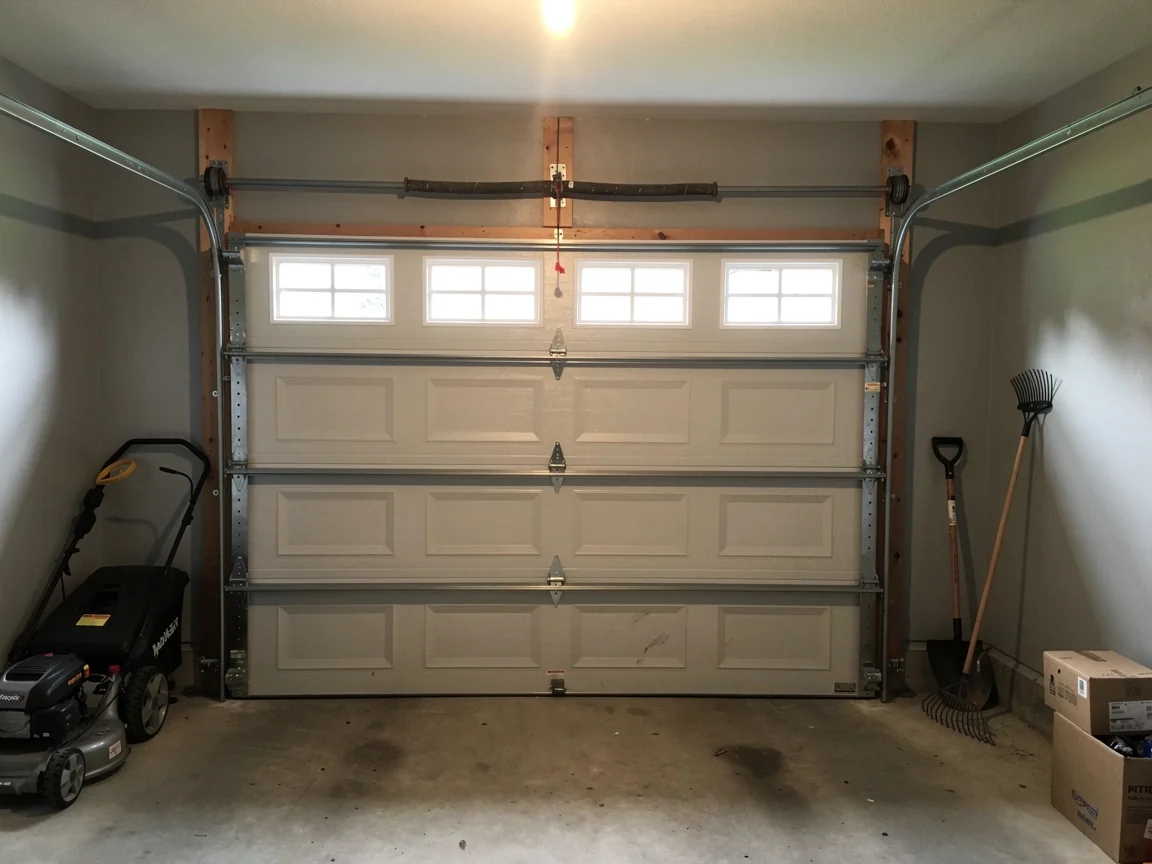
A garage door isn't a weekend kit project, and that's true everywhere, not just here. The part that trips people up on a newer builder-grade door specifically is the torsion spring sizing - these doors were set up at the factory to a standard weight, and if you swap panels, add insulation, or change the window layout without recalculating spring tension, the door either won't open cleanly or it'll slam down. We'll do the measuring and the spring calculation as part of the install. If you're handset on doing the demo and disposal of the old door yourself to save on labor, that's a reasonable split of the job - just don't touch the spring or track hardware without the door disconnected from the opener.
Why This Fails Locally
The climate here runs in the moderate-heat band for the region, which isn't the extreme end some inland areas see, but it's still enough heat cycling to matter on a door that's mostly builder-grade steel.
Foam laminate separates early
These panels were specified for cost at construction, not for 15-plus years of daily thermal expansion, and the foam lamination in cheaper units starts to separate from the skin well before the door itself fails structurally.
Failures cluster by street
Because Eastvale's housing is concentrated in that 2007-era build window rather than spread across six decades like elsewhere in the area, this separation tends to show up in clusters - one street calling within the same season.
Insulation rating matters
A new install done right accounts for that: proper insulation rating for the exposure, and hardware sized for the actual door weight, not the lightest spec that passed inspection.
How to Book
We run out of Chino, about 4 miles from Eastvale, so there's no separate branch here - just a short drive for the truck. If you want to see what we cover day to day in Eastvale beyond installation, that's on our Eastvale service page. For the full rundown of installation work as we do it out of Chino, including doors and options not specific to this suburb, see the Chino installation page. Either way, the first step is the same: a look at your opening and your current door before we talk numbers.
What Can Go Wrong
Across the wider area we work, homes were built anywhere from 1938 to 2007, with a lot of that stock dating to the 1960s and 70s.
Single-wave builder doors
Eastvale sits at the far end of that range - most of it went up closer to 2007, which means the doors here are builder-grade steel sectional units on lighter-gauge tracks, installed in a single wave rather than replaced piecemeal over decades. That sounds like an advantage, and it mostly is, but it creates its own failure pattern.
Tract-wide synchronized wear
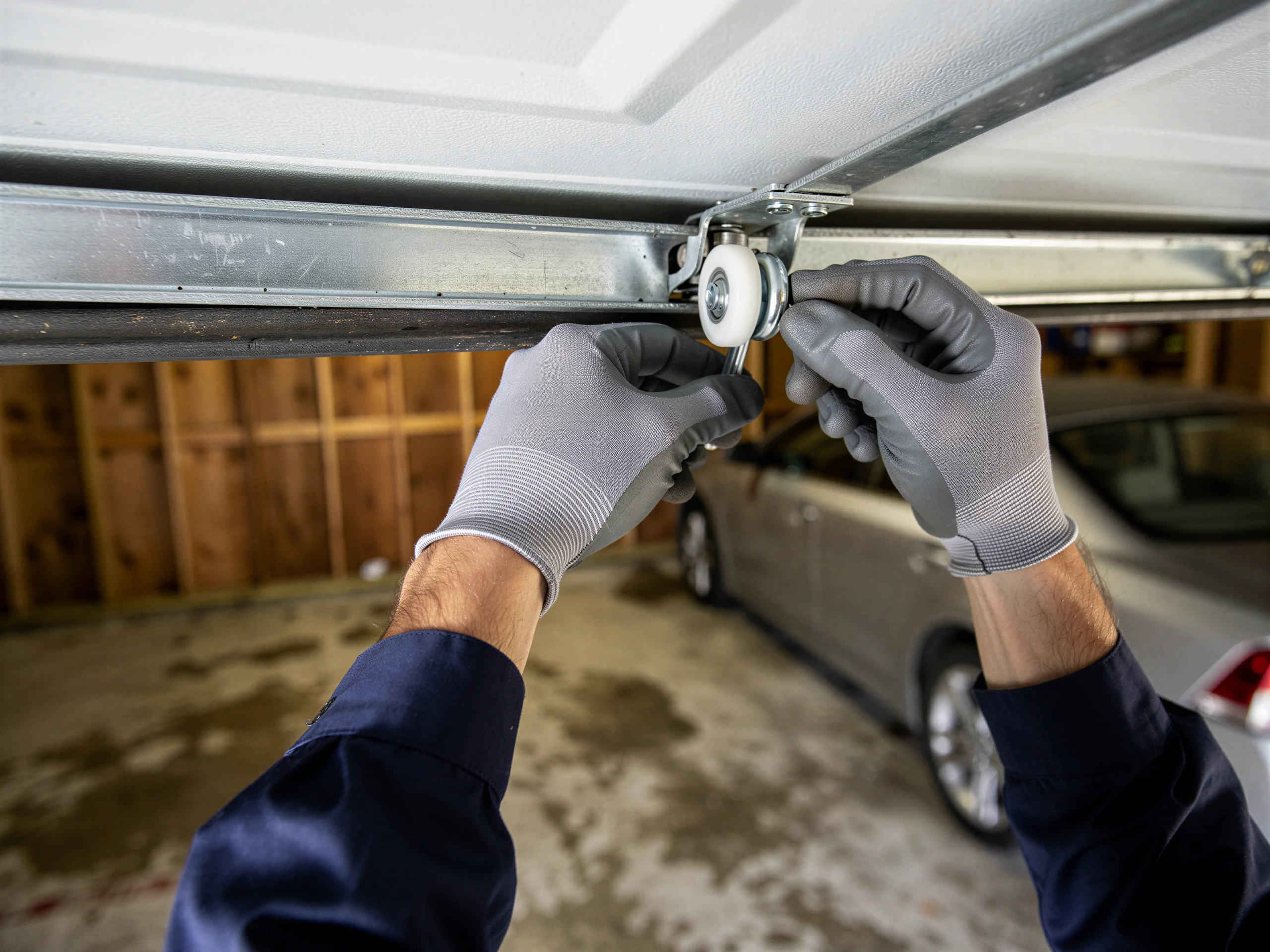
A lot of these doors share the same opener models and the same plastic idler pulleys and nylon rollers that builders spec in bulk, and those parts wear out close together across a tract, not randomly like they do in older neighborhoods. When one goes, the identical door three houses down usually isn't far behind.
Upgrading before failure
New installation here often isn't about replacing a door that's failed outright - it's homeowners upgrading from the builder-grade unit before it fails, usually for better insulation or a quieter opener, since the original equipment was priced to a spec sheet, not to this area's climate or budget.
Talk to a local pro
Garage door service in Chino?
Same-day service with honest, upfront quotes.