What It Costs
We don't have a price list specific to West Covina to publish here, and we're not going to guess at a number just to fill the section.
Part swap or replacement
What we can say is that cost on a job like this comes down to two things: what's actually broken, and whether the fix is a part swap or a full door replacement.
Phone quotes with photos
Because the truck is coming 15 miles from Chino, we quote the job itself over the phone when we can, based on what you describe and photos if you can send them, rather than running a truck out for a look and a second trip for the repair. That's not a guarantee of same-day service at this distance, and we're upfront about that rather than promising a window we can't hold.
Repair or replace decision
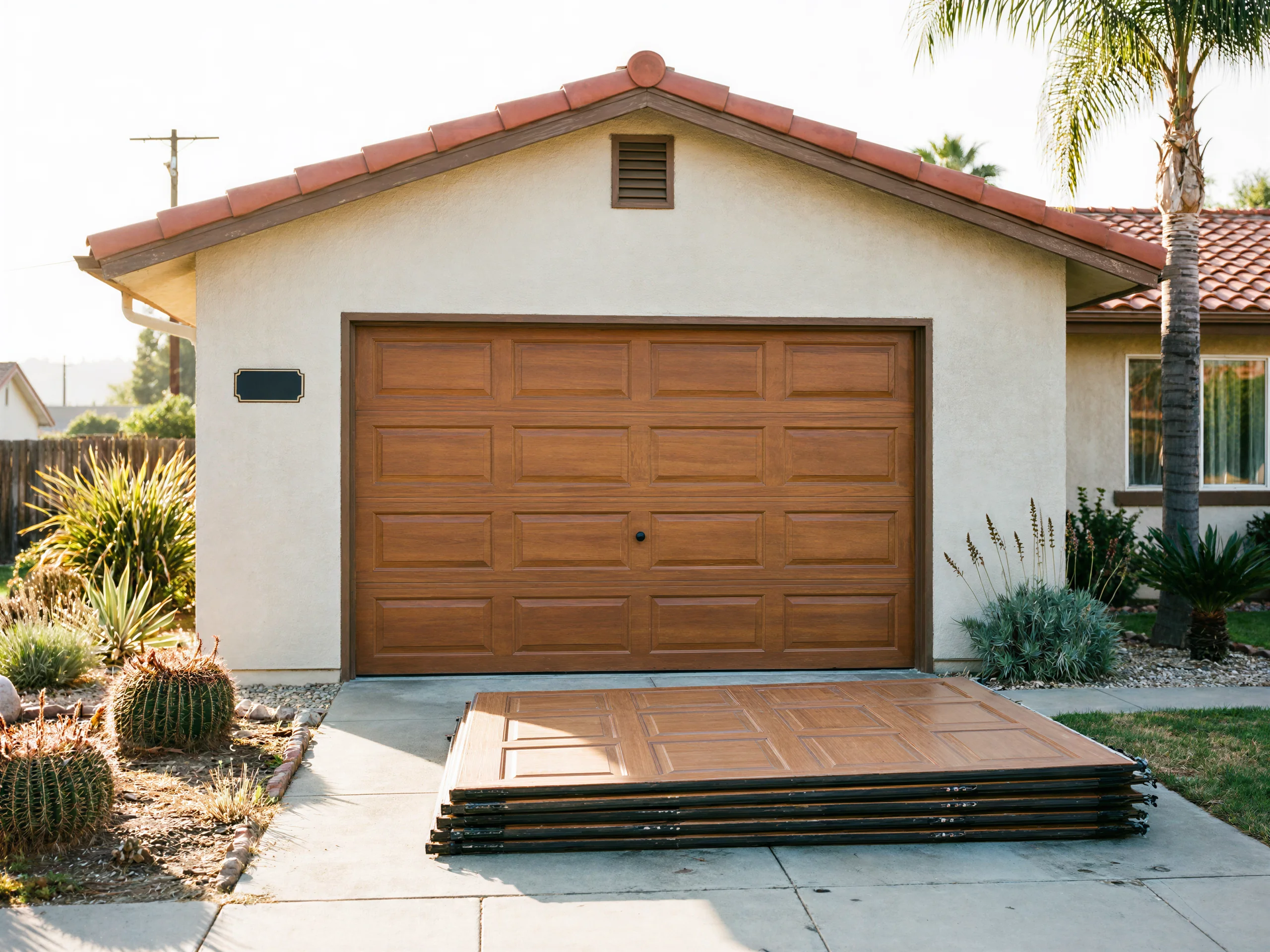
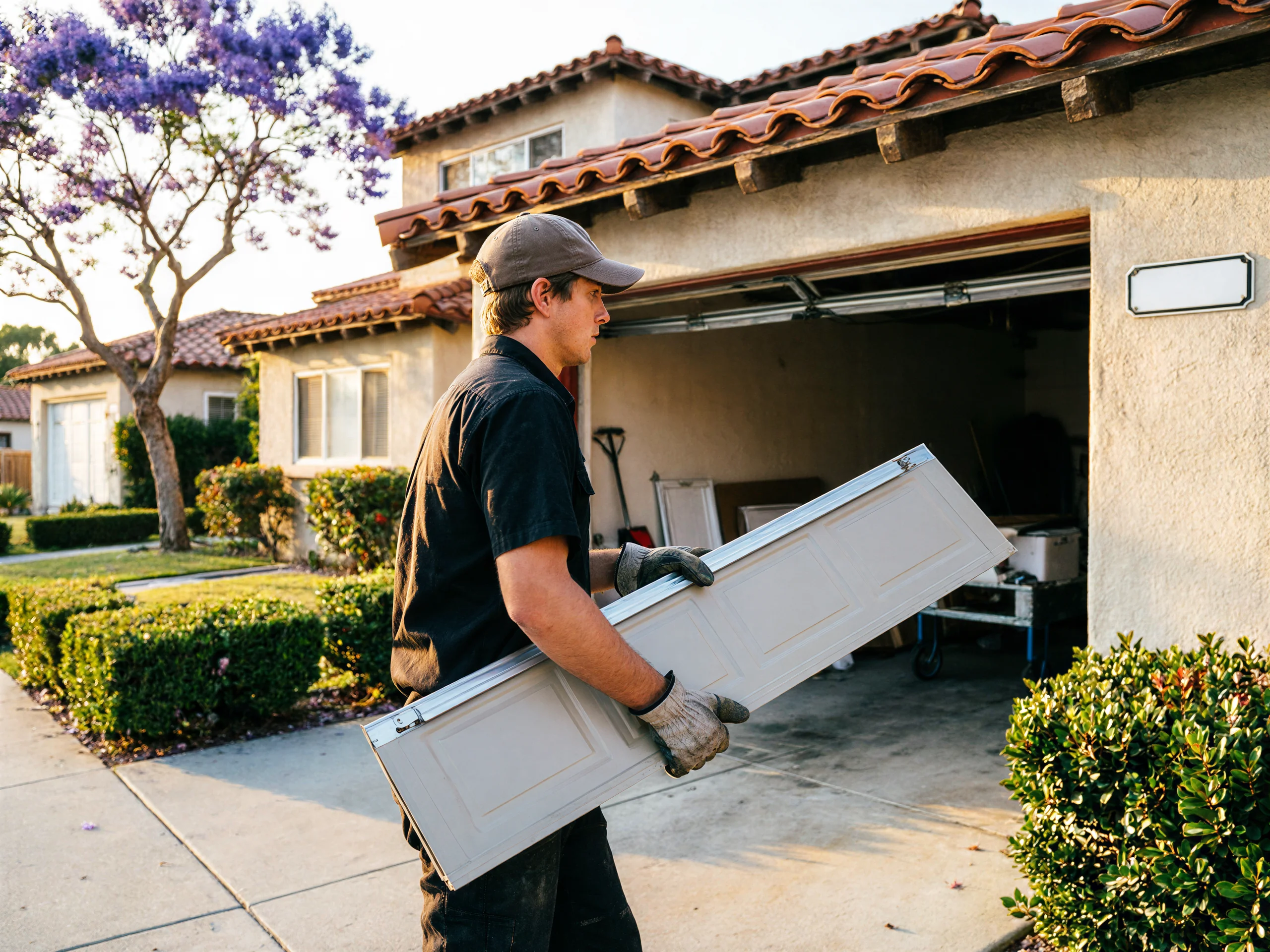
If you're deciding between repairing an original 1968-era door and replacing it outright, the honest answer depends on the panel condition and whether the track is still square. A door with rust-through or a warped panel usually costs more to patch than to replace, and we'll tell you that on site rather than billing for a repair that won't hold.
Why This Fails Locally
West Covina's 32,586 households sit inside a much larger service area of 427,123 households, and the median income here, $98,570, runs close to but under the area-wide median of $105,104. That gap matters less for whether a door breaks and more for which repair gets chosen: in a market like this, more owners ask for the torsion spring swap or the hinge and roller rebuild than for a full replacement, because the original door is often still square and worth saving.
The age of the stock is the bigger driver. A door built around 1968 was engineered to a different set of expectations than one built after 2000 - lighter gauge steel, no safety cable through the spring in a lot of cases, and hardware sized for openers that weighed more and moved slower. When that hardware fails, it tends to fail at the weak point: the spring, the cable, or the bottom bracket, not the panel itself. That's a different failure pattern than you'd see on a house built in the 2000s, where the opener's electronics are usually the first thing to go instead.
What the Fix Involves
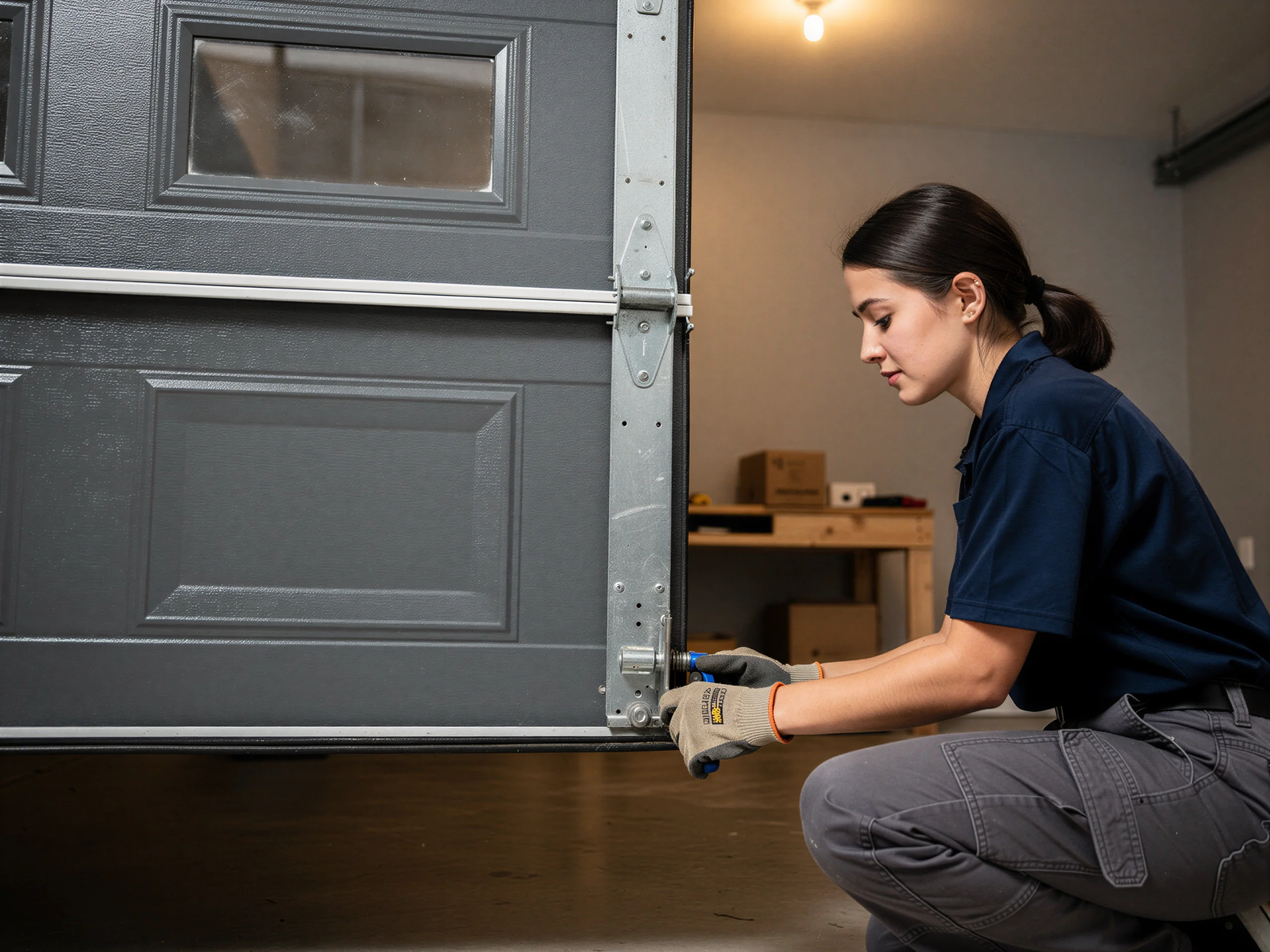
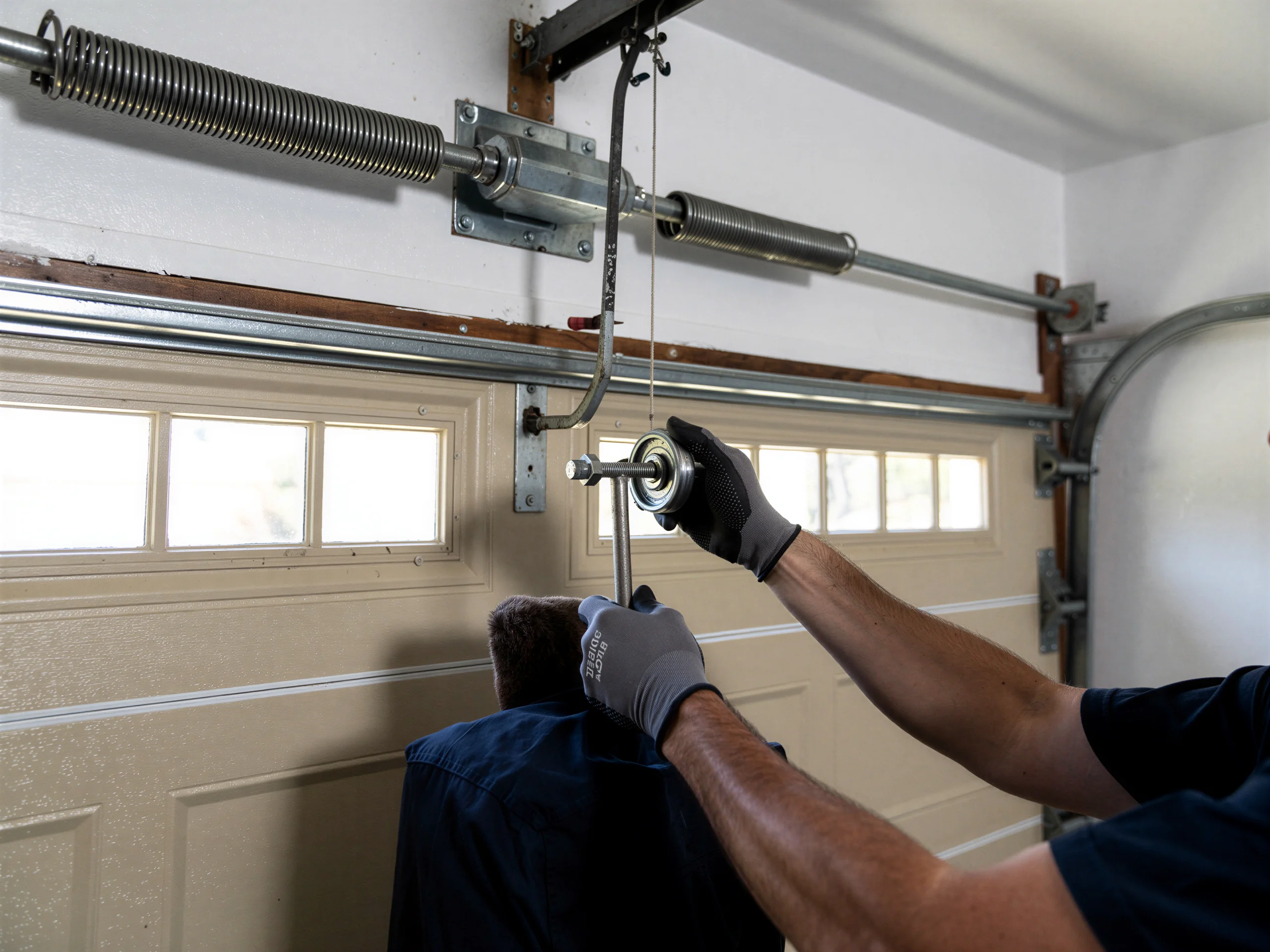
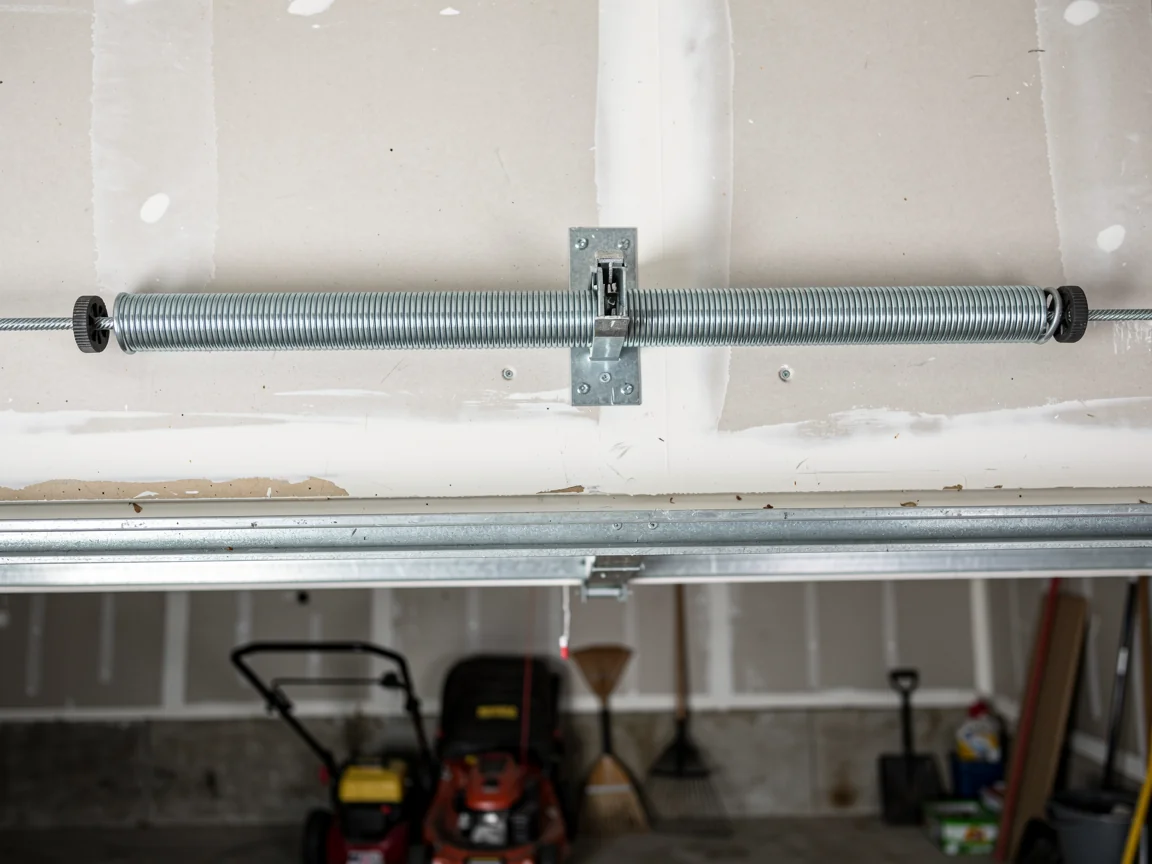
On a door this age, the job usually starts with pulling the spring and checking the drum and cable before touching anything else, because a worn cable on 1968-era hardware is often the real cause of a door that looks like a spring failure.
Matching wind and length
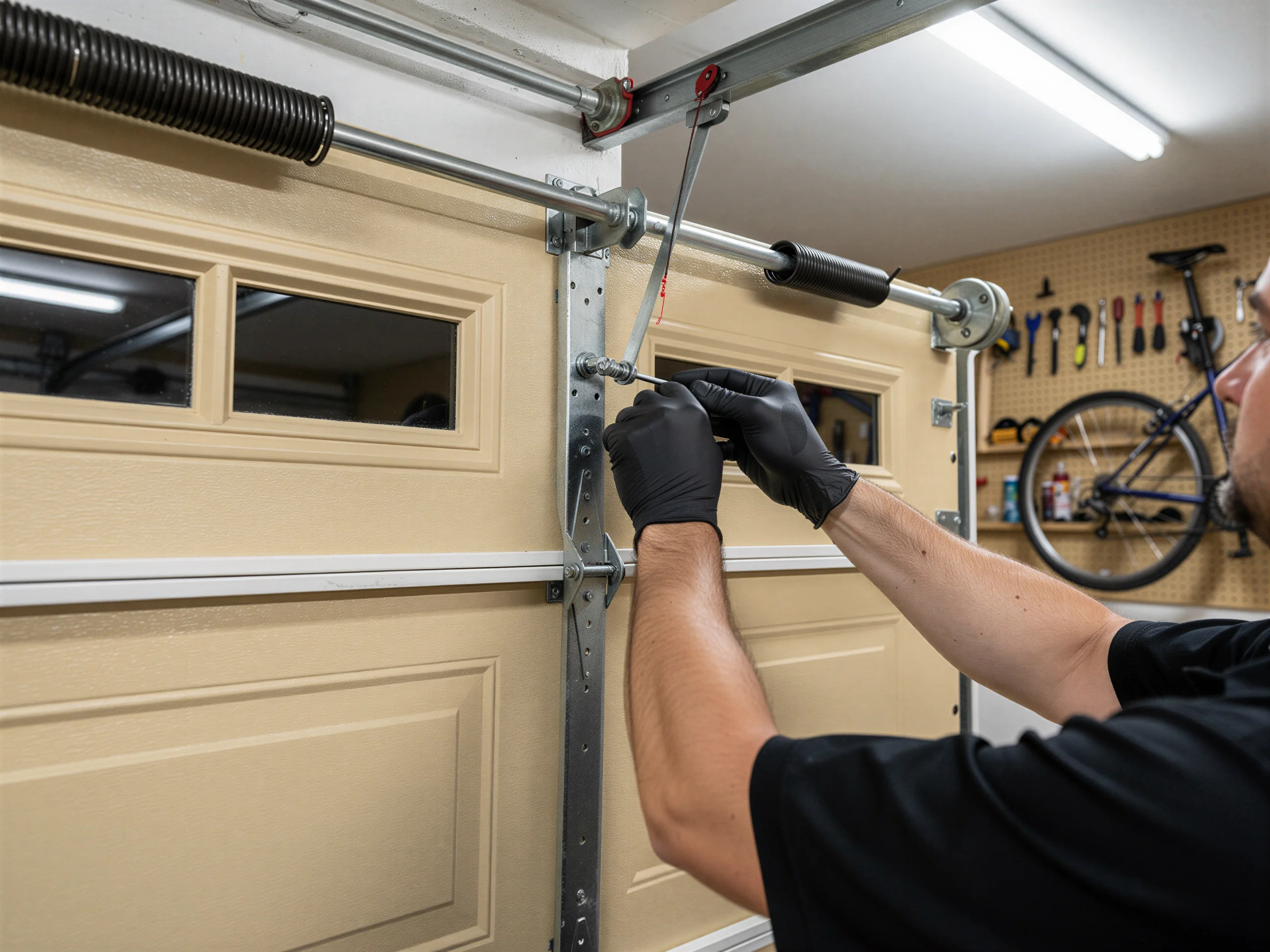
We replace to match the door's current wind and length rather than whatever happens to be on the truck, since torsion springs are sized to the door's weight and track geometry, and a mismatched spring either won't lift the door or will wear out again within a year.
Checking opener adjustability
If the opener is an older unit, we check whether the travel limits and force settings are even adjustable on that model before recommending a repair over a swap - some units from this era simply don't have the safety reversal sensitivity that current code expects, and in that case replacement is the straighter path.
Side-mounted hardware drift
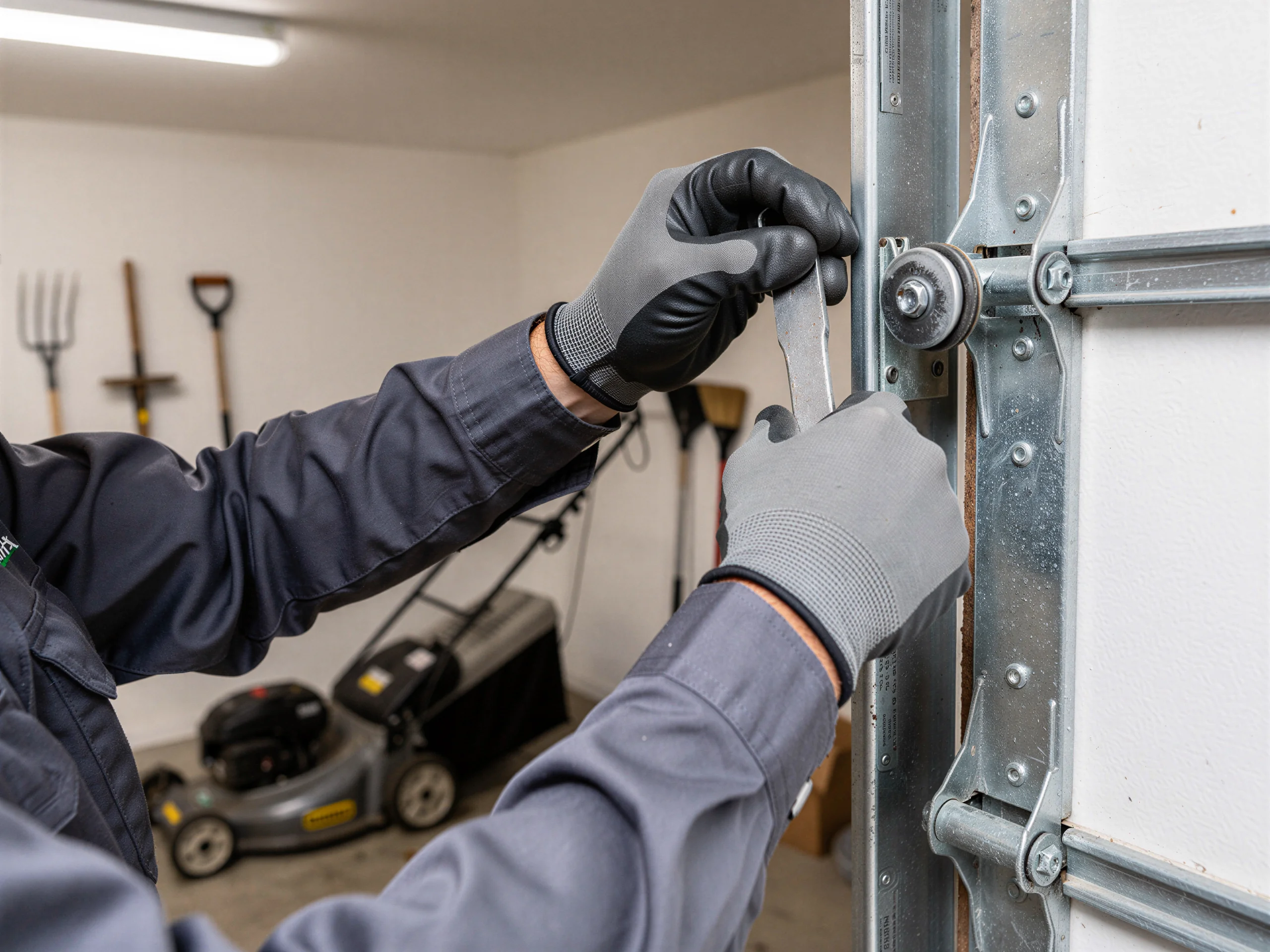
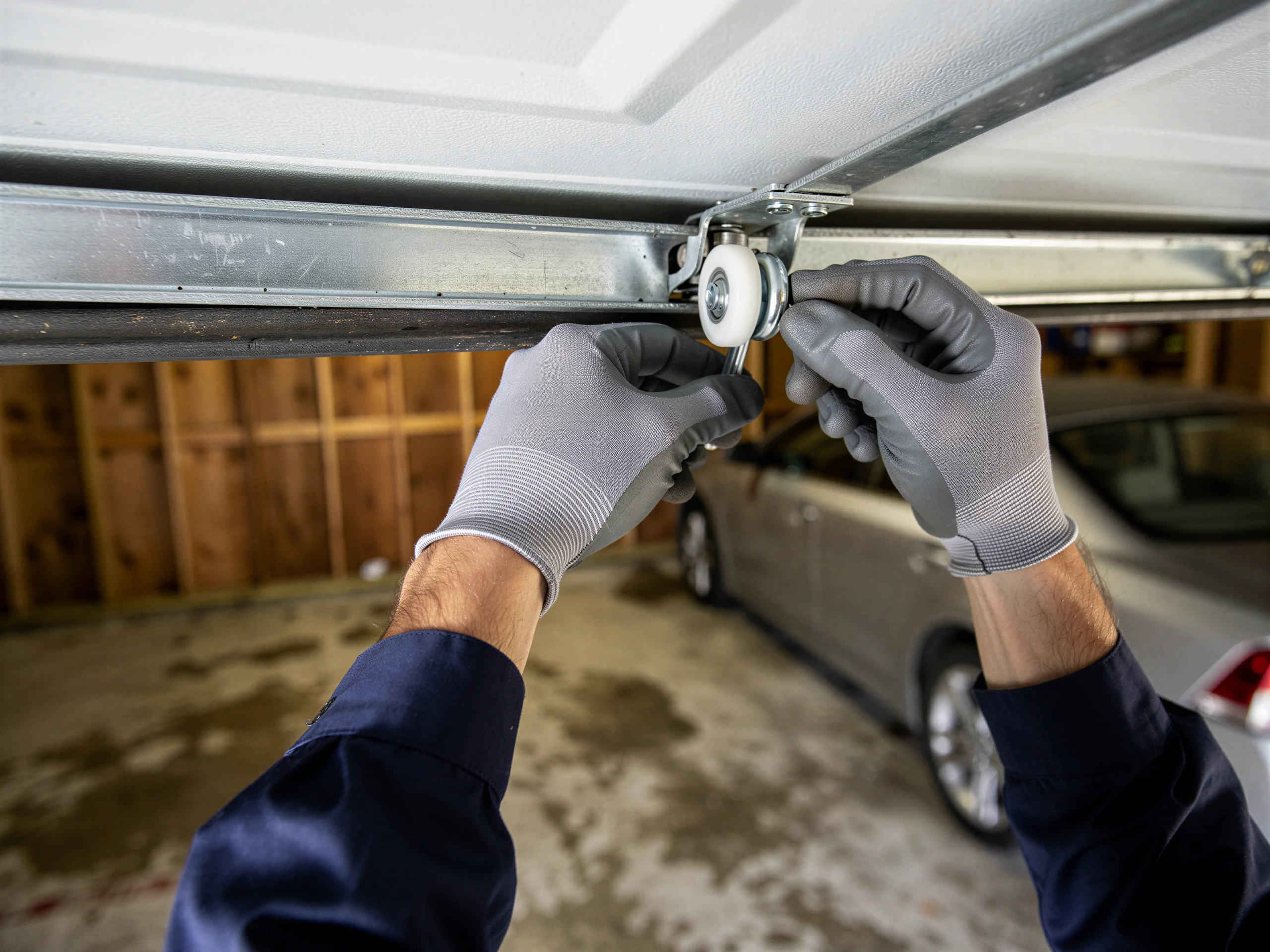
We also check the track alignment, since houses from this build era commonly used side-mounted hardware that drifts out of plumb as the house settles over fifty-plus years. We don't carry every obsolete part for a door this old on the truck. If the original bracket or an odd-sized track roller isn't something we stock, we'll say so and give you a real timeline for the part rather than a vague one.
What Can Go Wrong
West Covina sits 15 miles west of Chino, which is the first thing worth saying before anything about springs or openers: a call out here isn't a five-minute hop, it's a planned trip, and that shapes how we schedule the day rather than how we diagnose the door once we're standing in front of it.
Single-layer 1968 doors
Most houses in West Covina went up around 1968, which lines up with the broader pattern across this service area of 1960s-70s construction. Doors from that era are usually single-layer steel or old wood panel, hung on torsion springs that have long since lost their factory lubrication, with openers that have been swapped once or twice since the house was built but tracks and hinges that haven't.
Outdated safety hardware
The common failure we see on this vintage is a torsion spring that snaps after decades of cycling, or a cable that frays at the drum because the original hardware was never upgraded to current safety standards.
Cycle count drives wear
Rollers seize, especially on doors that sit in full sun for part of the day, and the heat band for this region is moderate rather than extreme, so it's wear and cycle count driving failures here more than thermal stress on the metal itself. Openers from the 1990s and early 2000s, common replacements on a 1968-built house, are also reaching the end of their working life as a group.
Talk to a local pro
Garage door service in Chino?
Same-day service with honest, upfront quotes.