How It Shows Up
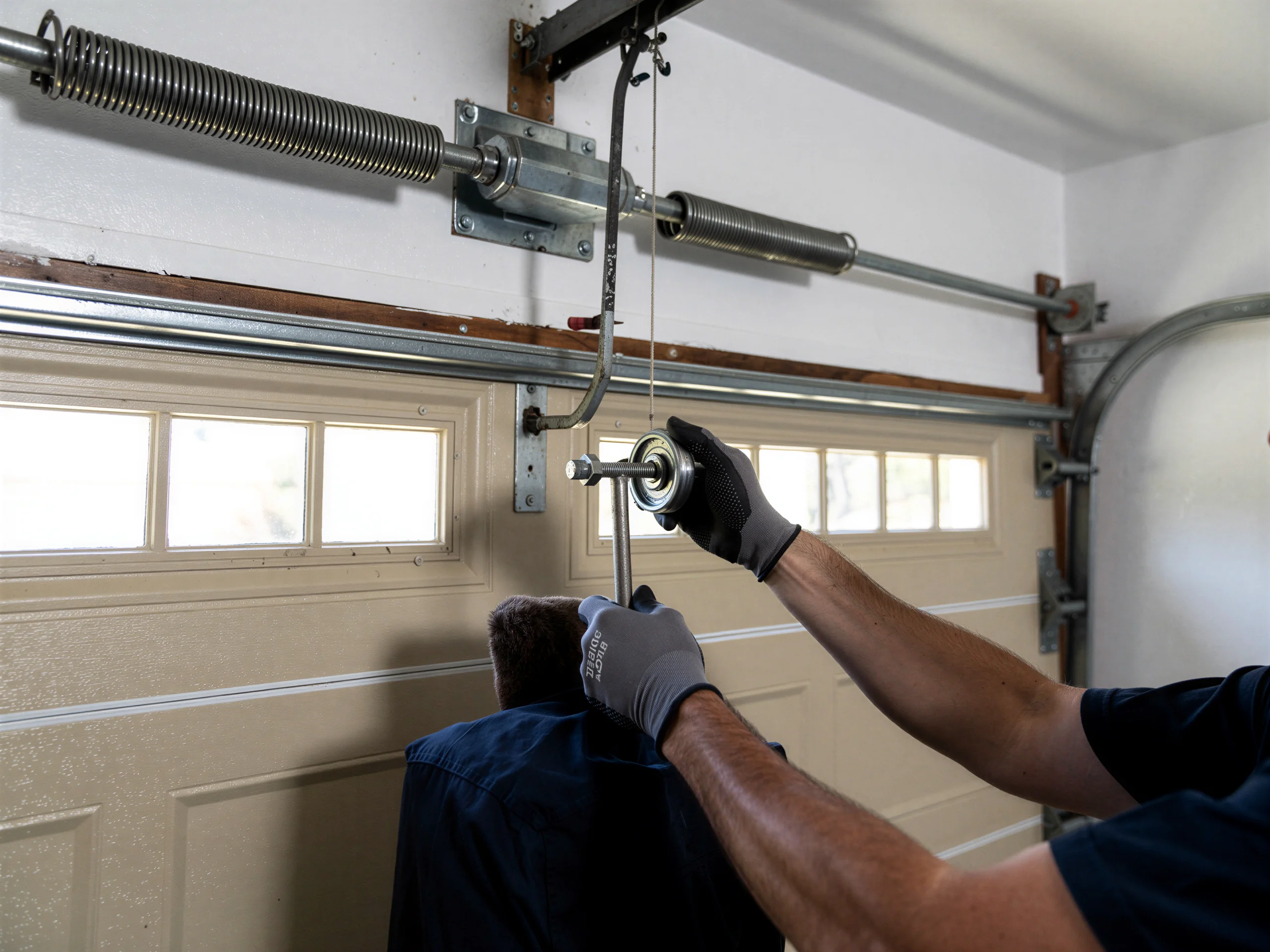
The first sign is usually noise - a groan or a bang from the spring area when the door opens, especially in the morning before anything's warmed up.
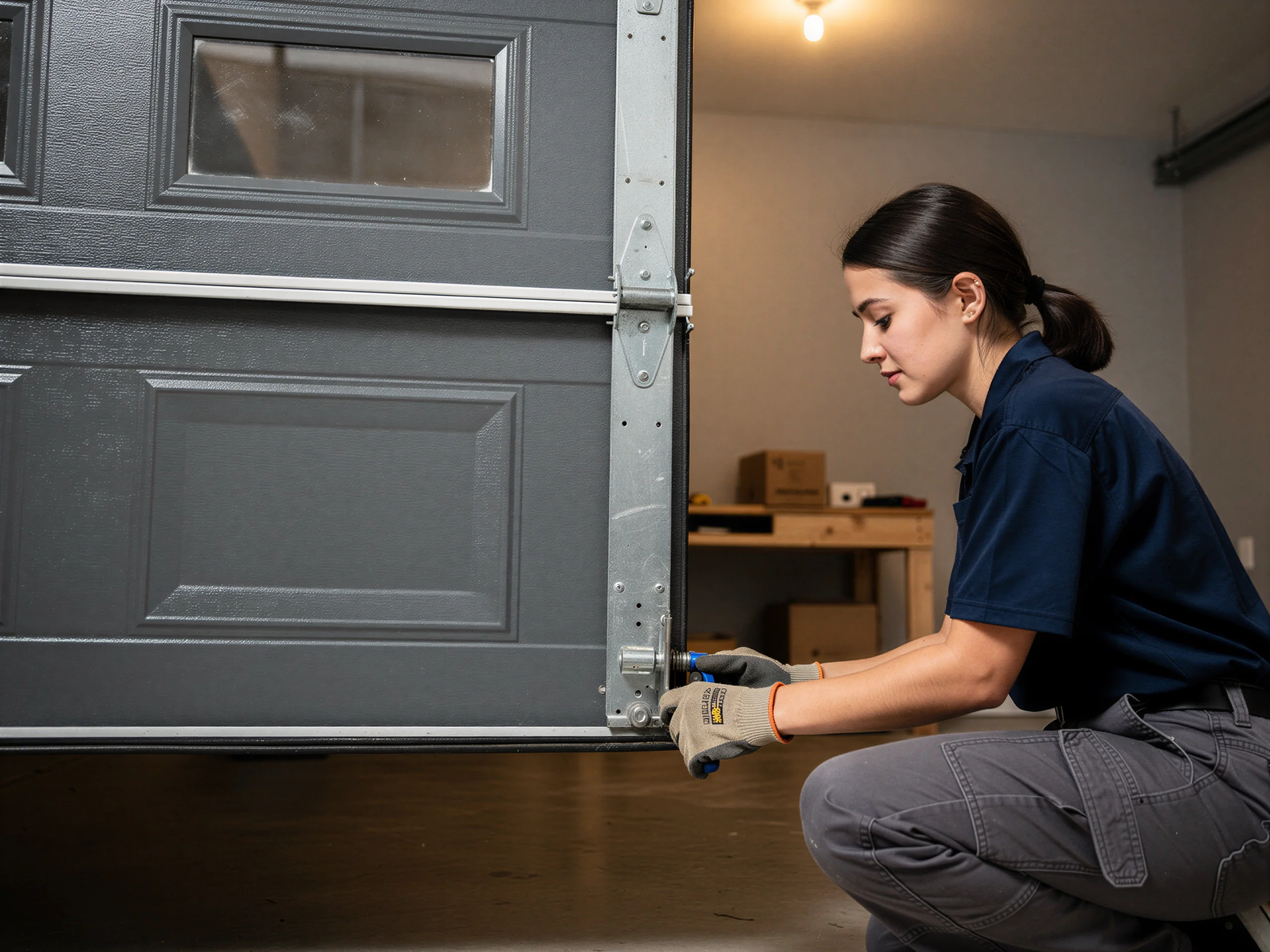
One side lagging
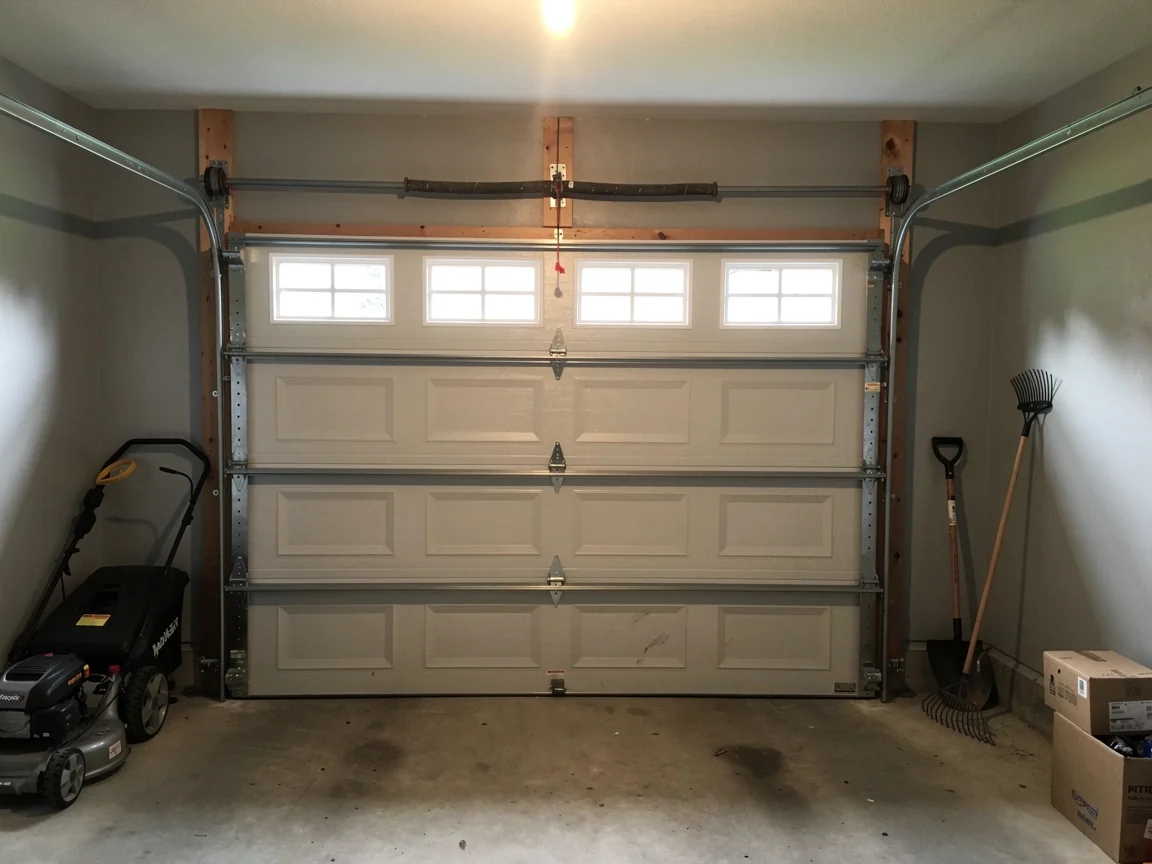
Next comes unevenness: one side of the door lags behind the other by an inch or two, which tells you one torsion spring is weaker or has already given out while the other is still holding.
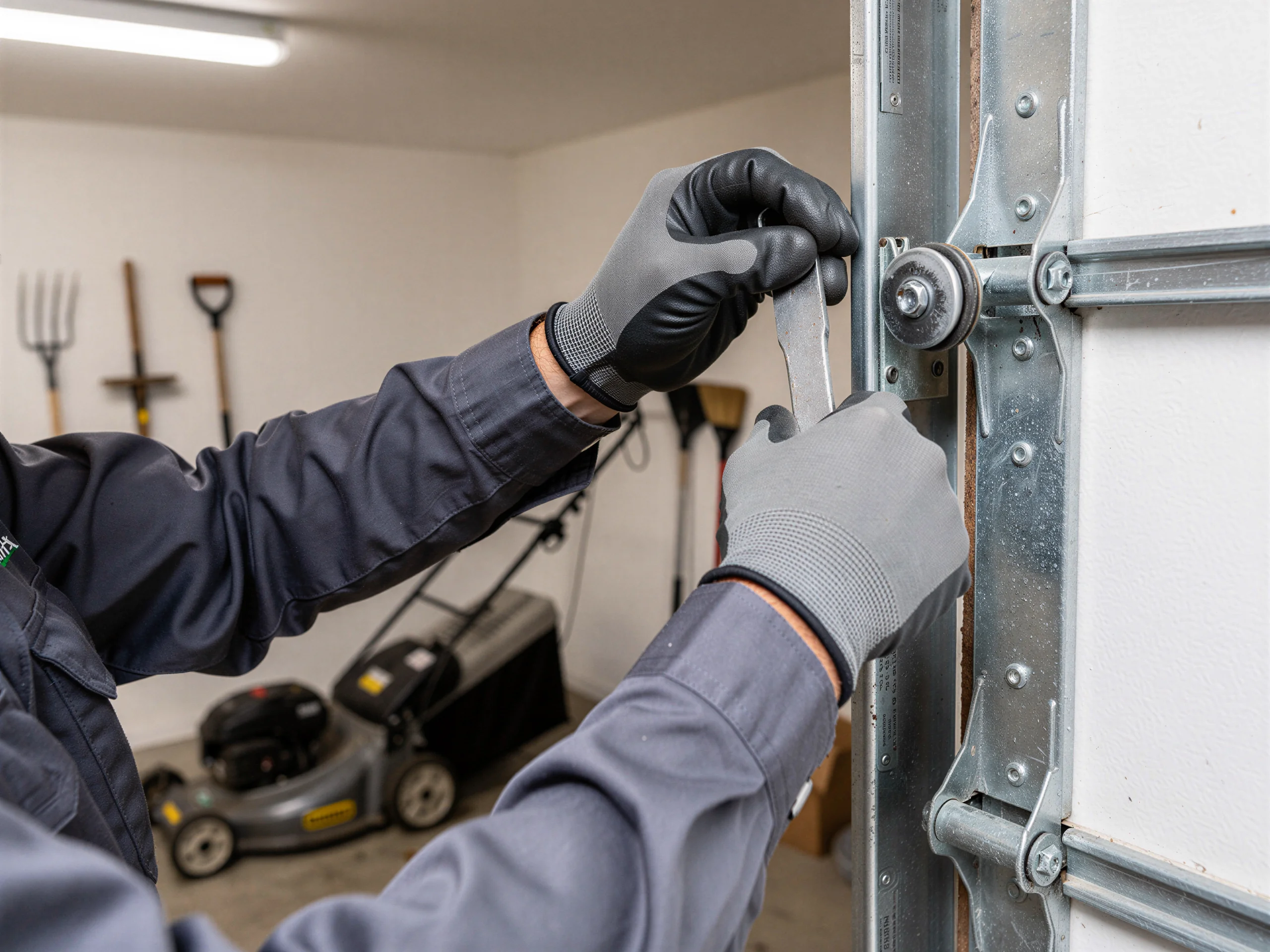
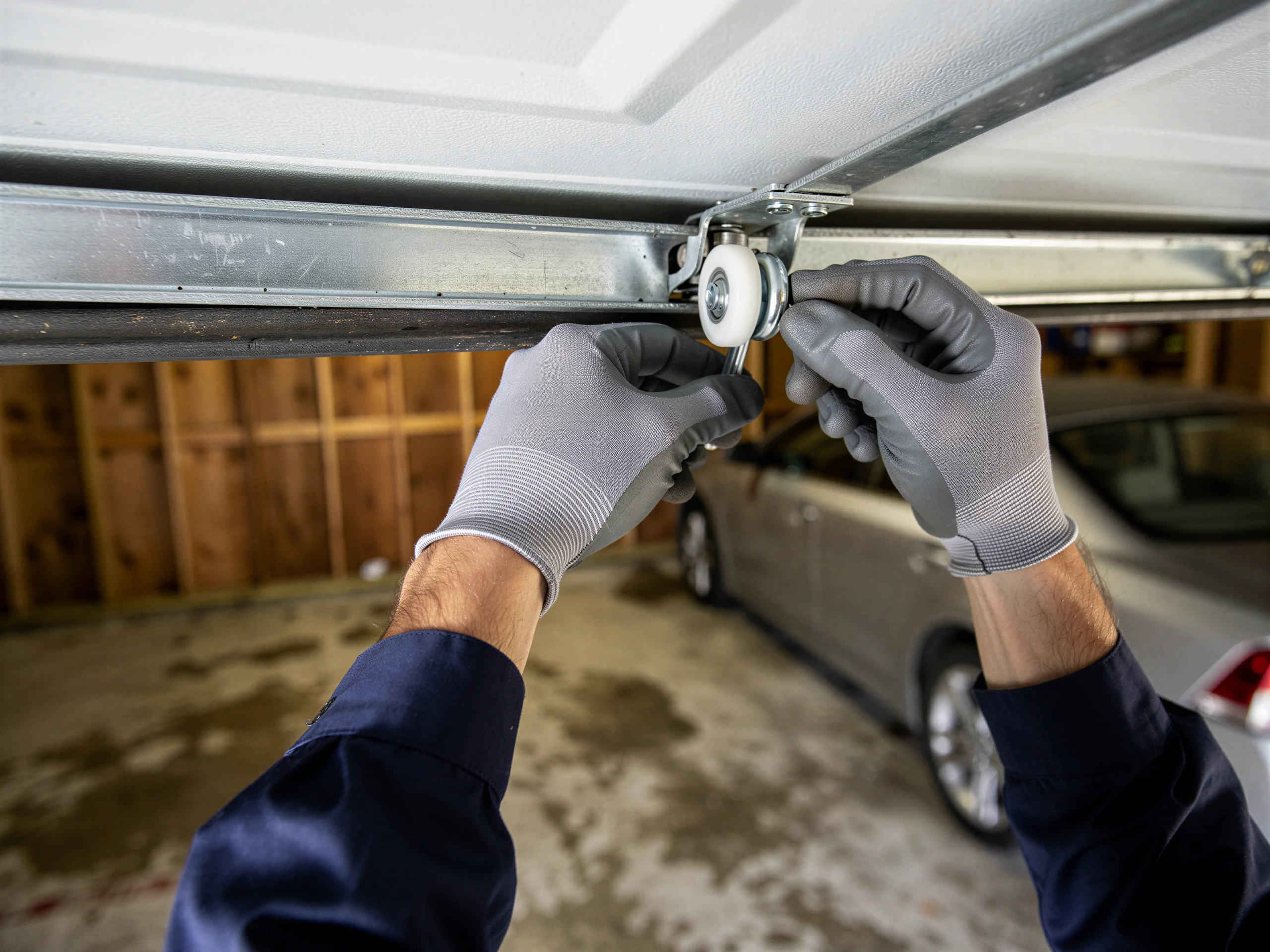
Grinding steel rollers
Rollers from a 1979 install are almost always steel, not nylon, so you'll also hear a grinding rattle as the door travels, worse at the top and bottom of the track where wear concentrates.
Mismatched opener and hardware
Openers in homes of this era have frequently been replaced once already, so the symptom split is common: newer opener, original spring and track hardware underneath it doing all the physical work. That mismatch is worth flagging before a repair, because fixing the visible symptom (a straining opener) without addressing the worn torsion assembly just moves the failure point.
What It Costs
We're not going to quote a number here that isn't accurate for your door, because the honest answer depends on what's underneath the opener - not on the town. A 1979-era torsion system that's never been serviced usually needs more than a spring swap: the drum cones, end bearings, and sometimes the shaft itself have worn alongside the springs, and replacing one without checking the rest just buys you a shorter interval before the next call. What drives the cost up or down is how much of the original hardware is still in play versus how much has already been replaced over the years - a door that's had one prior repair is a different job than one that's never been touched since the house was built. We'll tell you what we find before we touch anything, including when a full torsion conversion makes more sense than patching 40-year-old parts one at a time.
Stocked Parts
We carry the torsion springs, cables, and standard bearing plates that fit the sizing common to late-1970s construction, since that's a large share of what we run into working this area.
Proprietary original brackets
What we don't carry on the truck is original hardware specific to a given manufacturer from that era - some builders used proprietary end brackets or non-standard drum sizes that aren't in production anymore, and those have to be sourced or fabricated around rather than swapped straight across.
Diagnosis, then return trip
That's the honest limitation: if your door has one of those less-common original parts, the first visit may be diagnosis and a return trip rather than a same-day fix. We'd rather tell you that up front than pretend every 1979 garage is built the same way under the opener.
How Long You Are Without the Door
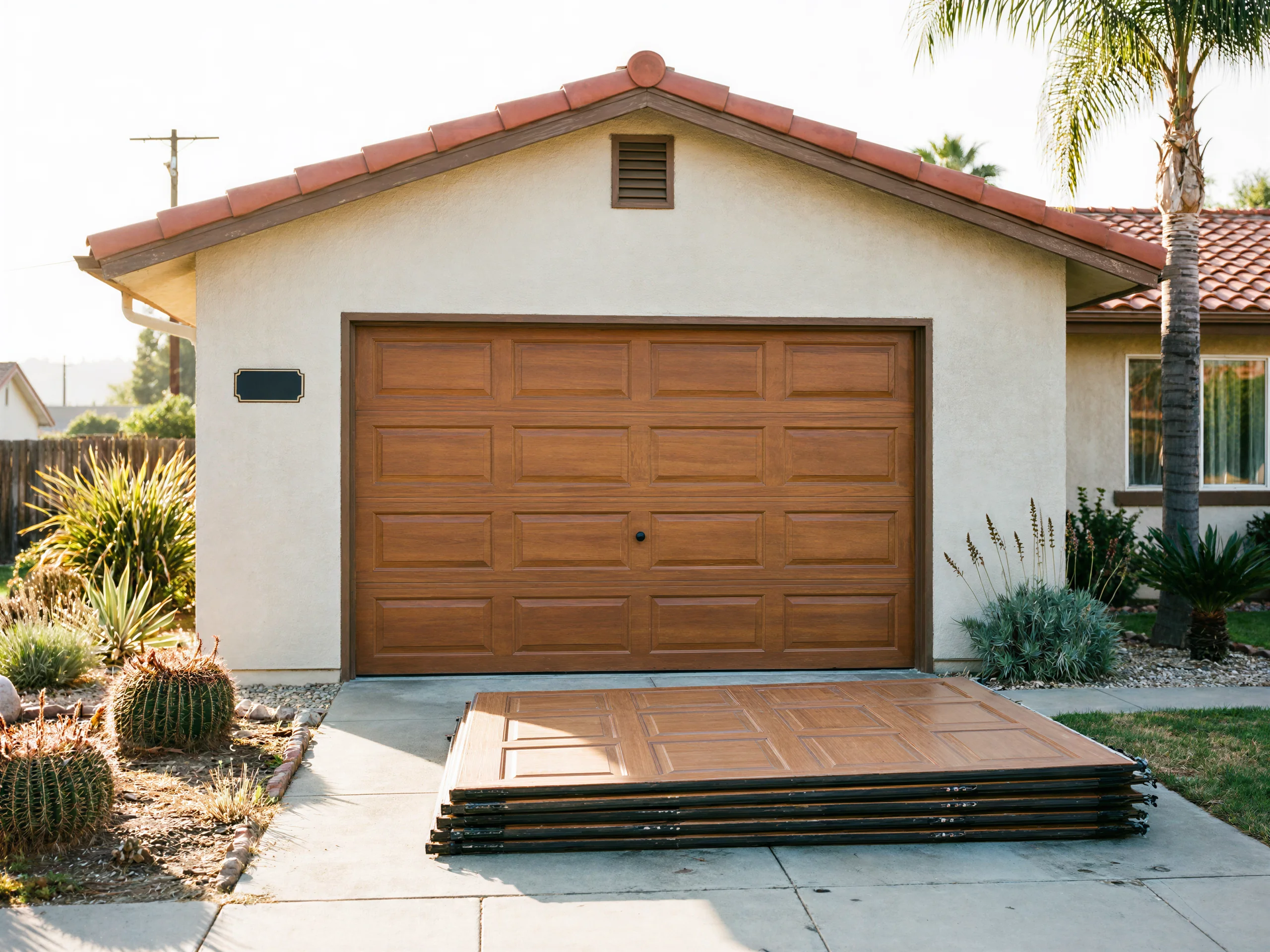
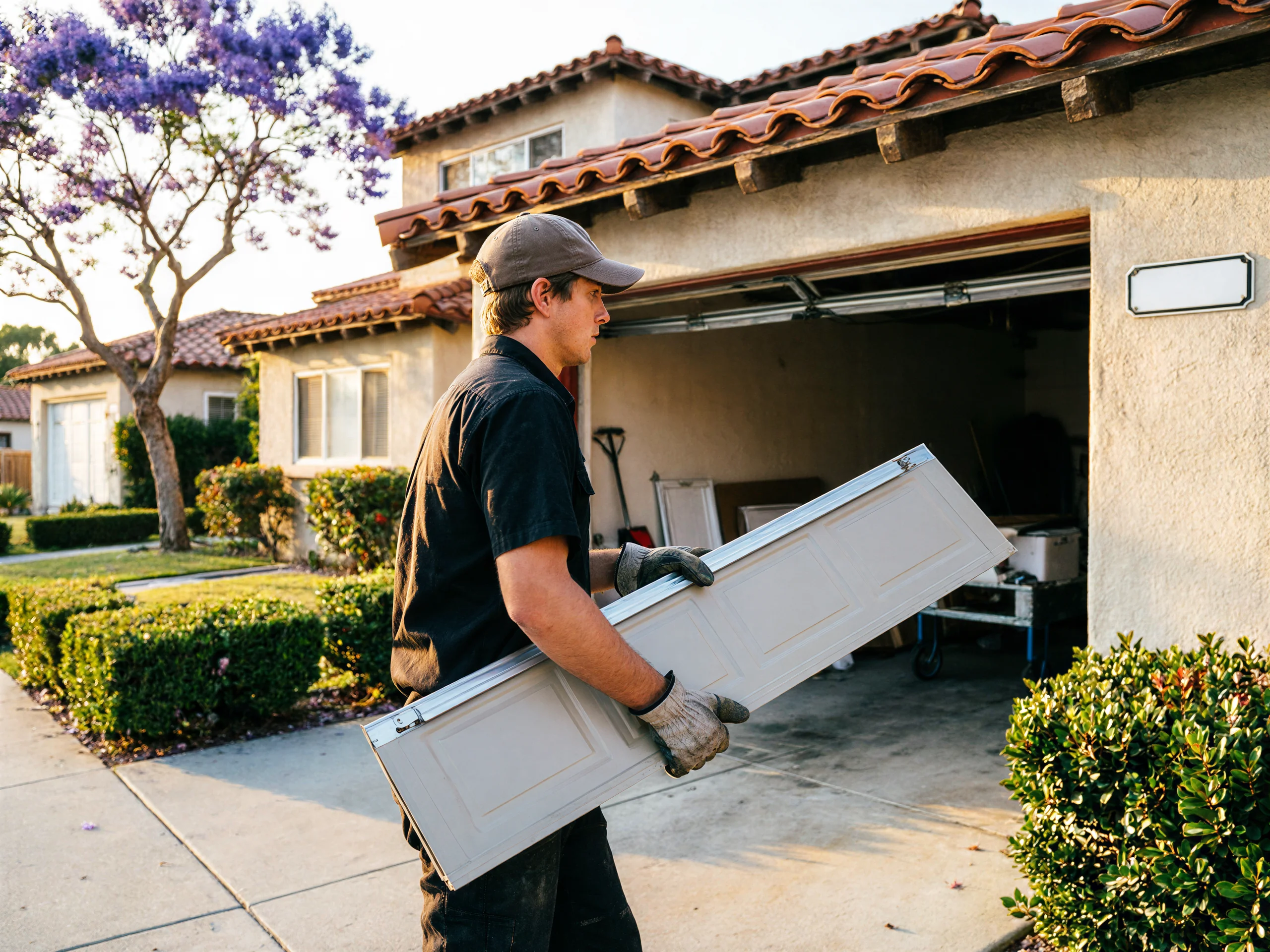
We come from Chino, 9 miles out, so the drive itself isn't the variable - what determines how long your garage sits open or stuck shut is whether the parts needed are the common ones we stock or the less common originals that have to be tracked down. A standard torsion spring or roller swap is a same-visit job once we're on site. A door still running a manufacturer-specific bracket or an obsolete drum size from 1979 construction is the case where you're waiting on a part rather than waiting on us, and we'll tell you which situation you're in before we start pulling anything apart.
What Can Go Wrong
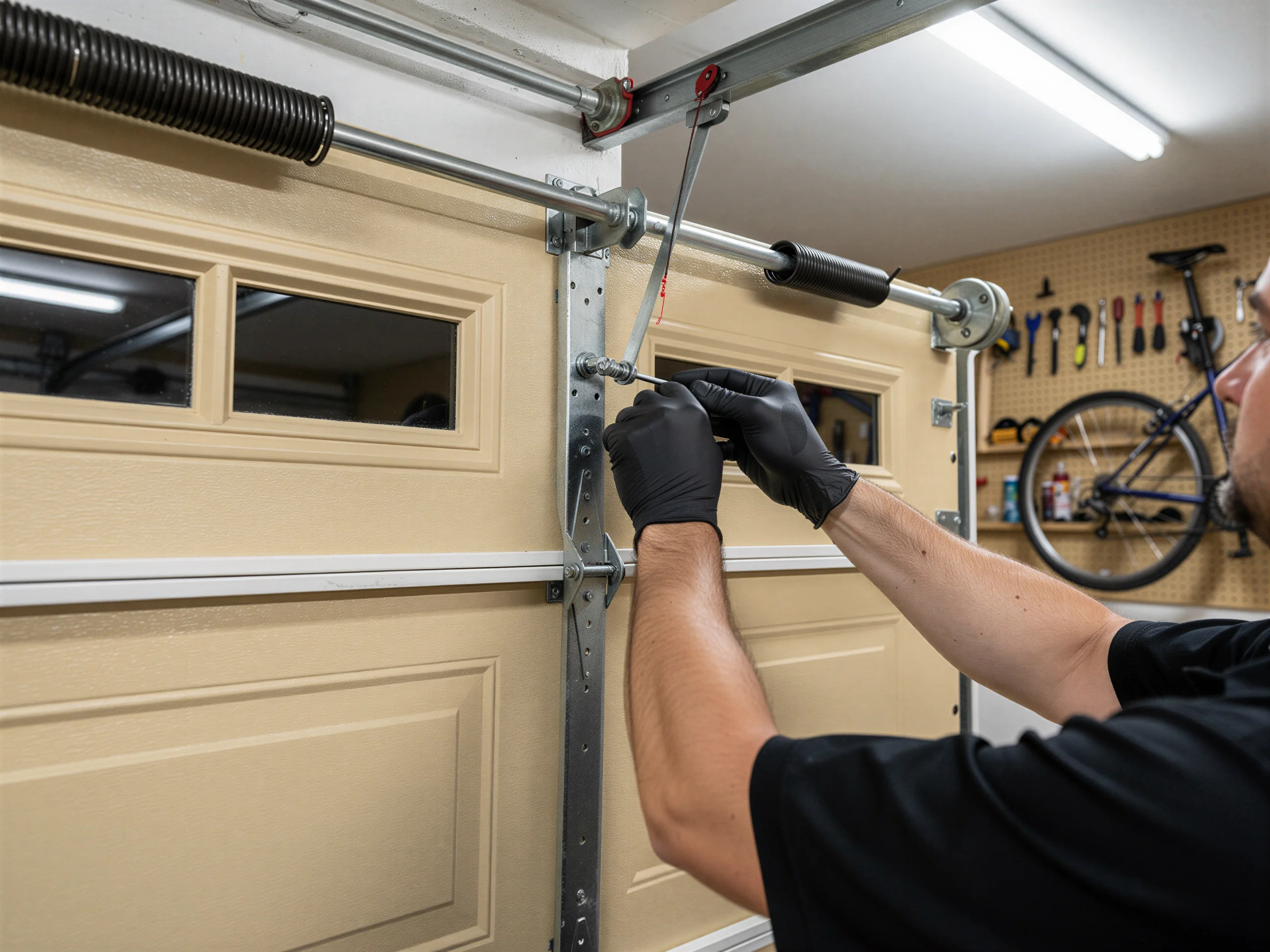
The real risk with hardware this old isn't the spring itself - it's everything the spring is attached to. A cable that's frayed from decades of travel over a worn drum can snap under tension and whip loose with real force.
Cracked center bearing plate
A center bearing plate that's cracked but still holding will eventually let the shaft shift sideways, which can bend the end brackets or crack a panel on contact.
Partial fixes fail again
And because a lot of these doors in Diamond Bar's older construction never had their torsion hardware upgraded, a repair that only replaces the broken part and ignores a worn bearing or pitted drum often fails again within a year.
Flagging nearby failures
We flag what else is close to failing when we're already in there, because on a door with this many original parts, a second trip for the next thing to go is the expensive outcome, not the cheap one.
Why This Fails Locally
Diamond Bar's housing stock centers on 1979 - seven years newer than the 1972 median across the broader Chino service area, and later than the 1960s-70s builds that dominate most of the 39 communities we cover. That gap matters more than it sounds. A garage built in 1979 usually shipped with torsion spring hardware rather than the older extension-spring setups common in earlier tract construction, but the torsion shaft, the center bearing plate, and the drum cones are often still the same pieces the builder installed. Forty-plus years on steel that's never been swapped means fatigue in places you can't see from the driveway: a winding cone with hairline cracks, a shaft worn oval at the bearing seat, lag screws backed out a thread or two from decades of vibration. None of that shows up until the spring lets go or the door starts dropping unevenly on one side. We see this pattern across Diamond Bar's roughly 18,238 households often enough that it's not an exception - it's what a door from that build year does when nobody's touched the hardware since the house was new.
Talk to a local pro
Garage door service in Chino?
Same-day service with honest, upfront quotes.