How It Shows Up
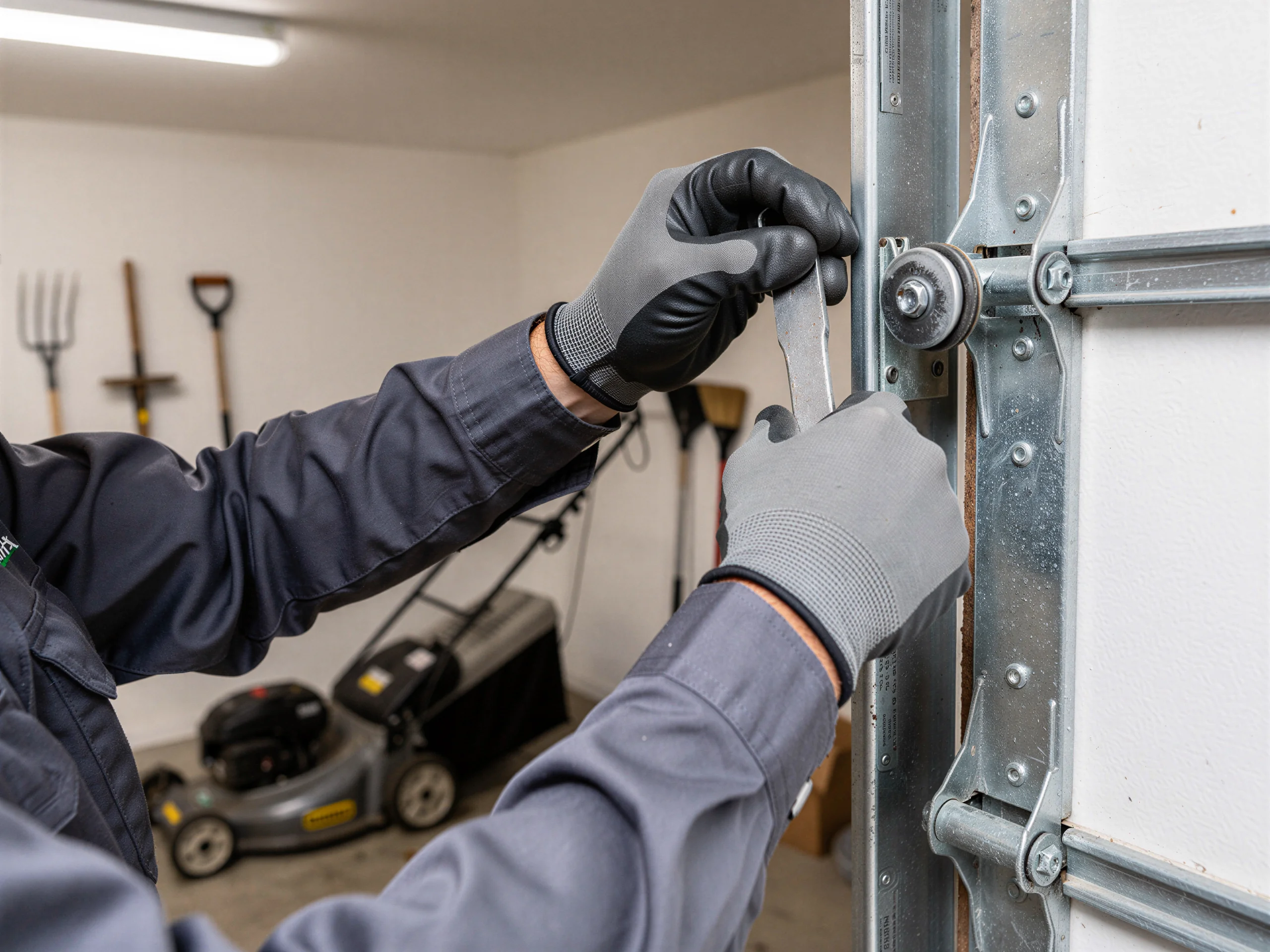
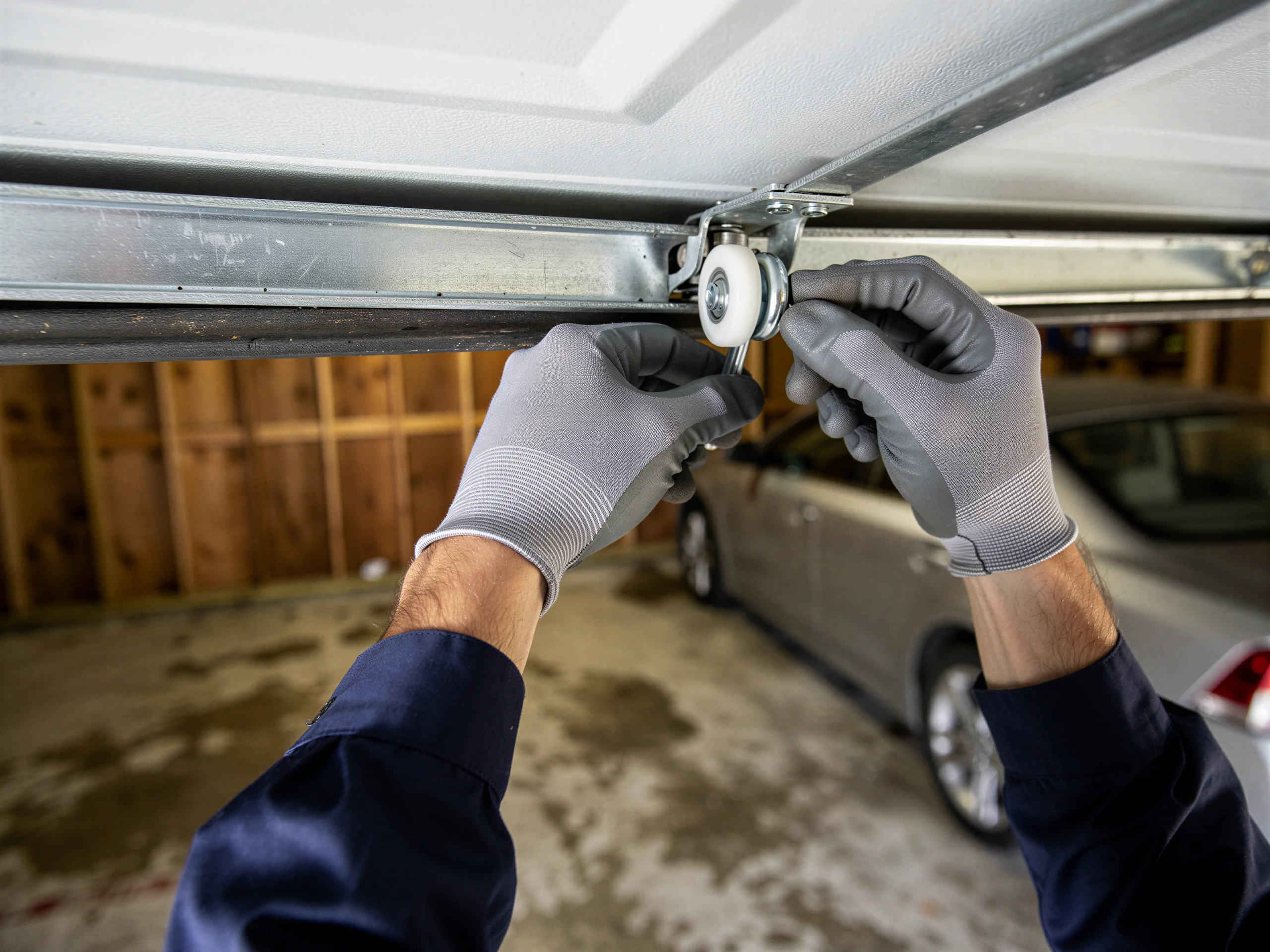
The door grinds or squeals as it travels, worse at the start and end of the cycle where the roller sits in the curved part of the track.
Cold mornings reveal wear
You'll notice it more on cold mornings before the metal warms up and less by afternoon - not because anything got fixed, just because metal expands. On steel-roller doors from the 1979 era, the stem usually wears unevenly, so the door starts to walk sideways in the track a little on one side.
Corner gap signals rollers
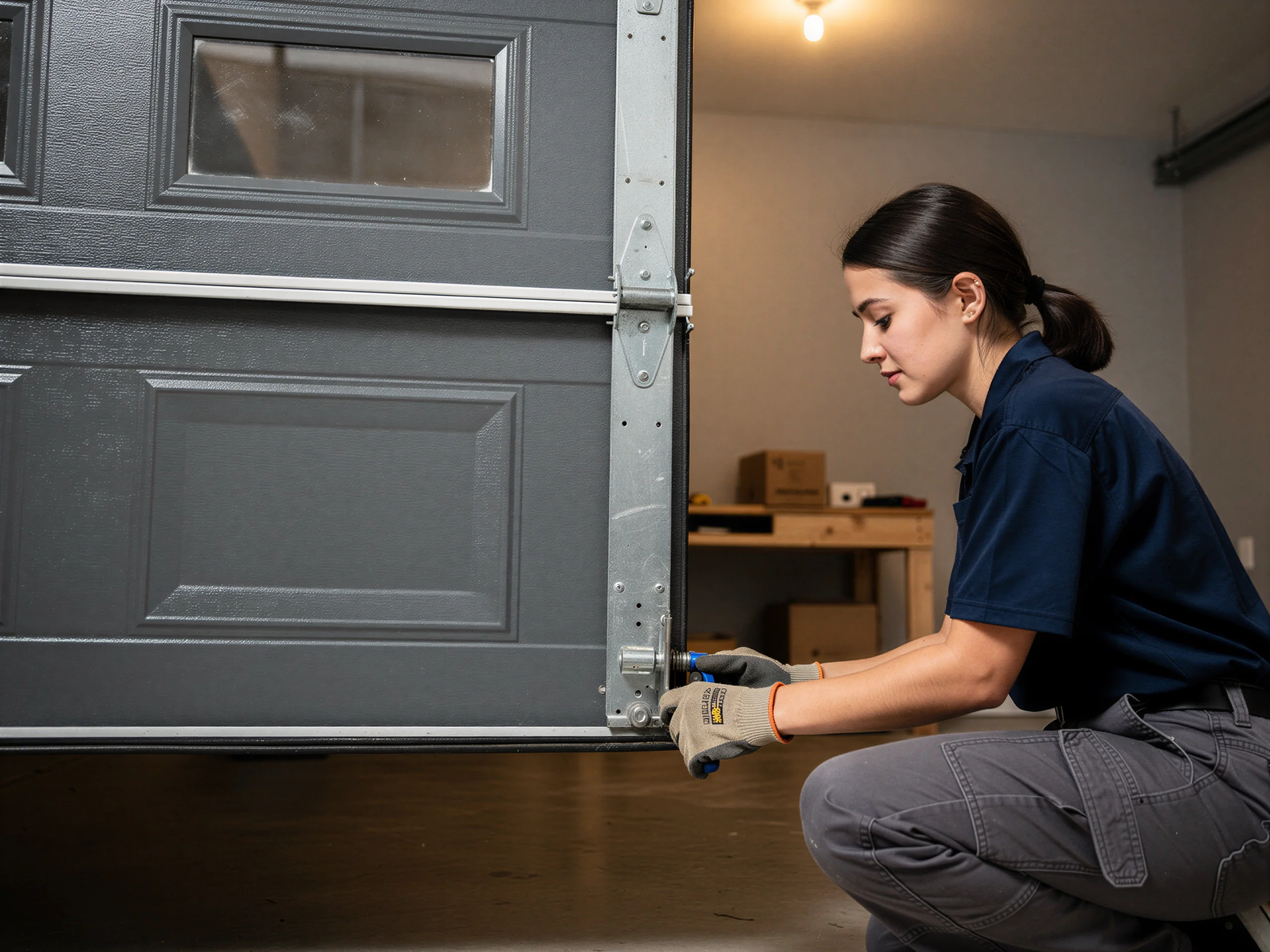
That shows as a visible gap between the bottom panel and the weatherstrip on one corner, or a door that looks slightly crooked when it's down. It's not the track that bent - in most of these jobs the track is fine, it's the roller riding in it that's worn out of round.
What Can Go Wrong
A roller that's worn but still turning is a nuisance. A roller that's seized - where the wheel stops spinning and just drags or skips in the track - is where it gets expensive fast, because a dragging roller chews the track itself, and track replacement costs more than rollers ever will.
The other failure mode on 1979-era hardware is a roller stem that snaps clean off while the door is moving. On a double door especially, that drops one corner suddenly, which can bind the opener's drive gear or bend the bottom panel against the frame. We've seen both outcomes start as the same quiet squeal a few weeks earlier. Waiting on a noisy roller doesn't save money - it usually moves the job into track or panel repair instead.
What It Costs
We don't publish a flat price here because roller jobs vary by how many rollers need replacing, whether the track needs adjustment alongside them, and whether it's a single or double door.
Roller sets count as repairs
What we can tell you is where the line sits: full roller sets are a repair job, not a replacement job, for the overwhelming majority of doors we see on houses built around 1979 in Diamond Bar.
Replacement decided on site
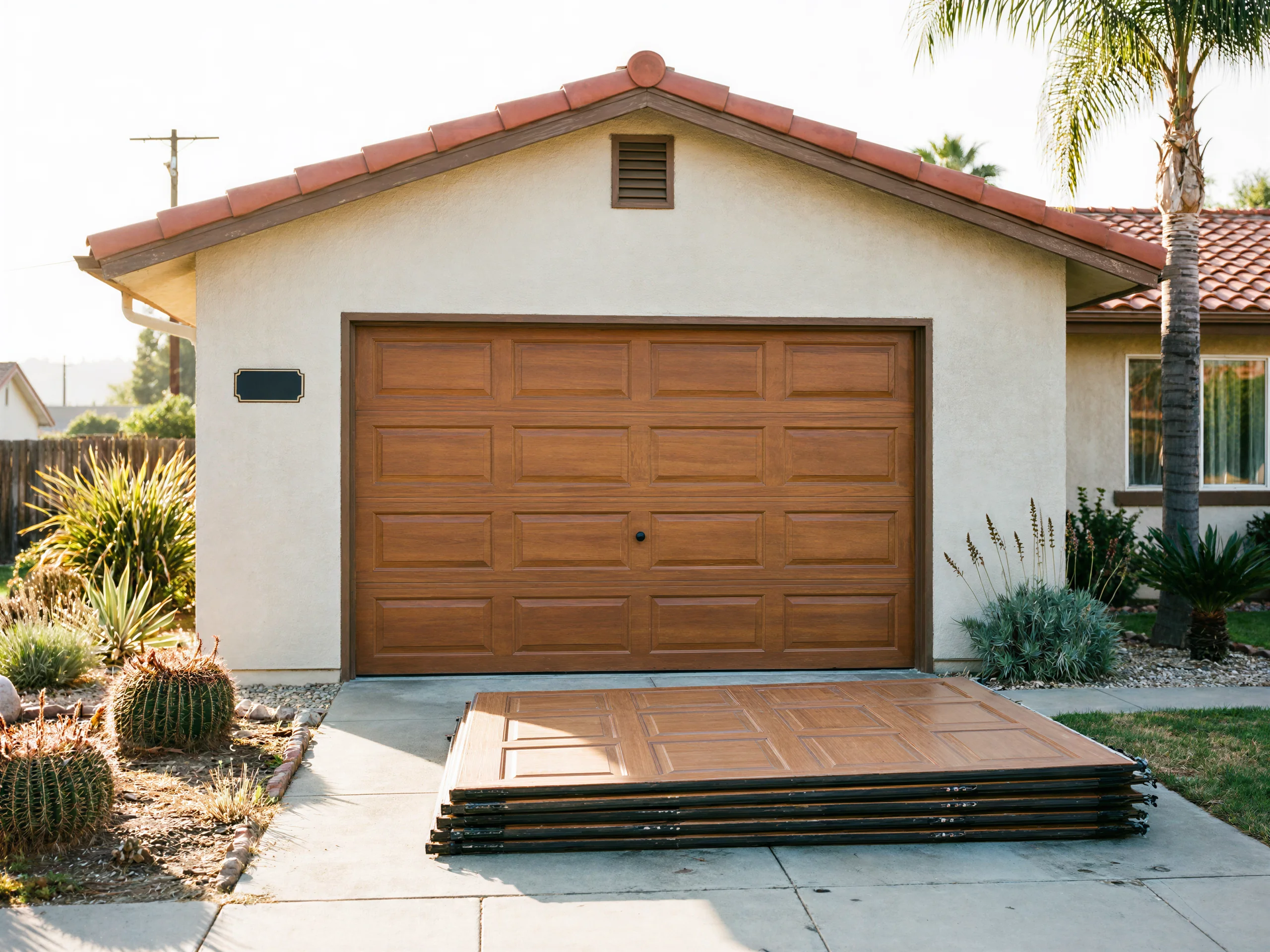
Replacement only makes sense when the track itself is bent or the door is old enough that other hardware is failing at the same time. That's a call we make on the driveway, not over the phone, because it depends on what the rest of the track and hinges look like once we're under the door.
Stocked Parts
We carry nylon roller sets on the truck, which is the standard upgrade from the original steel rollers on doors from this build era - nylon runs quieter and doesn't wear the track the way steel does over time. Standard stems and bearings for sectional doors are stocked too.
What we don't carry on the truck is anything specialty - oversized commercial rollers or rollers for doors with nonstandard track radius. Those get ordered, and that's the one honest limit here: if your door isn't a standard residential sectional, the first visit may be diagnosis only, with the part following after.
How Long You Are Without the Door
The crew comes out of Chino, nine miles from Diamond Bar. We don't quote a guaranteed arrival window here since that depends on the day's other jobs, but a straightforward roller swap on a standard door is a same-visit repair once someone's on site with the right parts.
If your door needs an ordered part - the specialty rollers mentioned above - the door is usually left workable but noisy in the meantime rather than left closed. We'll tell you straight if that's the situation before we leave.
Why This Fails Locally
Diamond Bar's median household income runs $106,602, a notch above the $105,104 figure across the wider Chino service area. That number matters here because it's usually the line between fixing a roller set and replacing the whole door - at this income level, most owners choose the repair, since the door itself and the opener are usually still sound.
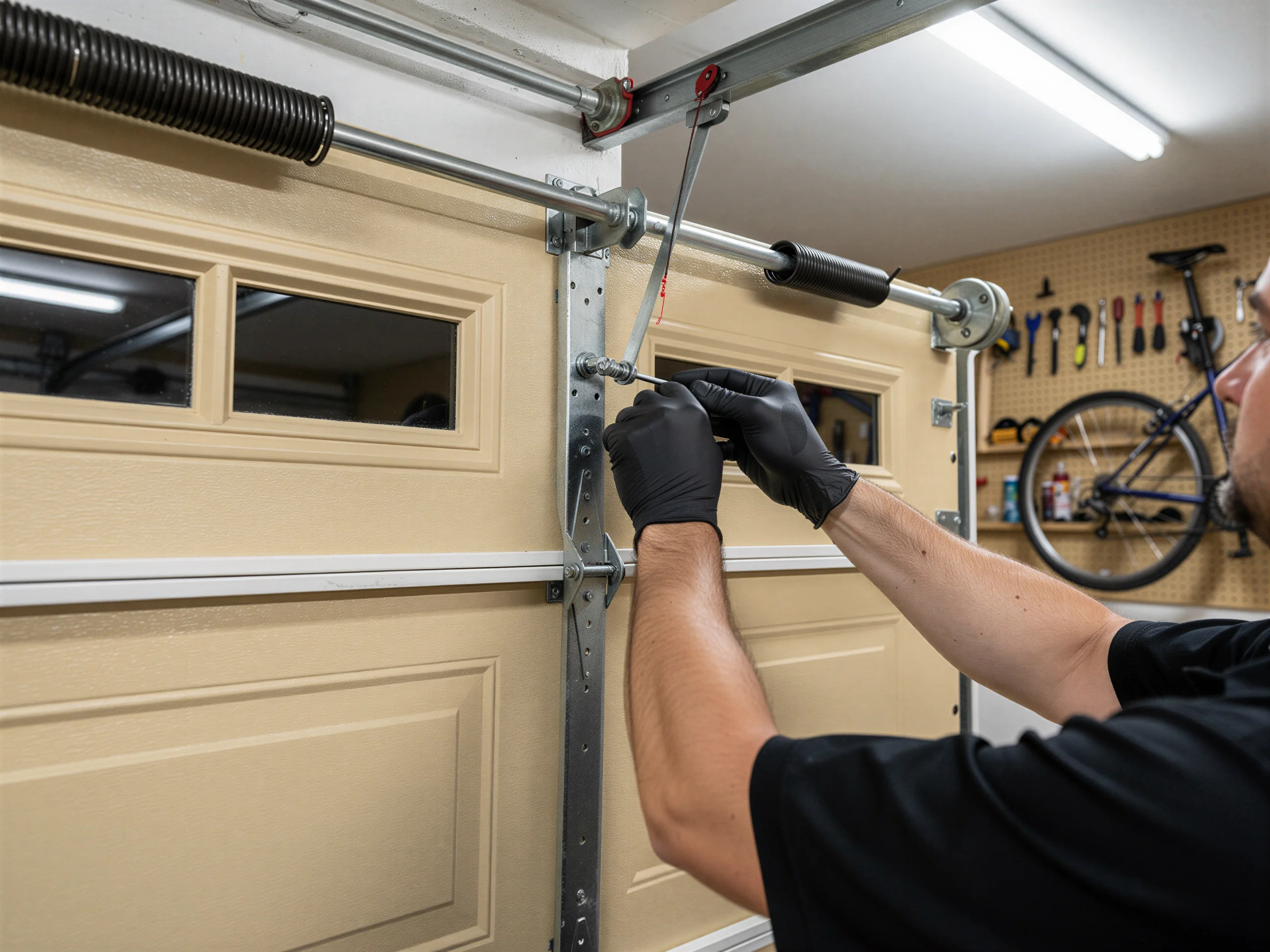
What's actually failing is the hardware, not the door. The typical house in Diamond Bar went up around 1979, seven years later than the 1972 median across the rest of the service area. That later build date means steel sectional doors with factory steel rollers rather than the older single-panel doors you see on the inner, pre-1960s streets closer to Chino. Steel rollers on hardware from that era don't fail the same way nylon rollers do - they wear the stem and the bearing races, and they get loud well before they seize. If your door sounds like a shopping cart on a bad wheel, that's usually this, not the opener and not the spring.
Talk to a local pro
Garage door service in Chino?
Same-day service with honest, upfront quotes.