How It Shows Up
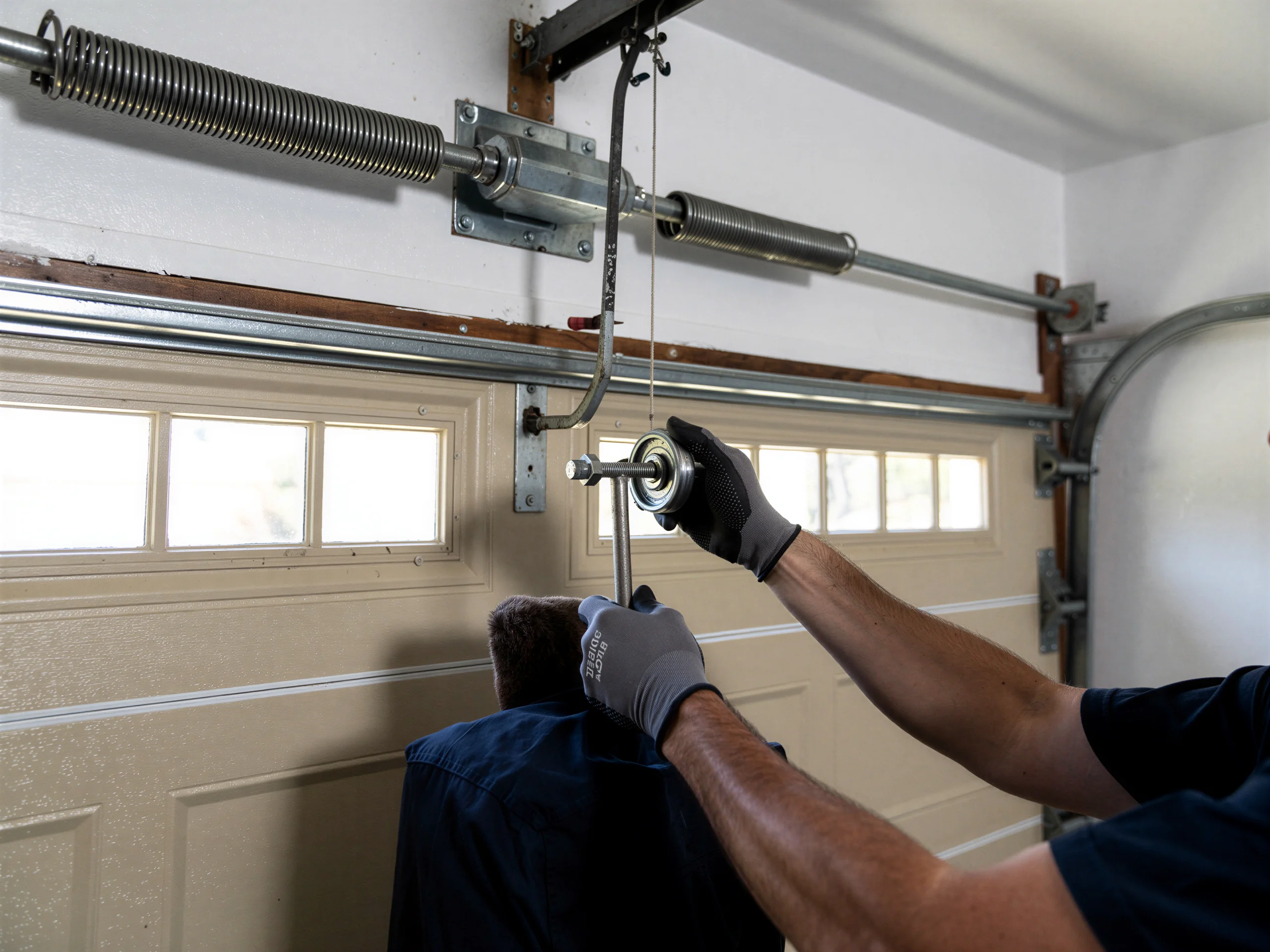
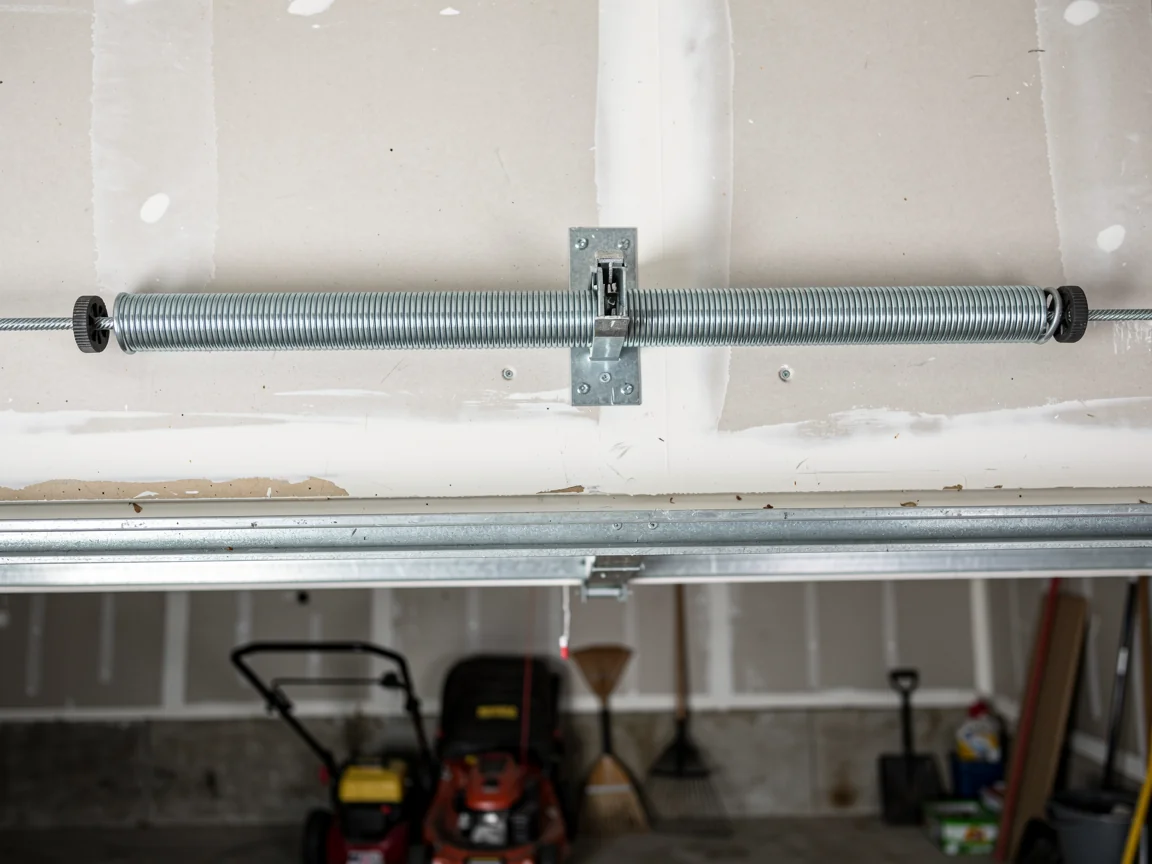
On a 1979 torsion setup, the first sign is usually noise, not failure: a grinding pop when the door rises, or a shudder partway up.
Chattering rollers and flecks
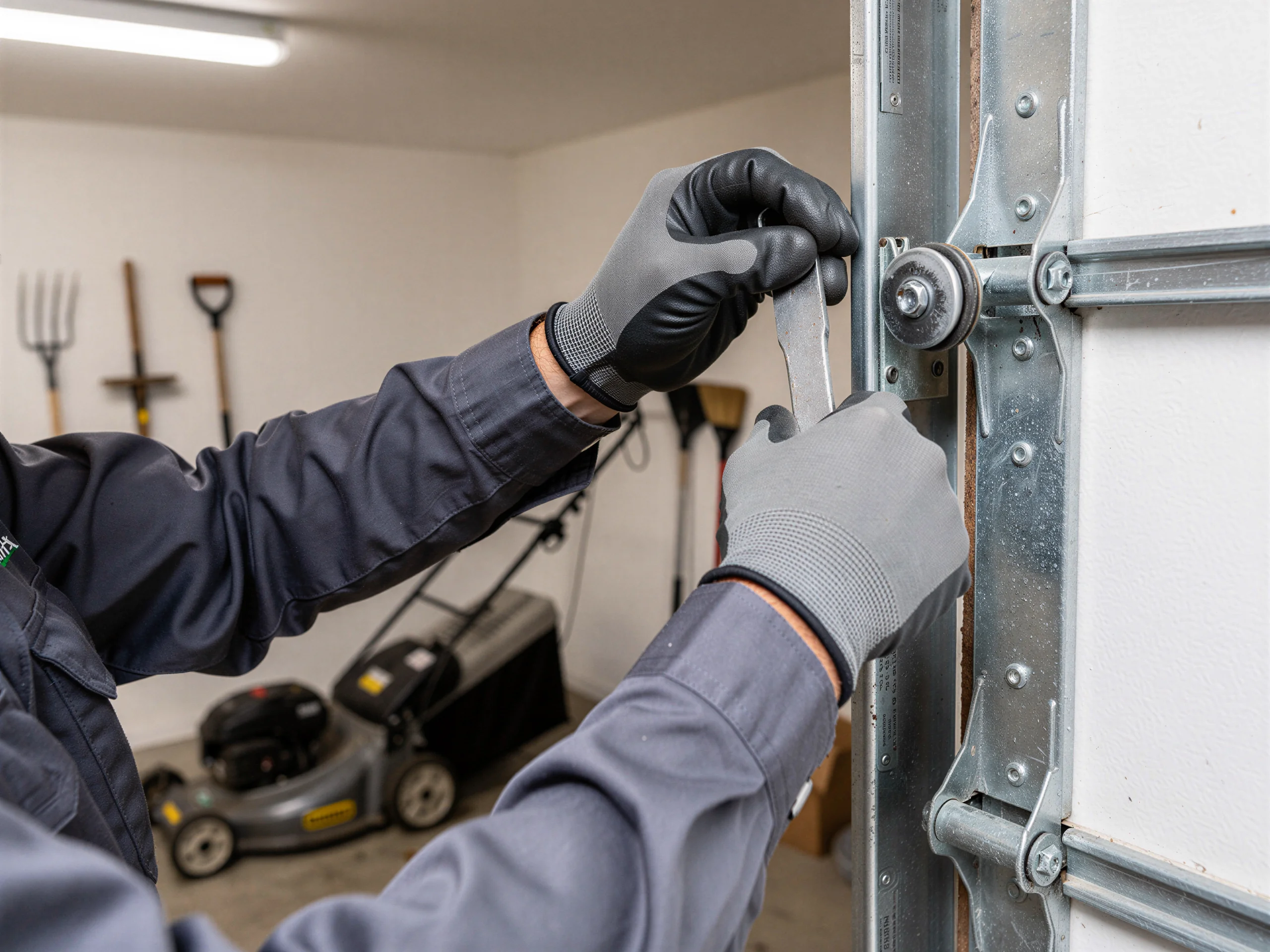
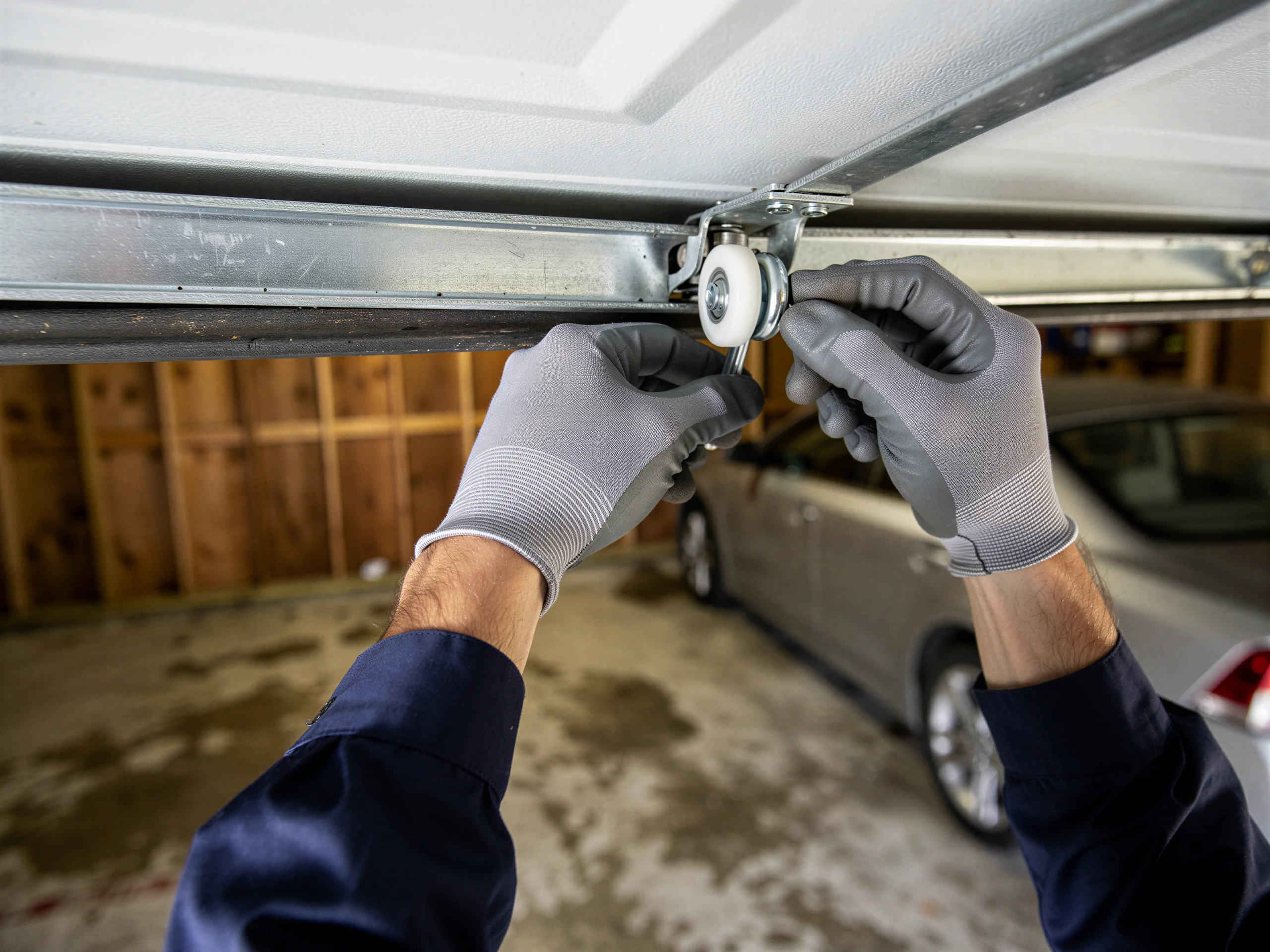
That's the spring losing tension unevenly, which strains the opener motor on every cycle after. Original rollers, worn down after four decades, start chattering in the track and leave black flecks of nylon on the floor.
Door drifting off level
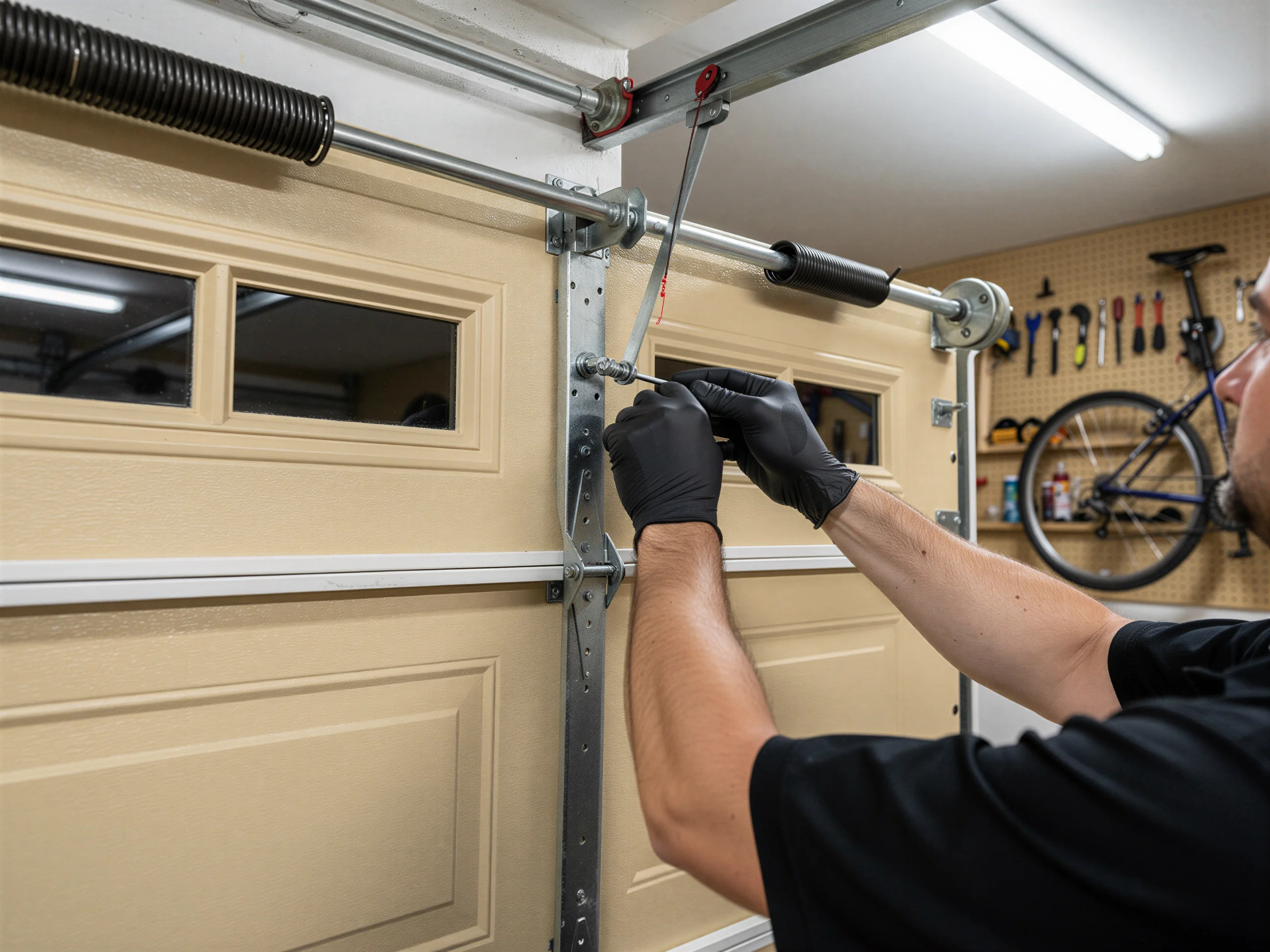
You'll also see the door drift slightly off level as it closes, a sign the cable on one side has stretched more than the other. None of these mean the door is done. They mean the hardware is at the point where it needs attention before it becomes a stuck door at 6 a.m.
Old parts need scheduling
Owners in the newer sections of Diamond Bar sometimes assume a 1979 build means modern parts; it means parts that are old enough to need lubrication and adjustment on a schedule, not parts that need replacing outright.
What It Costs
We don't have a flat number to quote here, and we're not going to invent one. What moves the cost on a maintenance visit is mostly whether the torsion spring and cable are original to a 1979 install or have already been swapped once. Original hardware from that era is heavier and the drums are sized differently than what's sold today, so a lubrication-and-adjust visit runs different than one where a roller or cable needs matching to decades-old spec. The honest answer is that we price after we see the door, not before, because two houses built the same year on the same street can have completely different wear depending on how often the door cycles and whether anyone's touched it since it went in.
Stocked Parts
The truck carries rollers, cable, and standard torsion springs sized for the common residential door openings built through the 1970s and 80s, which covers most of what's on a Diamond Bar garage.
Exact-match drums not guaranteed
What we don't always have on hand is an exact-match drum or end bearing plate for a door that's never been serviced and still has its original 1979 hardware stamped to specs nobody sells new.
Safe now, match later
When that happens, the visit still gets the door running and safe, but a true match on obsolete hardware can mean a short wait on a part instead of a same-visit fix. We'd rather tell you that up front than pretend every 45-year-old bracket is sitting in a bin.
How Long You Are Without the Door
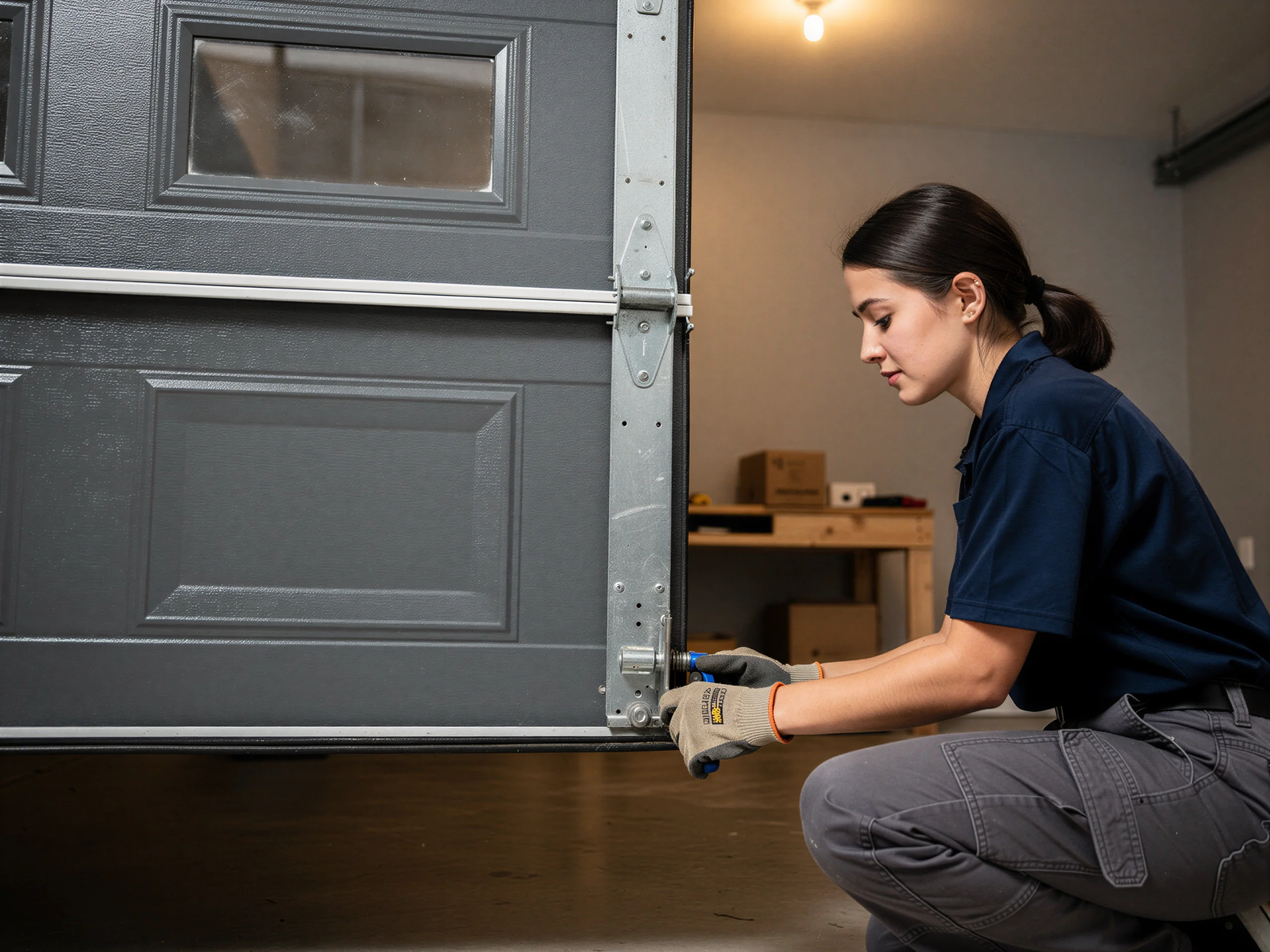
The crew comes from Chino, nine miles out, which is close enough that a maintenance visit doesn't turn into a half-day event. Once the technician is on site, a standard lubrication, spring-tension check, and roller inspection on a 1979-era door usually doesn't leave the door non-functional at any point - it's adjusted while closed, then tested open and shut before the truck leaves. The exception is if a part needs replacing that isn't in stock; in that case the door is left in a safe, locked position and the return visit is scheduled once the part is in.
What Can Go Wrong
The real risk with a 1979-era door isn't the spring itself, it's deferring the check past the point where the cable or the drum is also compromised.
Spring snap under load
A torsion spring that's been slowly losing tension for years can snap under load, and if the cable's frayed at the same time, the door can come down unevenly instead of straight.
Loose header brackets
We also see brackets that have worked loose from the header over decades of thermal cycling, which isn't a spring problem at all but gets blamed on one.
Patching end-of-life systems
Our limitation here is straightforward: if the door's original hardware is at the point where three or four parts need replacing at once, we'll say so rather than keep patching a system that's at the end of its service life. Sometimes maintenance is the wrong call and a full hardware swap is the honest one.
Why This Fails Locally
Diamond Bar's housing stock centers on 1979, about seven years newer than the 1972 median across the rest of the service area, where most tracts went up in the 1960s and 70s. That gap matters more than it sounds. A house built in 1979 usually shipped with a torsion spring over the header rather than the side-mounted extension springs common on the older tract homes closer to Chino, and the steel sectional door itself was lighter gauge than what you'll find on a 1962 build. The hardware holds up fine for decades, but it was never maintenance-free. Rollers were nylon on a steel stem, not sealed bearings, and the track brackets were bolted, not welded, which means they work loose with thermal cycling. The service area sits in a moderate heat band, and a door that sits closed through hot afternoons dries out factory grease faster than the household expects. Add 18,238 households in Diamond Bar, a median income of $106,602 (slightly above the area's $105,104), and you get a town where garage doors get used daily, by owners who can afford to fix things right, but who often don't know their door is 1979-vintage until a spring lets go.
Talk to a local pro
Garage door service in Chino?
Same-day service with honest, upfront quotes.