How It Shows Up
On a door this age, the signs build slowly before the door quits outright. You'll notice the door shuddering partway through its travel, or one side lifting a half-second before the other because a cable has stretched unevenly.
Chalking paint and rust
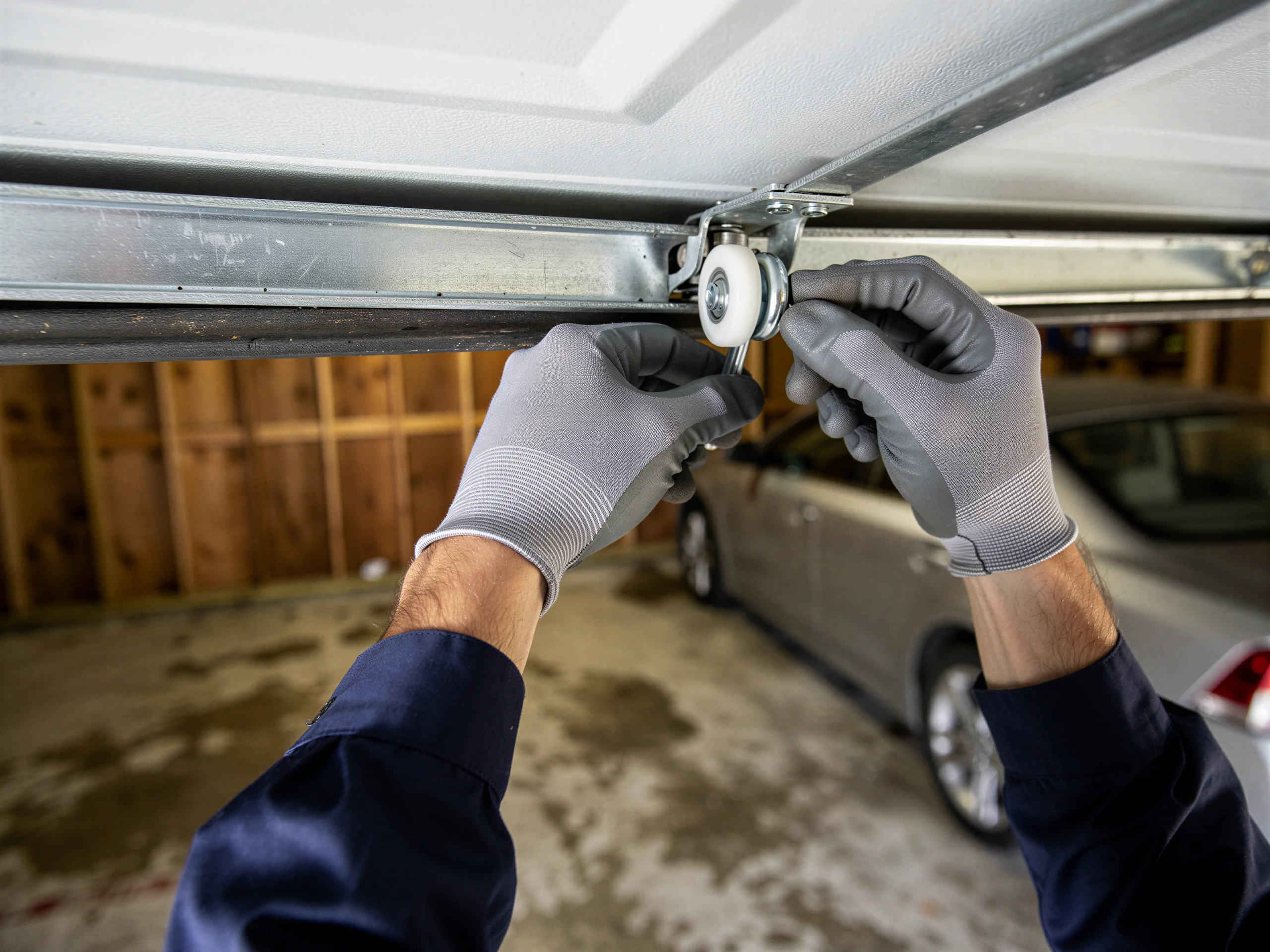
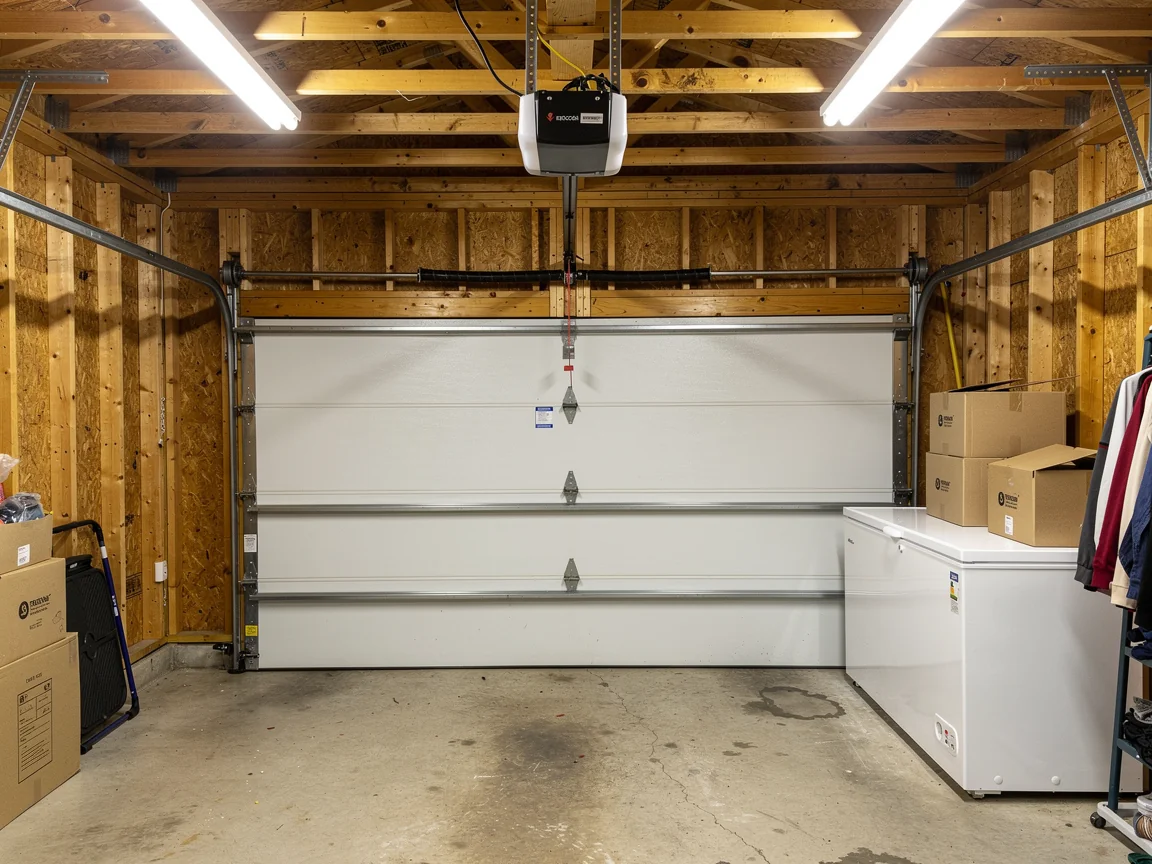
Paint on the panels chalks and cracks from sun exposure, and the bottom panel often shows rust or rot where moisture collects at the seal. Rollers that started as steel or cheap nylon in a 1979 install are usually down to bare metal-on-metal contact by now, which is where the grinding noise comes from.
Sagging panels strain opener
Some owners notice the opener straining harder than it used to - the motor hasn't changed, but the door has gotten heavier to lift as hinges loosen and the panels sag out of square. None of this means the opener is the problem.
Frame no longer square
It usually means the door itself has reached the point where adjustment isn't fixing it anymore, just delaying the call. A door that won't hold a square frame is the clearest sign that repair has stopped being the cheaper option.
What It Costs
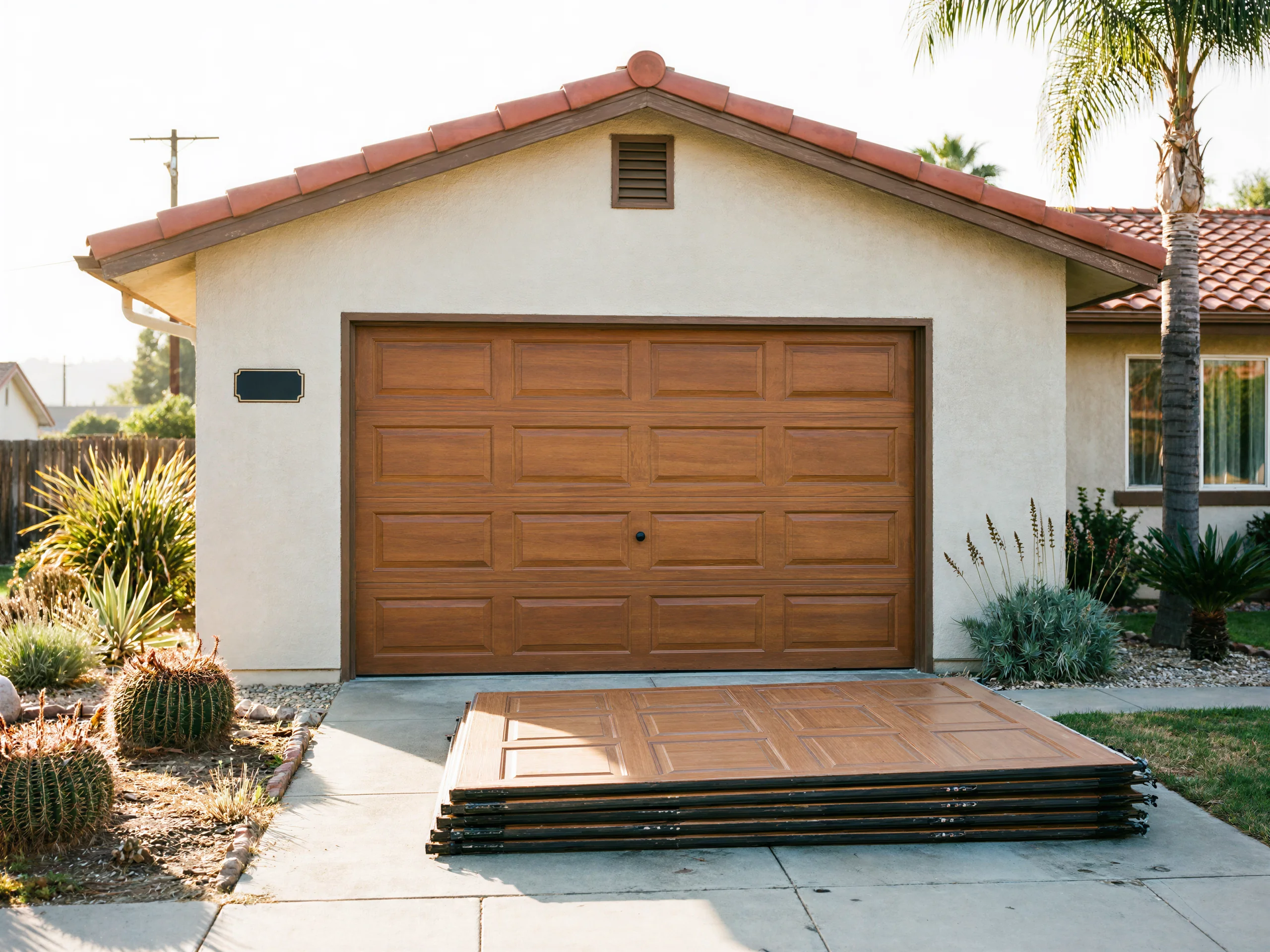
We don't post flat prices for a new door install here, because the cost swings on the door size, the opening (9x7 single or 16x7 double are both common on 1979-era Diamond Bar lots), and whether you want insulated steel or a lighter uninsulated panel to match what was there before. Homeowners in this area, with a median household income running slightly above the wider service area's $105,104, more often ask about insulated or composite doors instead of the bare single-layer steel that shipped originally - that upgrade changes the number more than almost anything else on the job. What we can tell you up front: a straight swap, same size opening, standard steel door, costs less than anything involving custom width, a higher-lift track for extra headroom, or matching an odd original opening. We'll give you a real number once we've seen the opening in person - guessing on a page doesn't do you any favors.
Stocked Parts
A 1979-era house in this part of the service area almost always has one of a handful of standard openings, and the truck carries doors and hardware sized for those openings as a matter of course - nothing exotic needed for the typical job.
Extension-to-torsion matching
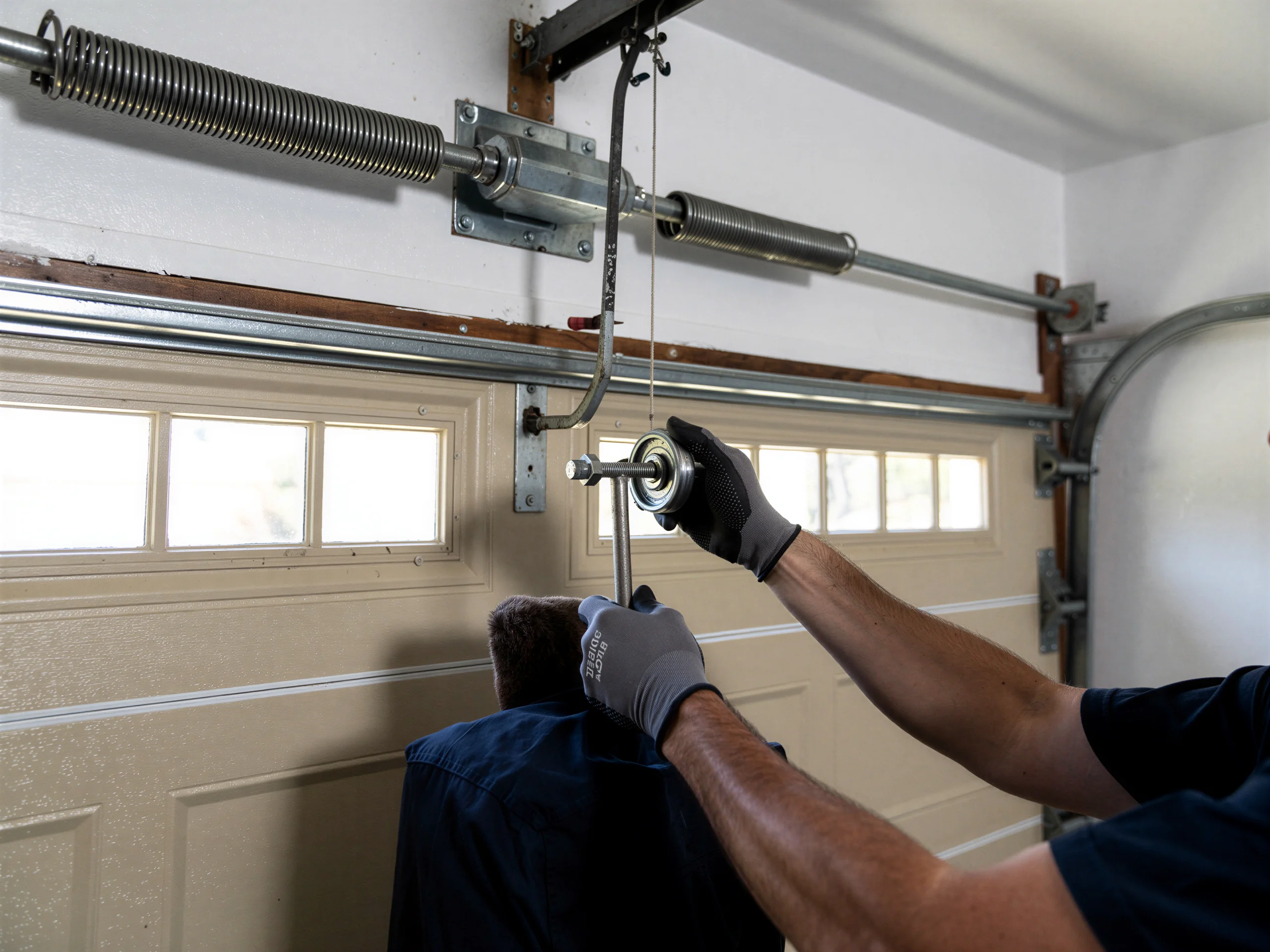
What slows a job down is almost never the door panel itself; it's matching old-style extension spring setups, which some of these builder-grade installs used instead of torsion springs, to a track and drum system that isn't made the same way anymore.
Flagging extension spring pairs
If your garage still runs on the original extension spring pair bolted along the horizontal track, that's worth flagging on the call, because it changes what we bring. Standard torsion spring replacements for the common sizes are routine.
Nonstandard sizes need quotes
A nonstandard width, a custom insulated panel order, or a full torsion conversion from an old extension setup is the kind of job that needs a lead time we'll quote once we've measured, not guessed at from a web page.
How Long You Are Without the Door
We run this job from Chino, about 9 miles out, so travel time is part of the schedule but it's not the long pole. The real variable is the door itself. If your opening takes a standard steel door we already stock, the old door comes down and the new one goes up the same visit. If you're converting from an old extension spring system to torsion, or ordering a custom insulated panel because the opening isn't a standard size, that part has to arrive before the install can finish - we won't give you a number for that here because it depends on what's actually on order at the time. We'll tell you straight during the estimate whether your job is a same-visit swap or a two-trip job with a wait in between. We'd rather tell you that up front than have you plan around a date we made up.
What Can Go Wrong
The most common mistake on a house this age is replacing the door panel but leaving worn track, hinges, or a weight-mismatched opener in place.
Opener sizing mismatch
A new door is heavier or lighter than the 1979 original depending on the material, and an opener sized for the old door can strain or fail to lift the new one correctly within months.
Skipping bearing plate updates
Another one we see: homeowners converting from extension springs to torsion without updating the end bearing plates, which leaves the new spring system fighting hardware it was never designed to sit on.
Settling before replacement
And sometimes the honest answer is that replacement isn't the right call at all - if the opening is out of square from foundation settling rather than door wear, a new door won't sit right until that's addressed first, and no amount of adjustment on our end fixes a problem that isn't in the door.
Why This Fails Locally
Most houses in Diamond Bar went up around 1979, a few years after the broader service area's 1972 median build date. That gap matters more than it sounds. A door from 1972 was likely already replaced once by the time a 1979 door starts failing - these are tail-end builder-grade installs, steel sectional panels hung on hardware that was already getting cheaper by the late '70s as tract builders cut costs. A lot of these original doors are still up. They're single-layer steel, no insulation, sized to the standard 16x7 or 9x7 openings that dominate this kind of construction run. The panels themselves aren't the weak point after four and a half decades - it's the springs and the track alignment that give out first, especially with the moderate heat cycling this part of the service area sees, which stresses steel fasteners and torsion coils over the years. When a homeowner here calls about a new door, it's rarely because the door failed suddenly. It's because the door has been sagging, binding, or grinding for months and finally stopped being worth patching.
Talk to a local pro
Garage door service in Chino?
Same-day service with honest, upfront quotes.