Can You Do This Yourself
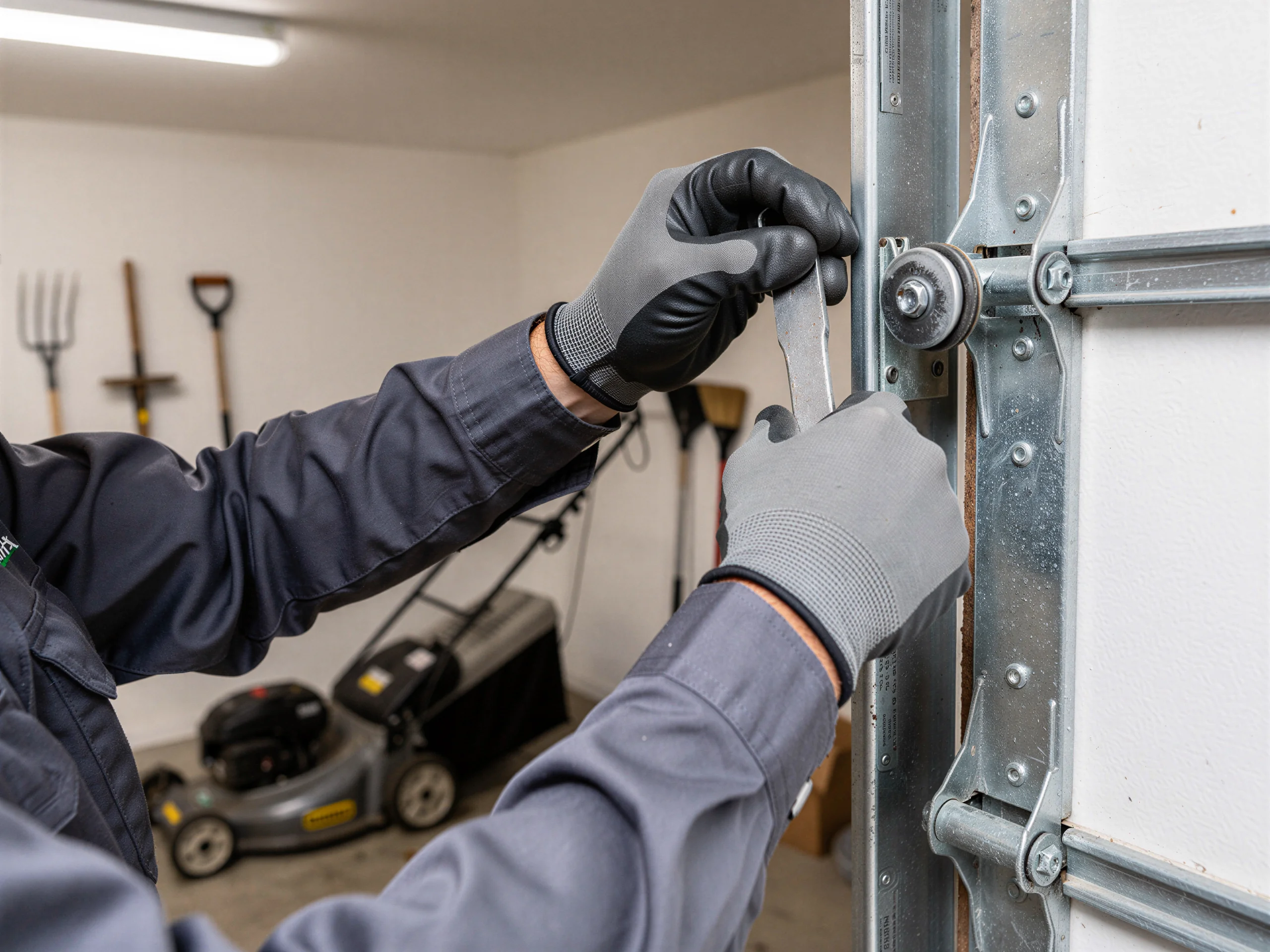
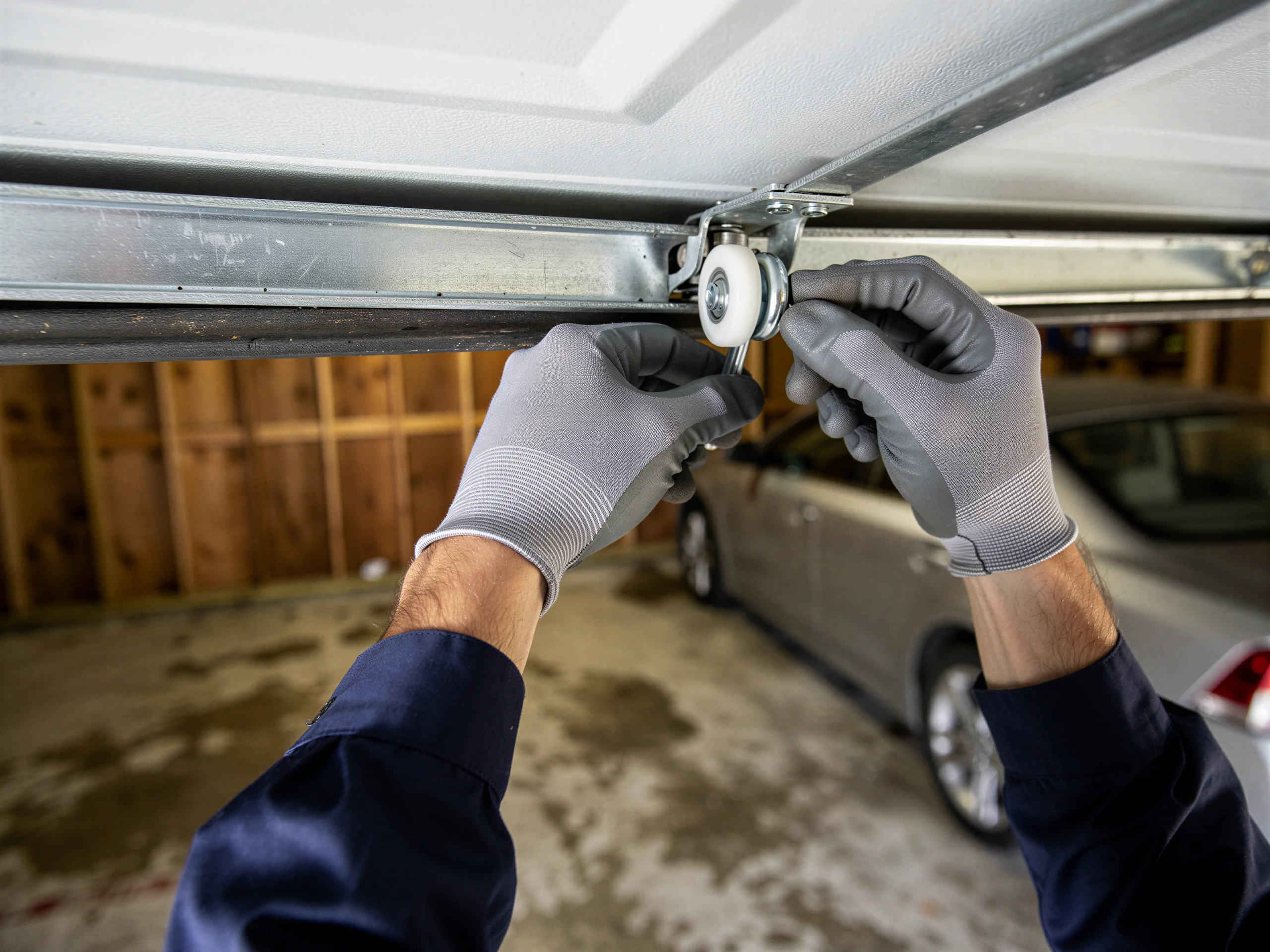
Some of it, yes. If your door is sticking or noisy, check the track for a buildup of grease and dust first - a wipe-down and a light spray of the right lubricant on rollers and hinges solves more squeaks than people expect.
Straightening photo-eye sensors
Photo-eye sensors near the bottom of the track get knocked out of alignment by a bumped broom or a stray box; straightening them yourself is safe and free. What you shouldn't touch is the spring itself.
Extension spring whip risk
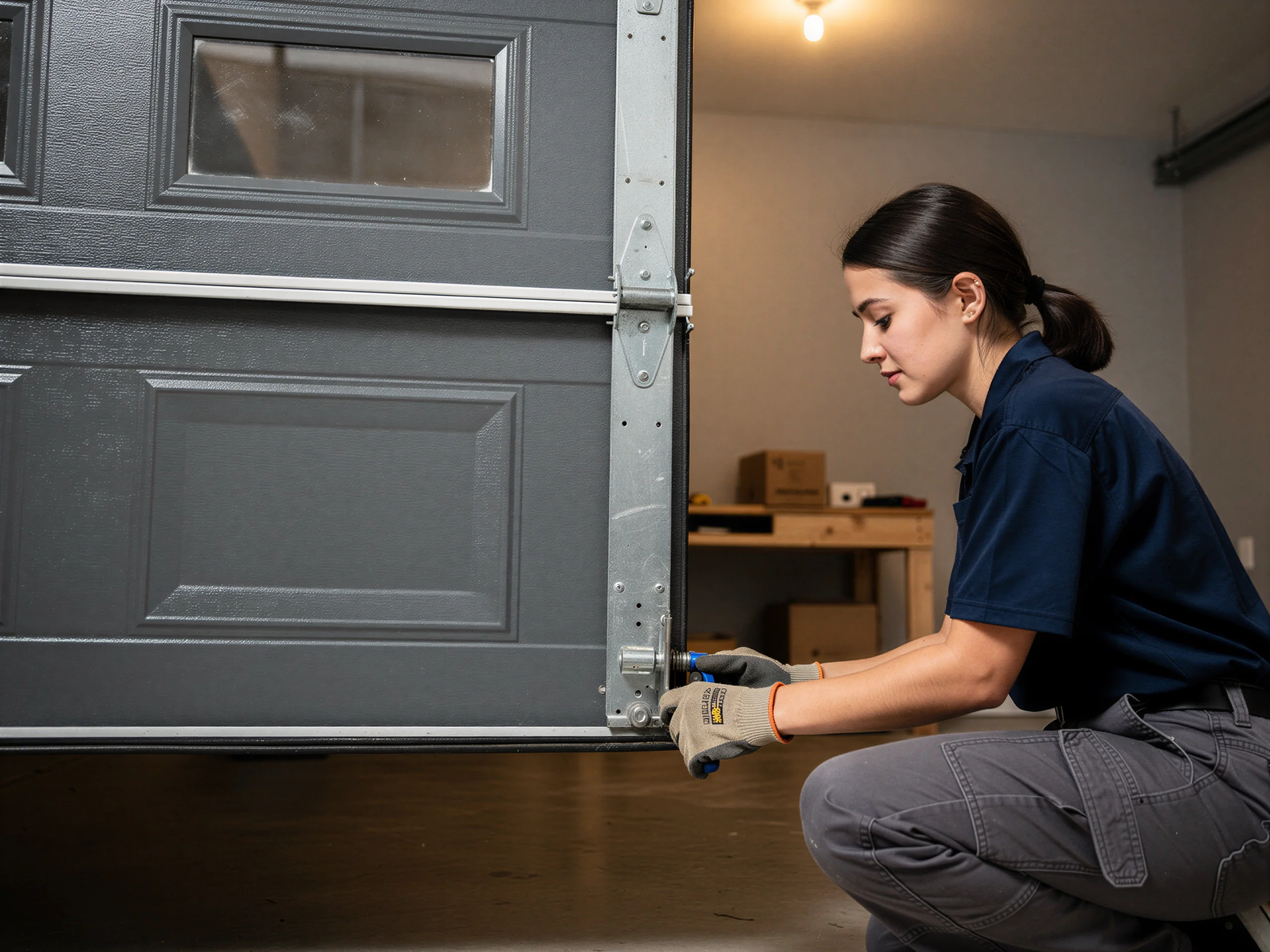
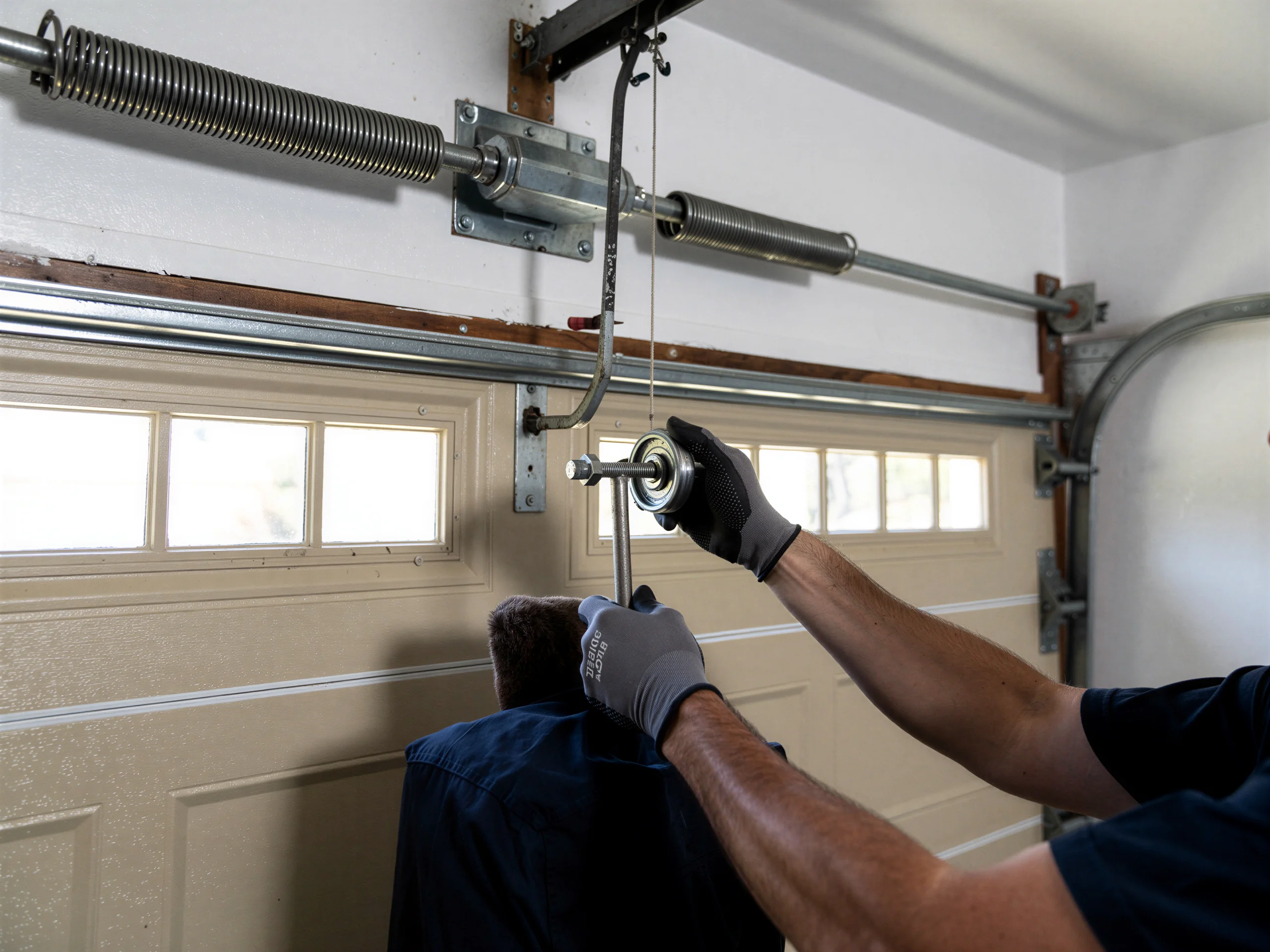
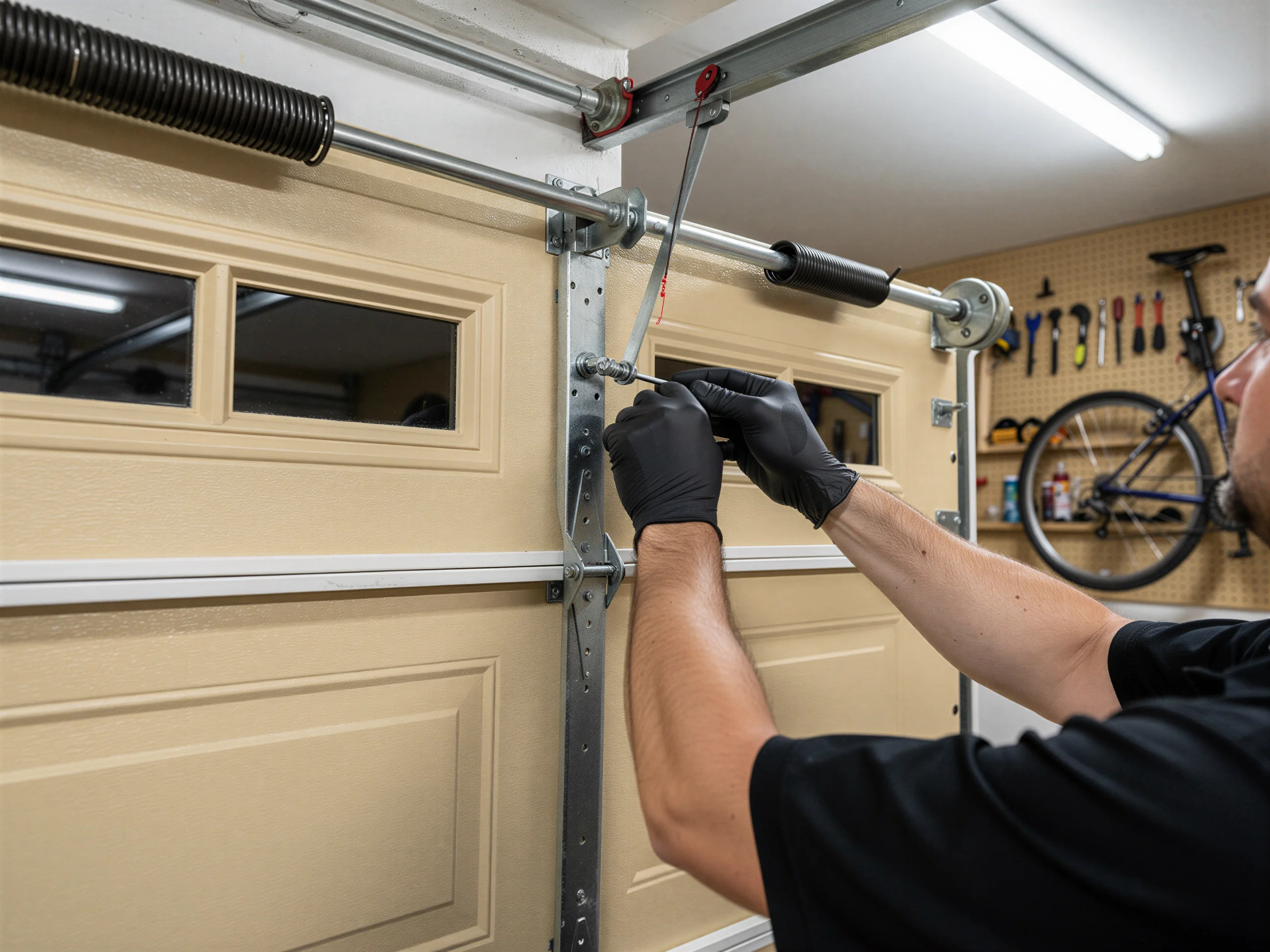
An extension spring under tension can whip hard enough to break a finger or put a hole in drywall, and on a door built around 1980 you're also dealing with hardware that's had four decades to fatigue - the cable, the pulley, the stationary cone can all be weaker than they look.
Sagging side means call
If the door won't stay up on its own, or one side drops faster than the other, that's a spring or cable problem, not a tune-up. We'll say plainly: this isn't the job to learn on your own garage.
What It Costs
We don't have a price list to hand you here, and we're not going to make one up. What we can tell you is what drives the number. A door from the 1980 era is more likely to need an extension spring replacement than a torsion conversion, and extension hardware is generally cheaper to source because it's common across that generation of homes - Jurupa Valley's roughly 27,132 households include plenty of doors built to the same spec. What pushes a job up is age-related wear stacking on top of the obvious fix: a cracked pulley, a rusted cable end, a track that's bent from the door dropping unevenly before anyone noticed. We quote after we've actually looked at the door, not off a phone description, because two doors from the same year can need two very different repairs.
How to Book
We run out of Chino, about 11 miles from Jurupa Valley, so we schedule the trip rather than treat it as a drop-in stop. Call ahead and tell us what the door is doing - won't open, dropped on one side, grinding noise - and we'll bring the hardware that fits a door from this part of the service area rather than guessing on-site. You can see the service page for this town at /jurupa-valley/garage-door-service/, and if you want the full rundown of what we handle out of our Chino shop, that's at /garage-door-service-chino-ca.
How It Shows Up
In Jurupa Valley the call usually starts one of two ways. Either the door won't lift past a foot or two and the opener strains against it - a sign the extension spring has lost most of its stretch - or the door comes down fast and uneven, catching on one side, which points to a cable that's frayed through or a spring that's already snapped.
Bowing bottom panel seams
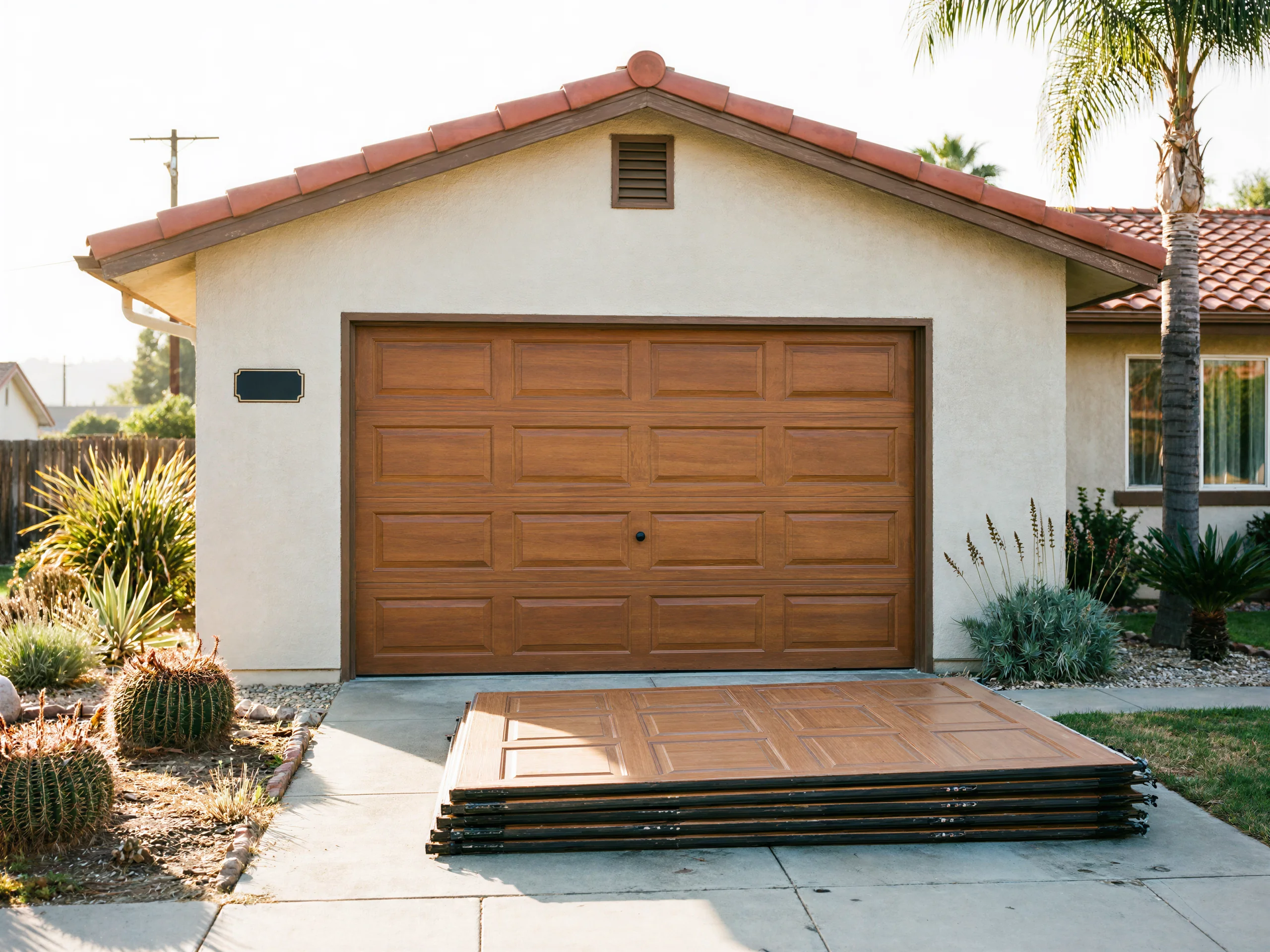
Given that most of this stock is now over forty years old, we also see panels that have started to bow at the bottom seam where moisture and heat cycling have worked the seams loose over time, even in a climate this dry.
Loose stationary cone
Less common but real: a stationary cone pulling loose from the header, which on an older door means the wood or steel backing it has fatigued, not just the spring.
Strain from uneven drops
None of these are emergencies that justify ignoring the door, but none of them fix themselves either - a door that's dropping unevenly puts more strain on the opener and the remaining hardware every time it's used.
Why This Fails Locally
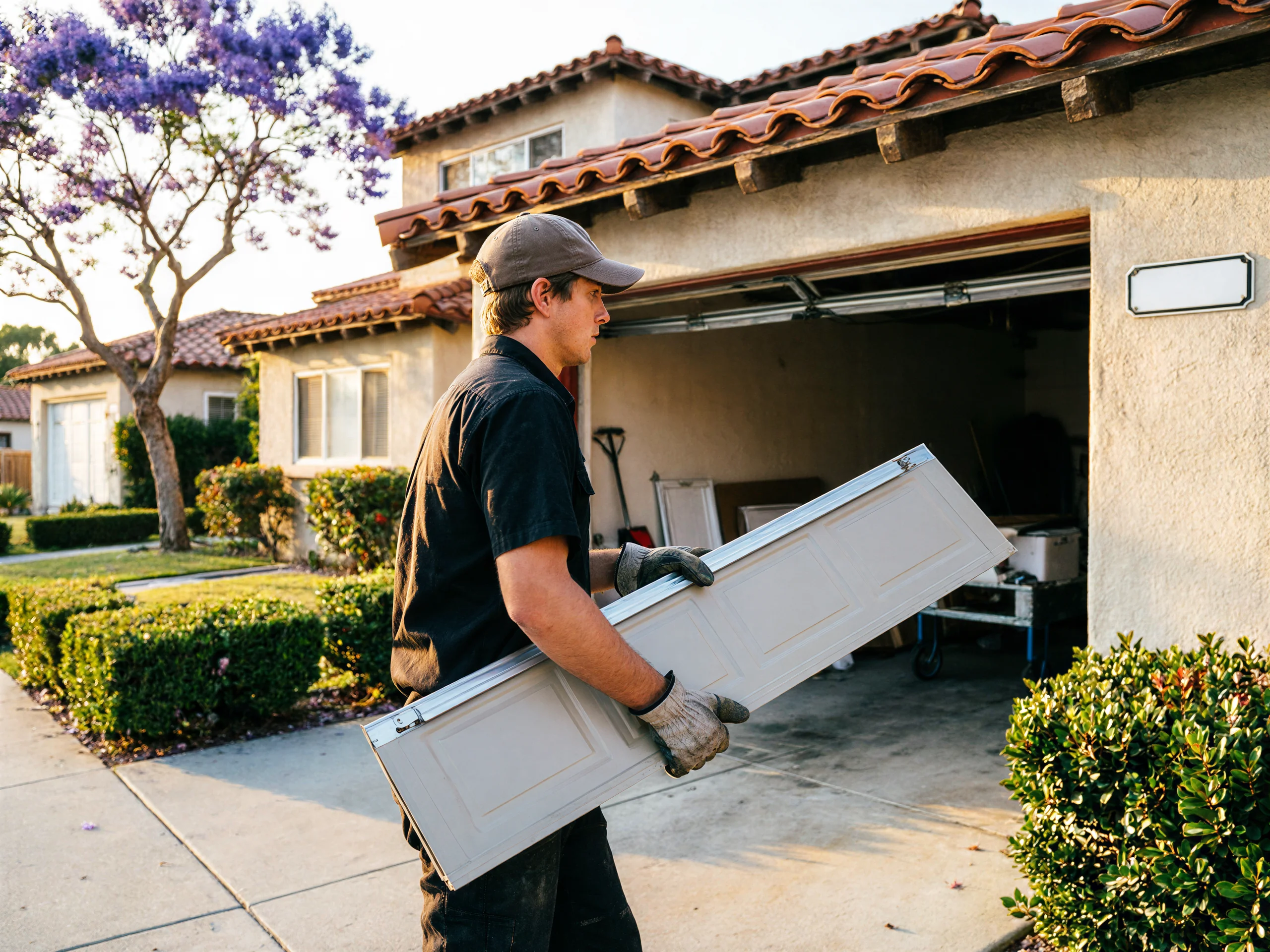
Most of Jurupa Valley went up around 1980 - noticeably newer than the typical house back toward Chino, where the service area's median build year lands closer to 1972. That eight-year gap matters more than it sounds. Builders in 1980 were still putting extension springs on a lot of single and double doors rather than the torsion-bar setups that became standard a decade later. Extension springs run along the horizontal track, stretched by the weight of the door, and they fail differently than torsion springs do - they stretch, lose coil tension, or snap outright, and when they go, the door tends to drop hard on one side instead of jamming square. We also see steel sectional panels from that build era starting to show their age: hinges worn oval from decades of cycling, rollers that have gone from nylon to bare steel wheel. None of this is dramatic damage. It's just forty-plus years of a door doing its job in a moderate-heat climate, where daily temperature swings work springs and hardware harder than a mild coastal town would. The fix for a Jurupa Valley door usually starts with figuring out which spring system you've actually got, because the part numbers aren't interchangeable.
Talk to a local pro
Garage door service in Chino?
Same-day service with honest, upfront quotes.