Can You Do This Yourself
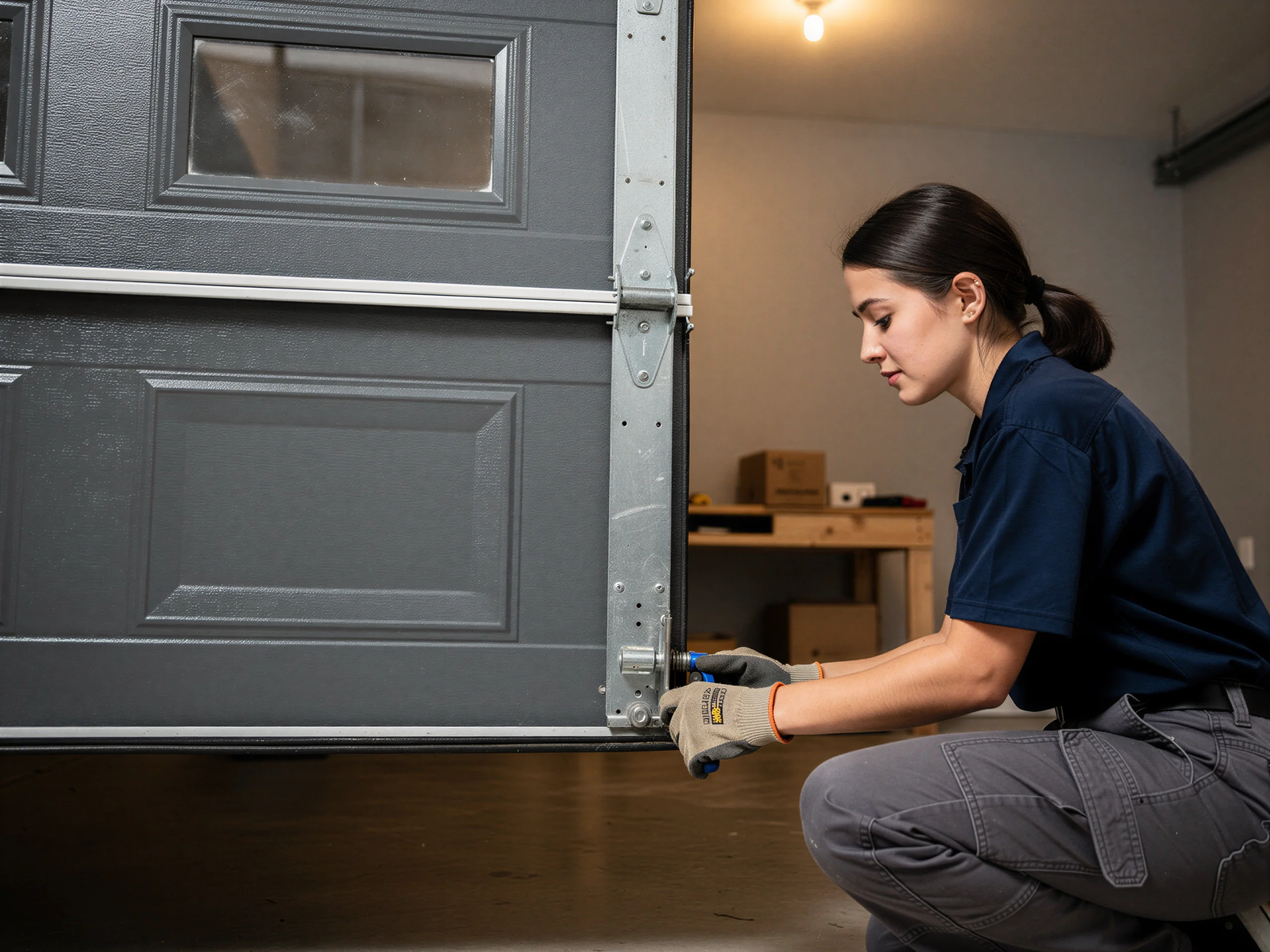
Some of this is fine to do yourself. Wipe down the tracks, check that the photo-eye sensors aren't coated in dust, and run a visual check on the cables for fraying.
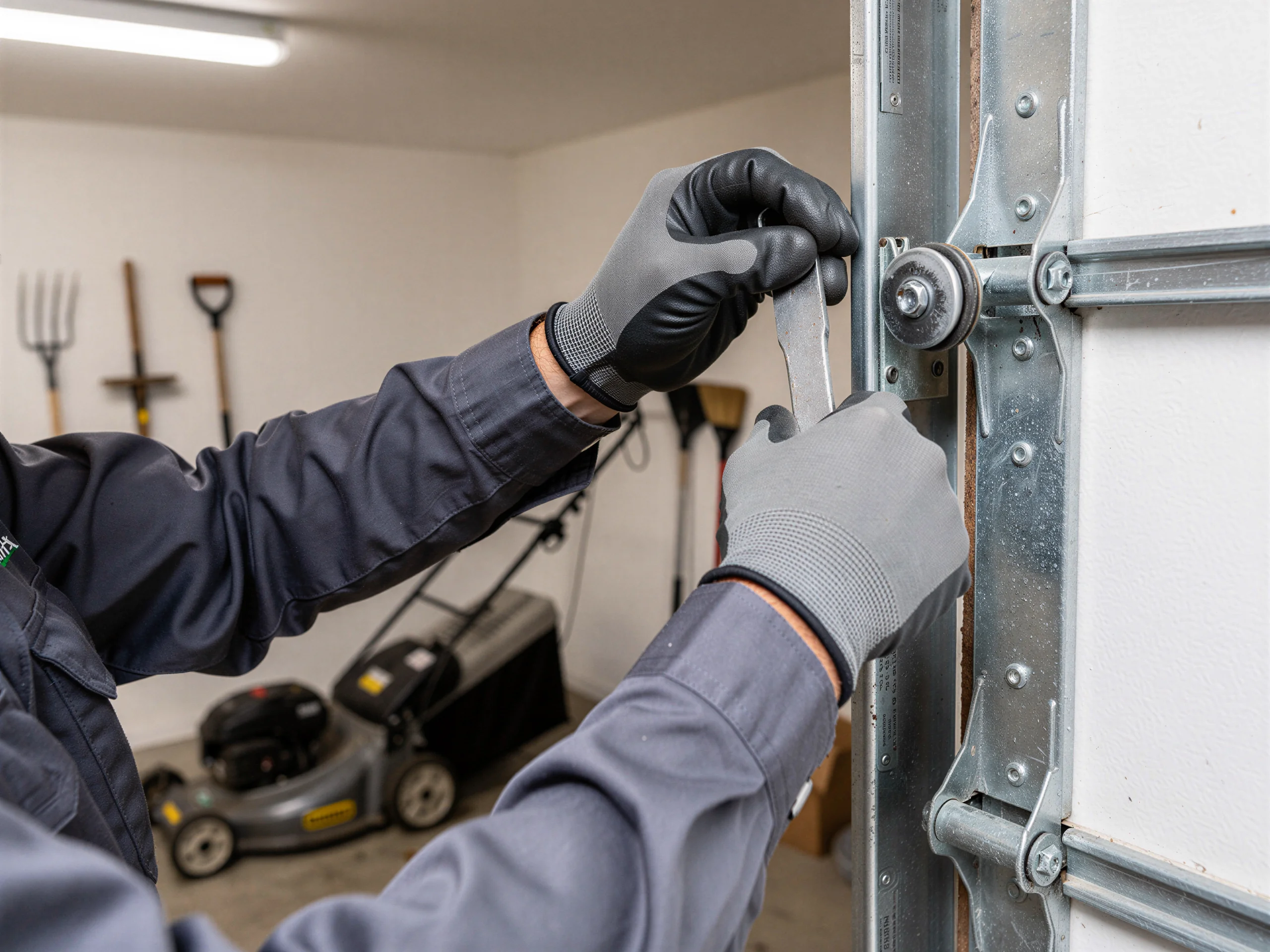
Grinding rollers in housings
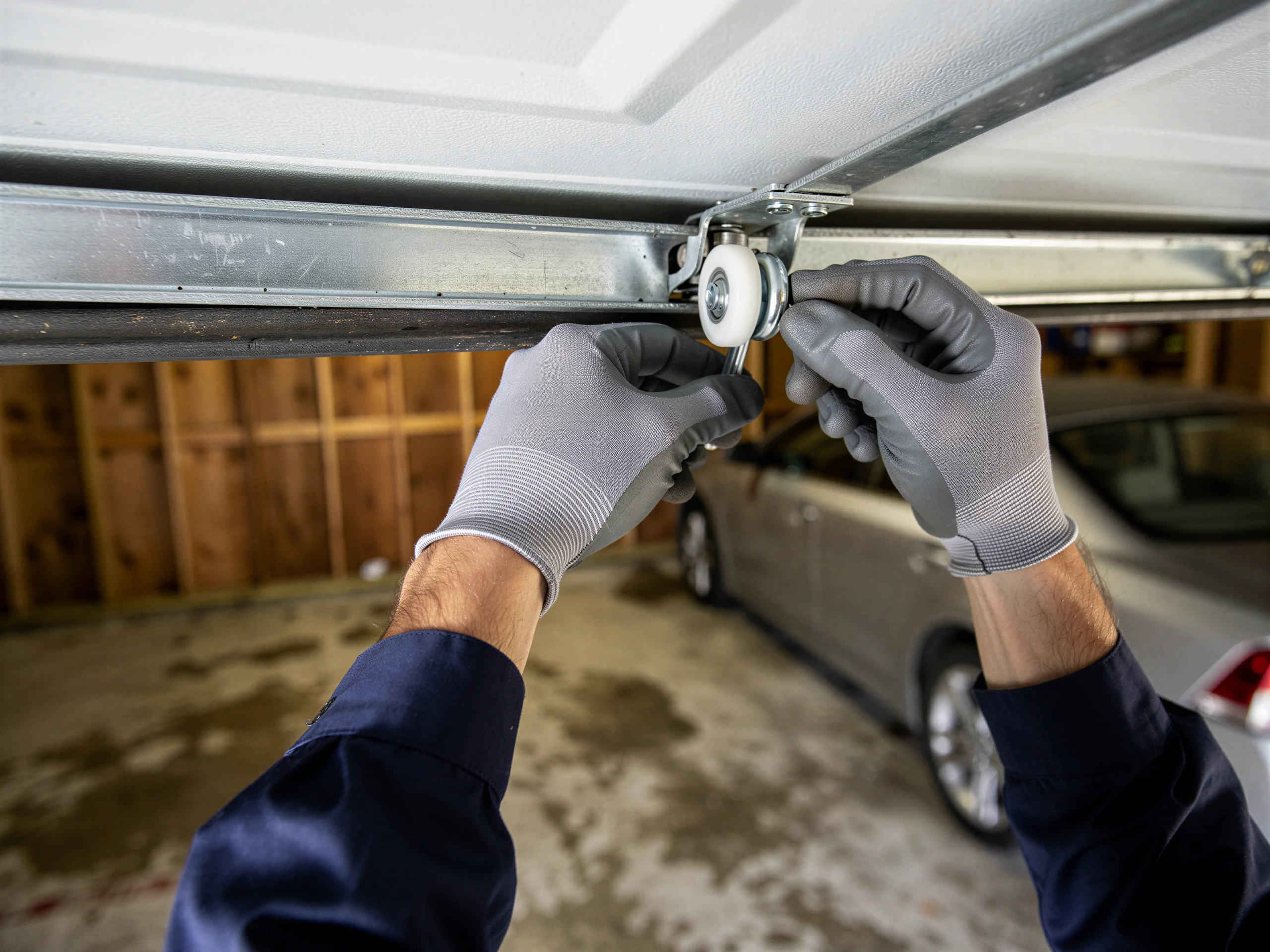
If your door is from that 1980 wave of construction, listen for grinding on the rollers, original steel rollers in nylon housings that are long past their life. What you shouldn't touch is the torsion spring itself.
Stored tension limits
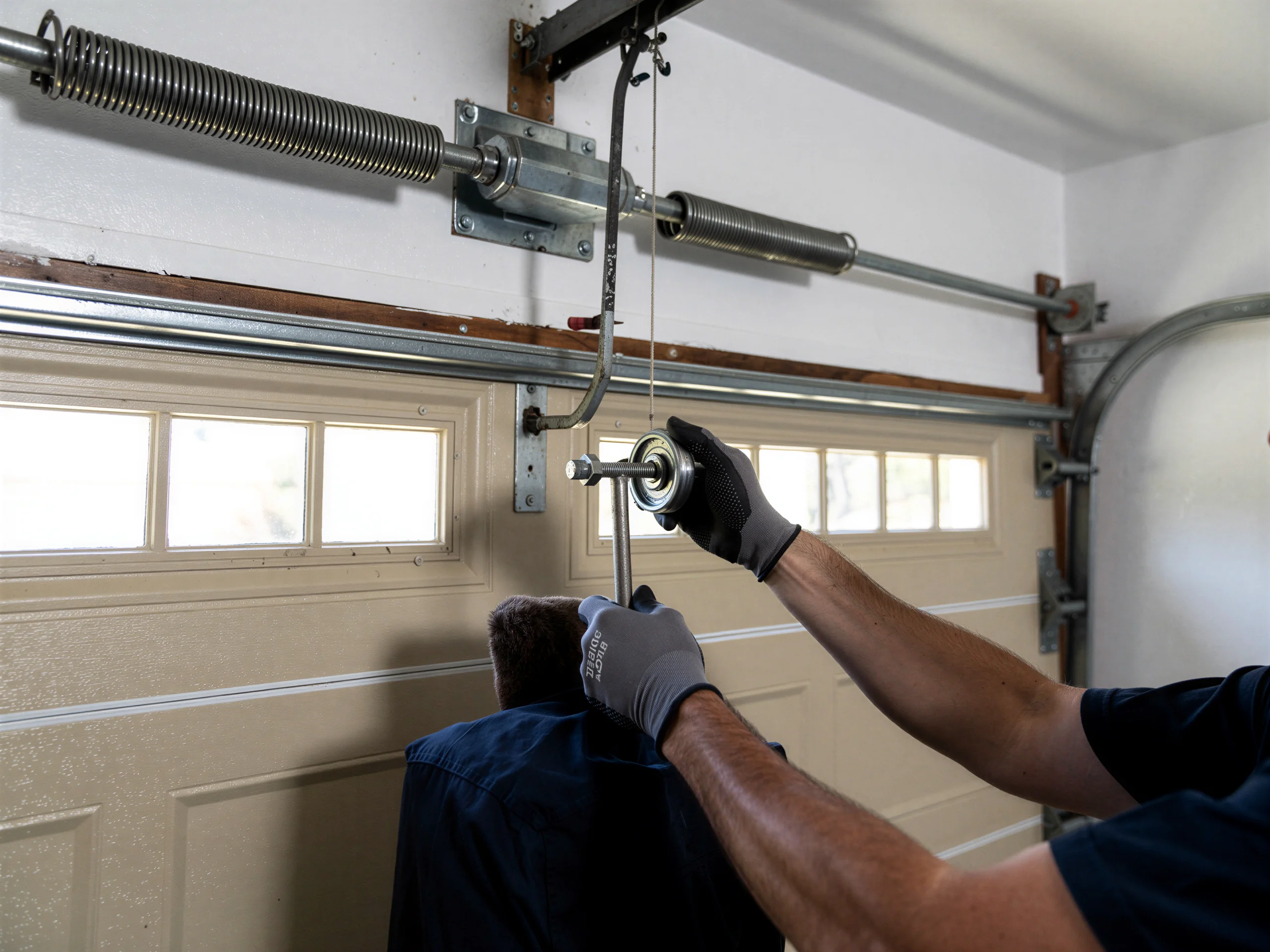
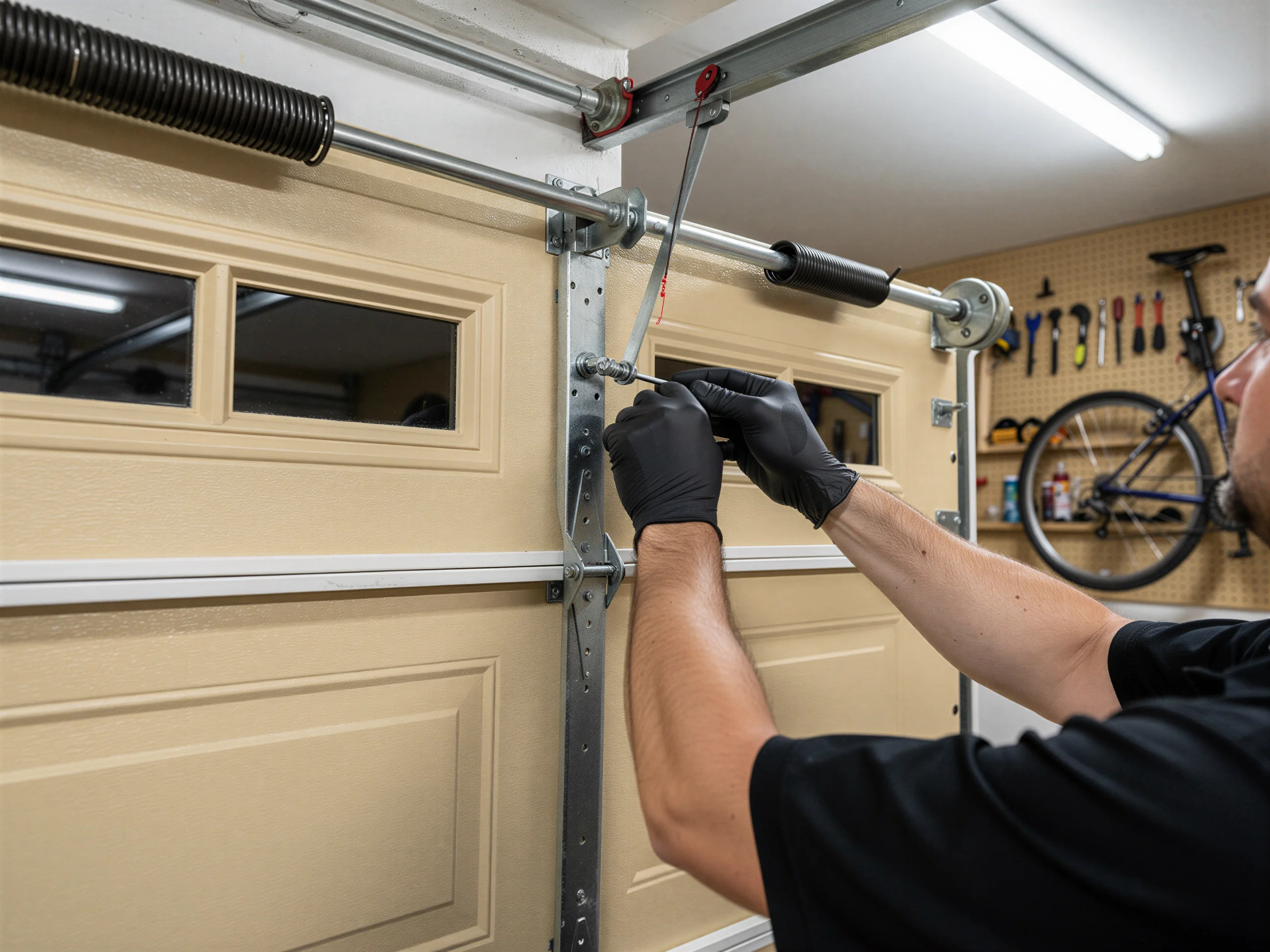
On a door this age, the spring is under more stored tension than it was rated for when new steel meets forty-plus years of cycling, and a spring that lets go while you're adjusting it can break a hand or worse. Winding cones, adjusting cable drums, and anything involving the spring bar belongs to someone who does it daily, not occasionally.
Gearing past its life
Honest limitation: if your opener is original to a 1980-built house, we're not going to pretend a tune-up will make 40-year-old gearing run like new. At some point maintenance is just delaying the inevitable, and we'll tell you when you've hit that point instead of billing you for another visit.
What It Costs
We don't post a flat number here because what drives the bill isn't the zip code, it's the door in front of us.
Original hardware slows service
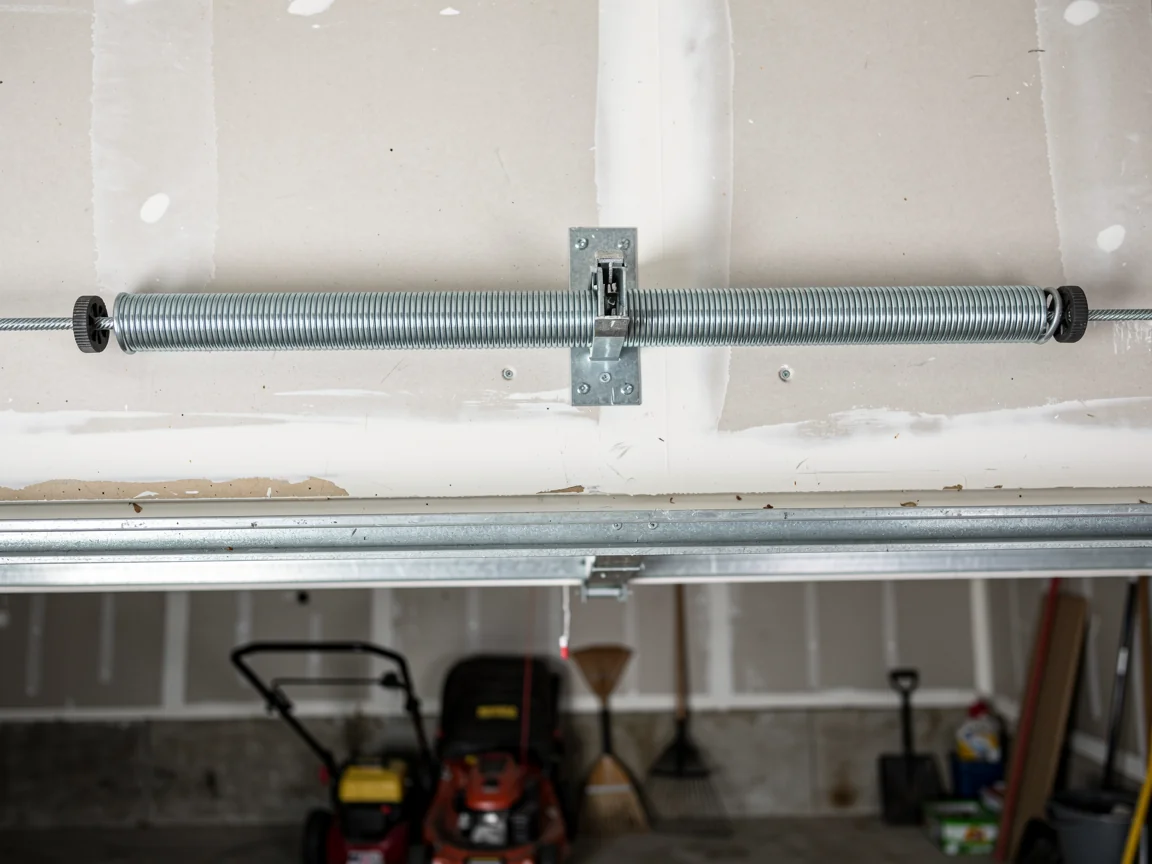
A single-panel steel door from the 1980 build wave with its original torsion spring and worn rollers takes longer to service than a door with newer composite hardware, and a double door costs more in parts than a single. What we can tell you is what moves the price: spring condition, whether the opener gearing needs attention or just lubrication, how many rollers have gone from steel to plastic-shell failure, and whether the track is still aligned or has been knocked out over the years.
Pattern-based accurate quotes
None of that is specific to Jurupa Valley by name, but the 1980 median build year means we see the same cluster of issues on a lot of these doors, which is part of why we can usually quote accurately after a look rather than guessing.
How to Book
We run out of Chino, 11 miles from Jurupa Valley, so a maintenance visit here means a scheduled trip, not a same-day drop-in from a local branch. We don't have a depot in Jurupa Valley and we're not going to pretend we do.
Book through our Jurupa Valley service page, and if what you actually need is a broader look at everything we offer out of Chino, the Chino maintenance page covers the full service menu rather than this one job.
How It Shows Up
On doors from the 1980 build wave, the first sign is usually sound: a groan or a clunk as the door starts moving, which is the spring working harder than it should to lift a panel it was never quite matched to after decades of tension loss. The second sign is the opener running longer before the door catches, a gap between motor noise and actual movement.
Rust on the bottom panel shows up more on doors that sat uninsulated for forty years, especially where the weather seal has worn thin and let moisture sit against the steel. None of this is dramatic until the day a cable frays through or a spring snaps, and by then it's not a maintenance call, it's a repair call with the door stuck halfway.
Why This Fails Locally
Jurupa Valley holds 27,132 households, which puts it among the larger stretches we cover out of Chino, not a handful of streets but a real spread of garage doors aging at different rates depending on when each pocket went up. The median build year here is 1980, newer than the service area's overall 1972 median, which matters more than it sounds like it should.
A door installed around 1980 usually came with a torsion spring sized for the panel weight of that era, often a single steel panel without the foam layer that became standard later. Over four decades that spring has cycled tens of thousands of times, and the bracket hardware holding it has loosened a little more each year than people notice because the door still opens. The median household income here is $96,190, and we see a lot of owners who've kept the original opener running because it still works, not because it was ever serviced.
The failure that shows up most in this stretch isn't catastrophic, it's cumulative. A spring that's lost 10% of its tension doesn't announce itself. The opener just starts working harder to cover the slack, and that's the wear nobody budgets for until the day the cable finally lets go.
Talk to a local pro
Garage door service in Chino?
Same-day service with honest, upfront quotes.