Can You Do This Yourself
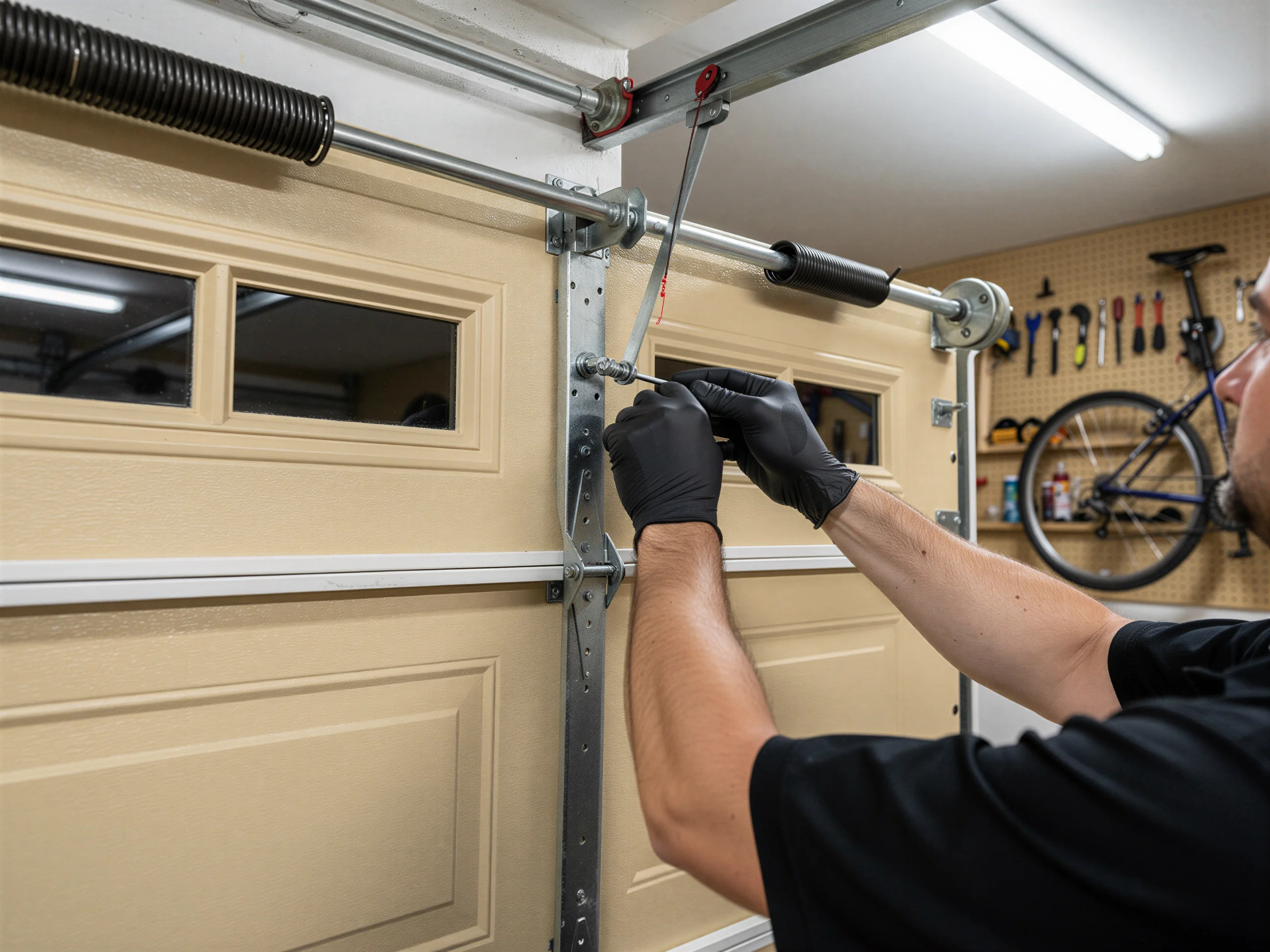
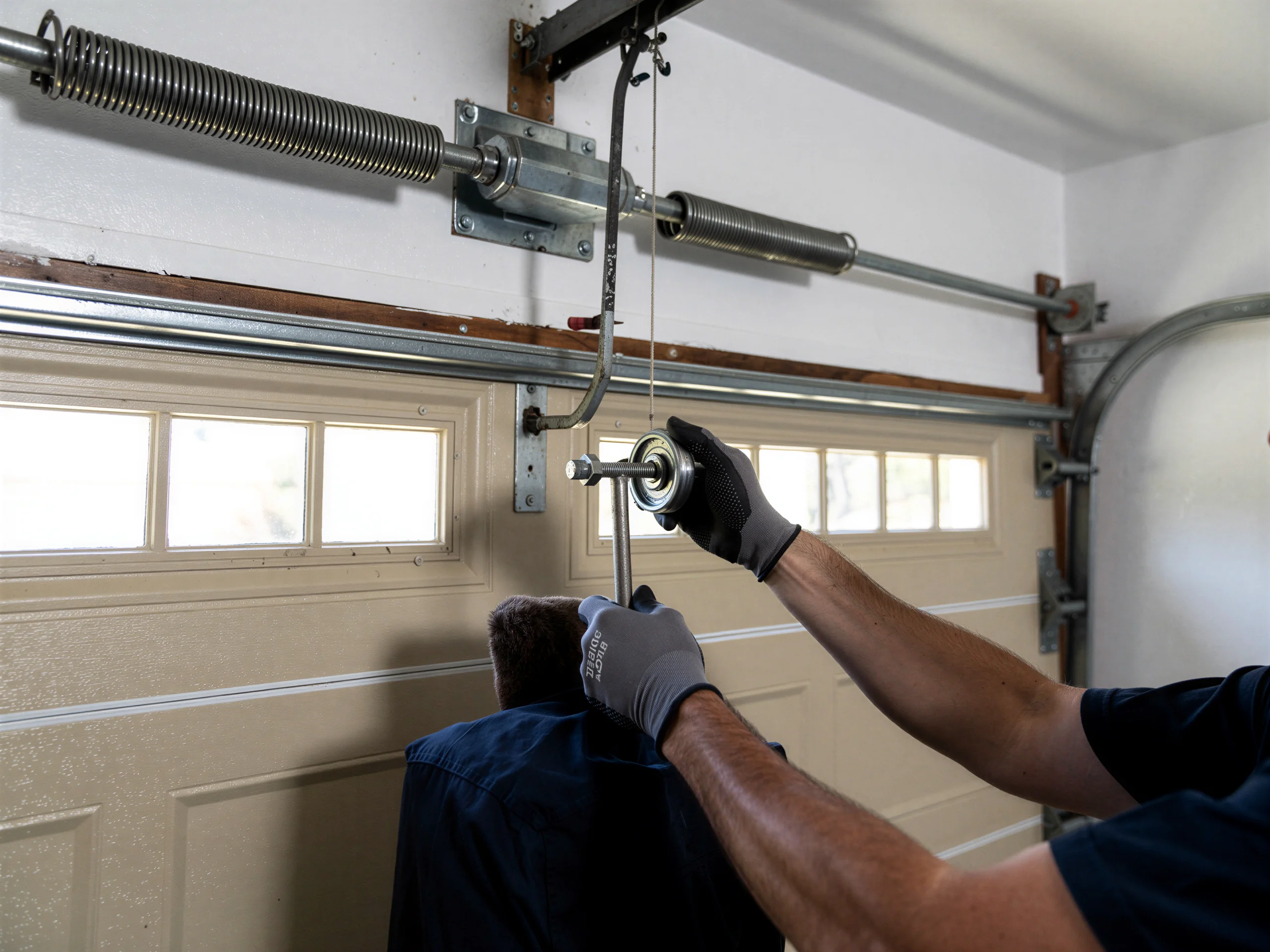
A broken torsion spring is not a bolt-it-back-together job, and we'll say that plainly: the spring is under enough wound tension to break a wrist or worse if the winding bars slip.
Half-broken springs hazardous
If you've got a double door with two springs, a half-broken one still holding tension is more dangerous than a fully snapped one, not less, because it can let go without warning while you're working near it.
Safe self-checks
What you can safely check yourself: whether the opener is even trying (listen for a hum with no movement, a sign the spring is gone and the opener is doing all the lifting), whether the door is noticeably heavier to lift by hand than it used to be, and whether you can see a visible gap in the coil above the door.
Skip winding bar kits
None of that requires touching the spring itself. We don't recommend the cable-and-winding-bar kits you can buy for this. The tension involved on a standard torsion spring is high enough that we'd rather lose the job than have you lose a finger. Call it out, don't fix it yourself.
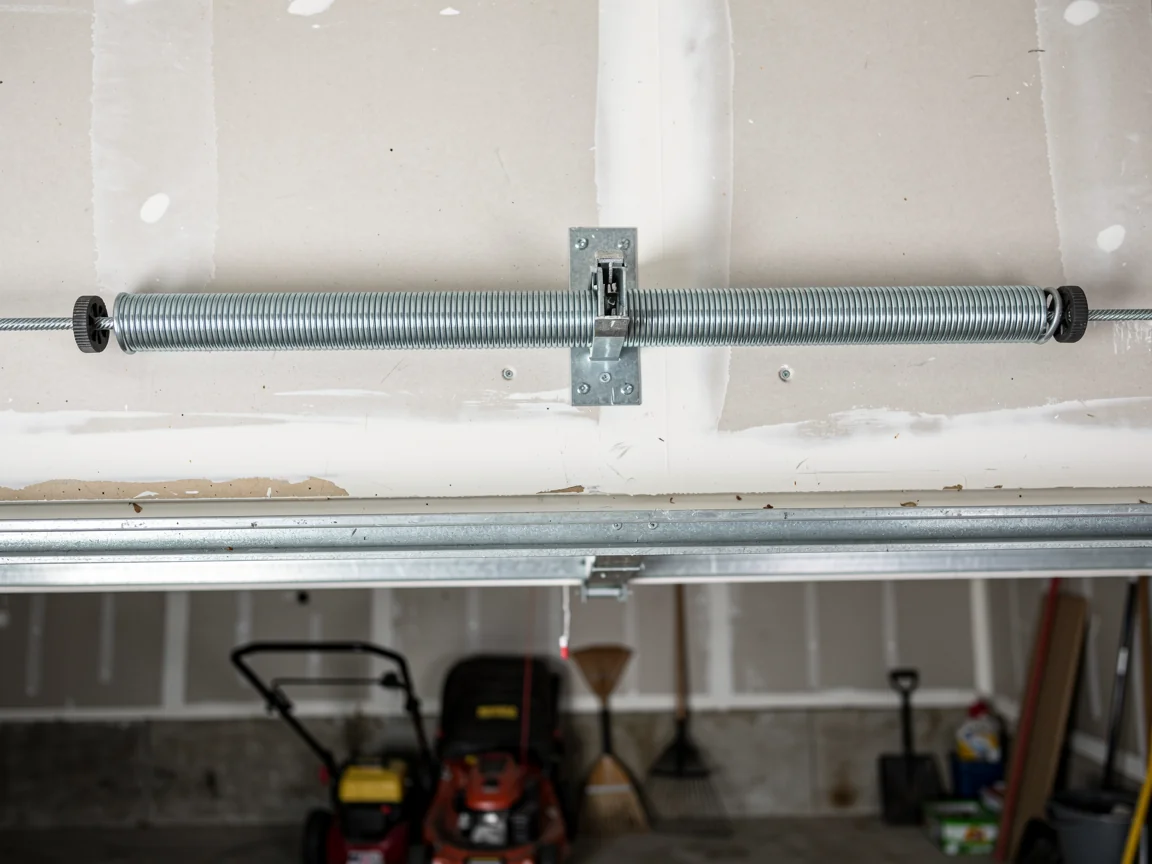
What It Costs
We're not going to list a number here that we can't back up for your specific door - a single door on standard torsion hardware isn't priced the same as a double door running two springs, and we haven't seen your setup yet.
Single or paired springs
What we can tell you is what drives the cost: whether one spring is broken or both need replacing (if one went, the other is usually close behind), the wire gauge and length the door actually needs rather than a generic size, and whether the drums, cables, or bearing plates got damaged when the spring let go, which happens more often on older, untouched hardware than on recently serviced doors.
Worn drums alongside springs
Given that a lot of the garage doors we see in Jurupa Valley are running original 1980-era hardware, we often find we're not just swapping a spring - the drums or end bearings have worn out right alongside it.
Pricing after inspection
We'll tell you what we find before we touch anything, and the price reflects the actual door in front of us, not an estimate pulled off a price sheet before we've seen it.
How to Book
We work out of Chino and drive the roughly 11 miles into Jurupa Valley for spring calls. There's no branch or depot here - just a truck coming from Chino with the spring stock and winding bars needed for the job. Book through our Jurupa Valley service page and we'll get the details on your door - single or double, how old the opener is, whether it's making noise or just not moving - before we head out.
We don't have a standing promise on same-day arrival to state here, so we won't make one up. What we will do is tell you honestly when we can get there once we know what's broken and what's on the truck.
How It Shows Up
Most people find out the spring is gone one of three ways. The opener runs but the door doesn't move, or moves an inch and stops - the motor isn't strong enough to lift a double door's weight on its own, which is the spring's job.
Sudden heavy lift feel
The door feels suddenly, dramatically heavier if you try to lift it by hand, sometimes by thirty or forty pounds difference from the day before. Or there's a bang, usually loud enough to hear from inside the house, as the spring lets go under tension.
Final cycle finishes it
On a door that's been running the original hardware since 1980, the failure is often sudden rather than gradual - thirty, forty years of cycling, and then one more open-and-close is the one that finishes it.
Slow groaning early warning
If your door has been getting slow or groaning for a few weeks first, that's usually a bearing or a dry roller giving you a warning the spring hasn't given yet.
Why This Fails Locally
The median home in Jurupa Valley went up around 1980, which puts a lot of garage doors here on their original torsion hardware. Nobody thinks about a spring until it's done, and a steel torsion spring wound for a door that's been opening and closing since the Carter administration has given everything it has. Forty-plus years of cycling, UV on the shaft ends, and whatever grease was last applied sometime in the Reagan years - that's what we're usually looking at under the hood.
This is a different fault pattern than you'd find in a tract built in the 1950s or 60s, which is more common across the rest of the service area we cover out of Chino. Those older builds often got a replacement door somewhere along the way and the hardware with it. A lot of 1980-built Jurupa Valley houses never had a reason to touch the door at all - it just worked, until the day it didn't, usually with a bang and a door that won't budge.
We're not guessing at this from a chart. It's what we find on the truck when we open the panel.
Talk to a local pro
Garage door service in Chino?
Same-day service with honest, upfront quotes.